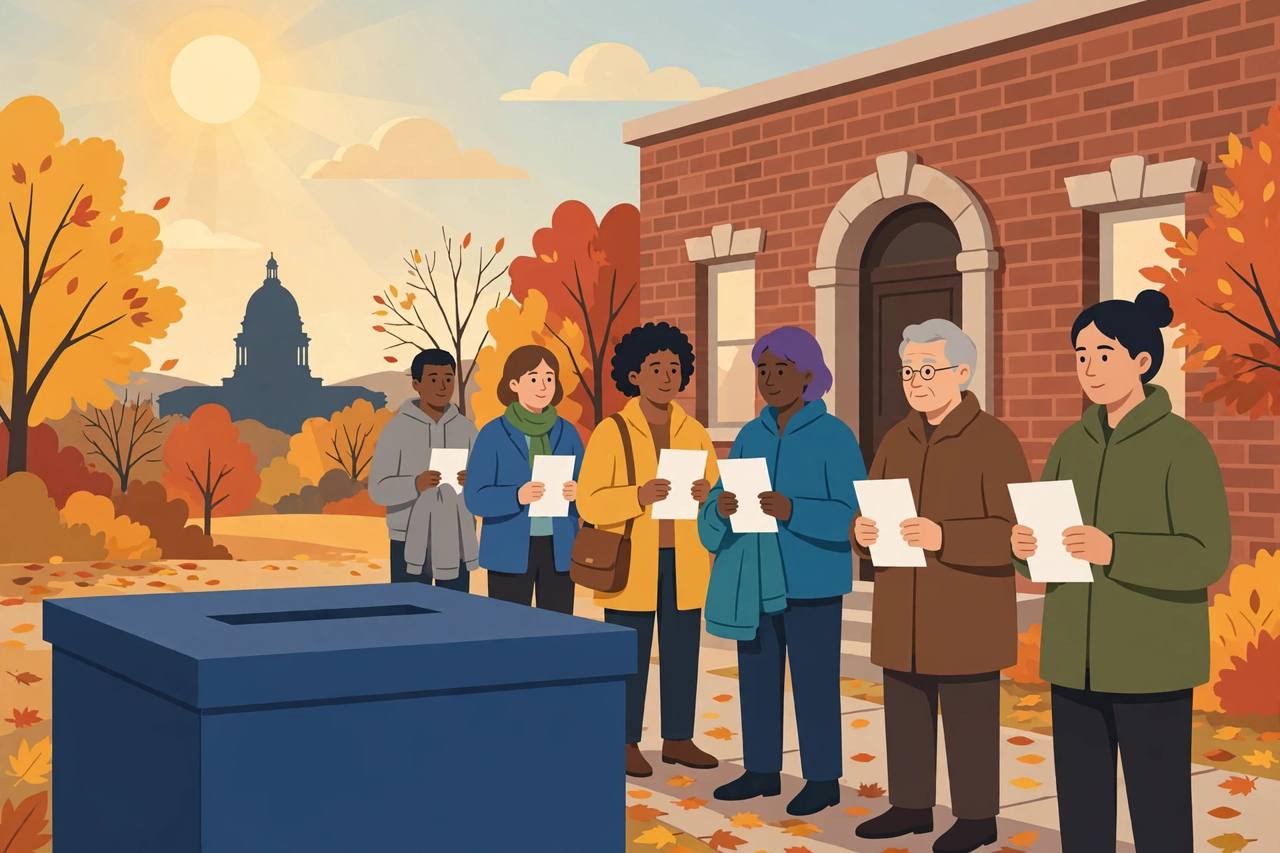
RICHMOND, Virginia — On Tuesday, November 3, Seychell Williams will vote for the first time in her life. On her ballot will be Question 3, a proposed amendment to Virginia's constitution that would automatically restore the voting rights of people convicted of a felony the moment they are released from incarceration — the very question that decided whether Williams herself, and more than 200,000 other Virginians, could vote this year at all, Virginia Mercury reported.
Source: Virginia Mercury, via WarrenCountyVa.com, Oct 30, 2026
Williams served five years in prison on a felony conviction and, after her release, spent years advocating at the state Capitol in Richmond for criminal-justice reform laws — while being unable to vote herself. She learned only last month that she was eligible. She chose to skip early voting and mail-in options so she could savour voting in person: 'It's my first time so of course I want to be out on Election Day,' she said. Williams runs a nonprofit, the Ruby Grant Project, which supports people reentering society from incarceration and is named for her grandmother, who conducted prison ministry.
What Question 3 actually asks
The certified ballot question asks whether Virginia's constitution should be amended to (i) provide for the fundamental right to vote in the Commonwealth, (ii) revise voter qualifications so that a person convicted of a felony is not entitled to vote during incarceration but is automatically invested with the right to vote upon release, and (iii) replace the existing bar on voting by persons found 'mentally incompetent' with a bar on persons found to lack the capacity to understand the act of voting. It is the third of three constitutional amendments on Virginia's November 3 ballot, alongside amendments on reproductive rights and marriage equality.
Under the constitution as it stands, a Virginians with a felony conviction loses the right to vote for life unless a governor pardons them or grants a petition to restore their rights — a process the Mercury describes as subjective and not always transparent, because it rests entirely on one governor's discretion, one applicant at a time.
How the ground already shifted this year: the Readmission Act ruling
Much of the change Williams is voting on has already happened through the courts. In King v. Youngkin, a federal court ruled in January 2026 that Virginia's felony disenfranchisement, read against the Virginia Readmission Act of 1870 — the Reconstruction-era law that set the conditions for the Commonwealth's return to Congress — could not bar people from voting for felony convictions outside a narrow set of historically recognised offences. On September 24, 2026, the Virginia Department of Elections confirmed that notices had been sent to 234,852 Virginians telling them their felony convictions should not prevent them from registering, according to The Commonwealth Ledger's analysis of the ruling and the department's confirmation.
Source: The Commonwealth Ledger, Oct 24, 2026
Under the state's current implementation of that ruling, only three modern offences remain disqualifying unless rights are restored: murder (Virginia Code section 18.2-32), voluntary manslaughter (section 18.2-35) and involuntary manslaughter (section 18.2-36). That three-offence list is an administrative implementation of a court ruling, not a permanent constitutional provision — a future case could change it, which is part of why Question 3's supporters want the rule written into the constitution itself. Separately, Governor Abigail Spanberger restored the rights of about 60,000 additional people over the summer, the Mercury reported.
The outreach problem: one letter is not enough
Being eligible and knowing it are two different things. 'One touch often isn't enough,' said Tyler Richardett, technology officer at Free Our Vote, 'especially for a group who may have believed they were permanently disenfranchised.' Free Our Vote has partnered with the Campaign Legal Center — which was involved in the Readmission Act case — the Virginia Civic Engagement Table and Vote Riders to reach eligible voters through text messages and further mailings, piecing together who qualifies from court and corrections data. At last month's Virginia Justice Conference in Richmond, the Secretary of the Commonwealth's office set up a table to help people look up their status, conference organiser Sheba Williams said. Seychell Williams, for her part, has spent the weeks since learning of her eligibility alerting as many people as possible to check their status and register.
How Question 3 reached the ballot — and why it would be hard to undo
Amending Virginia's constitution requires the General Assembly to pass the measure in two successive years before it goes to voters. Delegate Mike Cherry, a Republican from Colonial Heights, and Democratic lawmakers had carried the restoration proposal in past years without success; it finally passed two years in a row and reached this year's ballot. 'It's taken us a long time to get this on the ballot,' said Sheba Williams, who worked with lawmakers on the legislation. 'It's very difficult to change the constitution.' That difficulty cuts both ways: a rule placed in the constitution is also much harder for a future legislature or governor to reverse. The General Assembly has already passed implementing legislation during its 2026 session whose automatic-restoration provisions are contingent on voters approving Question 3; if they do, the change is scheduled to take effect on January 1, 2027, The Commonwealth Ledger reported.
Source: The Commonwealth Ledger, Oct 24, 2026
YES: voting rights return automatically on release from incarceration for a felony, for every offence, with no requirement to finish probation or parole first and no petition to the governor. NO: the petition-and-governor system stays, although the court-narrowed list — under which most felony convictions no longer disqualify after this year's ruling and the September notices — remains in place unless the law changes again.
The argument against
Opponents, including the Virginia Assembly of Independent Baptists, argue that Question 3 goes too far: in their reading it restores not only the vote but all political rights, draws no distinction between a property offence and a violent one, and asks nothing of a person beyond being released — no completed probation, no restitution paid to victims. Supporters answer that restoration on release is precisely the point: a sentence's prison term has been served, and tying the franchise to a governor's discretionary petition is what produced a system both sides have called uneven. Awaaz Punjab labels both positions as the arguments their makers present them as; the decision belongs to Virginia's voters on November 3.
What happens next
Polls close on Tuesday, November 3, and Question 3 passes or fails on a simple majority of votes cast on the question. More than 1.3 million Virginians have already voted early — roughly 350,000 more than in the 2022 midterms — and organisers say the three constitutional amendments, Question 3 among them, may be part of what is driving turnout. If Question 3 is approved and certified, the contingent implementing law takes effect January 1, 2027, and restoration becomes automatic on release; if it fails, the current mix of the court-narrowed eligibility list, gubernatorial restorations and individual petitions continues. For any Virginia reader with a family member leaving incarceration, the practical step this week is the one Seychell Williams has been urging on everyone she meets: check your registration status — because, as she put it, 'I'm going to be at every Election Day going forward.'