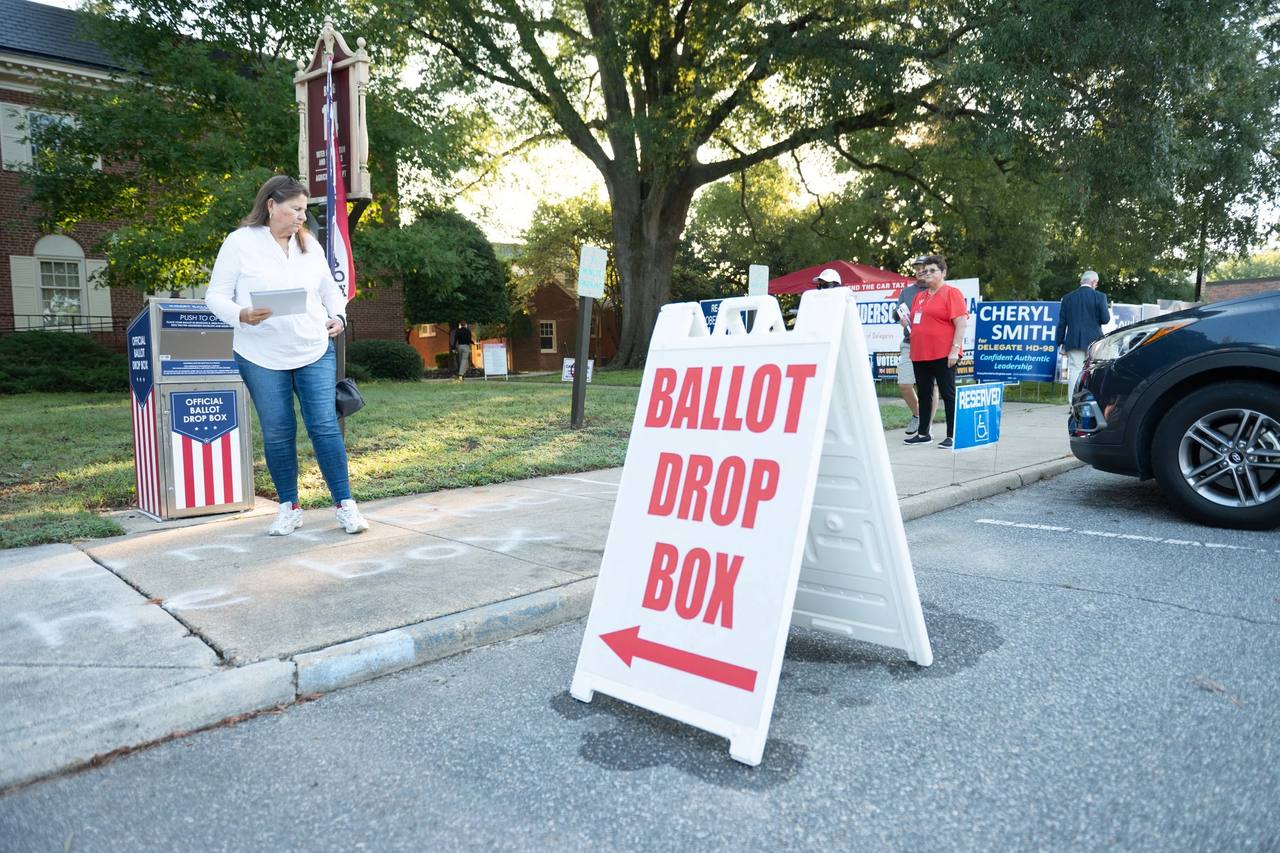
Virginia Beach's electoral board voted unanimously on Friday, October 30, to keep all neutral observers out of the city's polling locations on Election Day — refusing a U.S. Department of Justice request to monitor voting there, and refusing the civil rights groups that wanted to watch the federal monitors at the same time. The decision means that when Virginia Beach voters cast ballots on Tuesday, November 3, in the midterm elections that will help decide control of Congress, no outside observers — federal or civil rights — will be inside the polling places.
Source: WHRO Public Media, Oct. 30, 2026
Board chairperson Nanette Miller stressed during the meeting that the bar applies equally to both requests, WHRO reported. "We're not allowing one organization and not another," she said, telling reporters the decision was meant to be equitable and to prioritize the election process in Virginia Beach, which the dispute was complicating. Three speakers at the meeting raised concerns about DOJ monitoring, and the audience applauded the decision.
The Justice Department had written to the city more than a week earlier. Tim Mellett, deputy chief of the DOJ's voting section, informed Virginia Beach election officials on October 21 that the department planned to send monitors to ensure compliance with federal voting rights statutes. "They do not intrude or interfere in any way in the voting process," he wrote. The department has said its observers will be present in all 50 states, and a DOJ spokesperson said the monitors are there to observe and report any potential law violations, not to interfere, WRIC reported.
Civil rights groups wanted in — and accepted being shut out too
The civil rights organizations had asked to observe the same polling locations in order to keep an eye on the DOJ, amid concerns that federal resources could be used to intimidate voters, especially people of color. Bernita Richardson, secretary of the NAACP's Virginia Beach branch, said she had not wanted civil rights organizations excluded, but was glad the DOJ would not be inside polling locations. "It has been an ongoing concern, even before we got to this point, that [it] may be a ploy that could be used to intimidate people and keep them from going out to vote," she said — a concern she and other critics state as their allegation about the deployment's effect; the DOJ rejects that characterization and says its monitors only observe compliance with the law.
Statewide, the NAACP tells voters: know your rights
The board's vote came a day after the NAACP Virginia State Conference held a virtual press briefing on October 30 to brief voters on their rights at the polls, address concerns about the Justice Department's monitors and push back on what it called misinformation about the three proposed amendments to the Virginia Constitution on the November 3 ballot. "We have confidence in the integrity of our voting systems in Virginia. Virginians should vote with confidence, know their rights and recognize disinformation," said the Rev. Cozy Bailey, president of the Virginia NAACP State Conference. Anthony Ashton, senior associate general counsel at the national NAACP, told voters through WRIC: "You are not required to stop, to stay, or to answer questions" if a monitor approaches before you vote, adding: "Anything that might be seen as discouraging or intimidating people with regard to voting, it would be illegal, and it doesn't matter who does it." After voting, monitors may ask questions on the way out, but no voter is obliged to stop or answer.
Virginia's own state guidance sits behind the local decision. An October 15 election bulletin issued jointly by the Virginia Department of Elections and Attorney General Jay Jones' office — a ten-page playbook for handling federal officials at election sites — tells local officials to document federal agents, consult attorneys, contact local law enforcement and, when safe, ask agents to remain outside the 40-foot perimeter around a polling place, while not physically obstructing agents or delaying a search warrant. Elections Commissioner Steven Koski has noted that federal monitors attended this year's primaries in Fairfax and Prince William counties without major reported problems. The DOJ, for its part, dismissed the state guidance as "bluster and political posturing," Fox News reported. Democratic election lawyer Marc Elias, in a statement this weekend, accused the DOJ under Attorney General Todd Blanche of escalating pressure on election officials in the final days before the midterms, pointing to department letters to officials in all 50 states and contacts with officials in California, Nevada, Pennsylvania, New Jersey and Washington about allegedly ineligible voters — claims the department frames as election-integrity work.
What stays allowed on Tuesday — and what Virginia voters decide
The board's decision does not apply to observers from political parties, who routinely observe voting, and it does not apply to city workers who observe processes as part of their duties. Beyond the congressional races, Virginia voters on Tuesday also decide three proposed constitutional amendments, including Question 3, which would automatically restore voting rights to people released from incarceration for felony convictions and, if approved, would take effect on January 1, 2027. Early voting in Virginia ended on Saturday, October 31; on Tuesday voters must use their assigned polling place, and polling-place information is available through the Virginia Department of Elections. Voters who experience intimidation, delays or false information can call the Election Protection Hotline at 866-OUR-VOTE (866-687-8683), and anyone in immediate danger should call 911.
You will not see DOJ monitors or outside civil-rights observers inside your polling place on Tuesday — the board barred both. Party-appointed poll watchers and election staff will still be there. No monitor, official or observer may legally stop you before you vote or require you to answer questions; if you feel intimidated, tell a poll worker, call 866-687-8683, or call 911 in an emergency.
What is solid
- The Virginia Beach electoral board voted unanimously on Oct. 30 to bar neutral observers, federal and civil-rights alike, from polling locations
- DOJ's Tim Mellett wrote to city officials on Oct. 21 proposing monitors to check compliance with federal voting rights statutes
- DOJ asked to monitor four Virginia localities: Fairfax County, Virginia Beach, Charlottesville and Prince William County
- Party-appointed watchers and city workers on duty are not covered by the bar
What is only claimed
- Whether federal monitors protect voting rights or chill turnout — the DOJ says they observe and do not interfere; the NAACP and other critics say their presence can intimidate voters, which the DOJ rejects