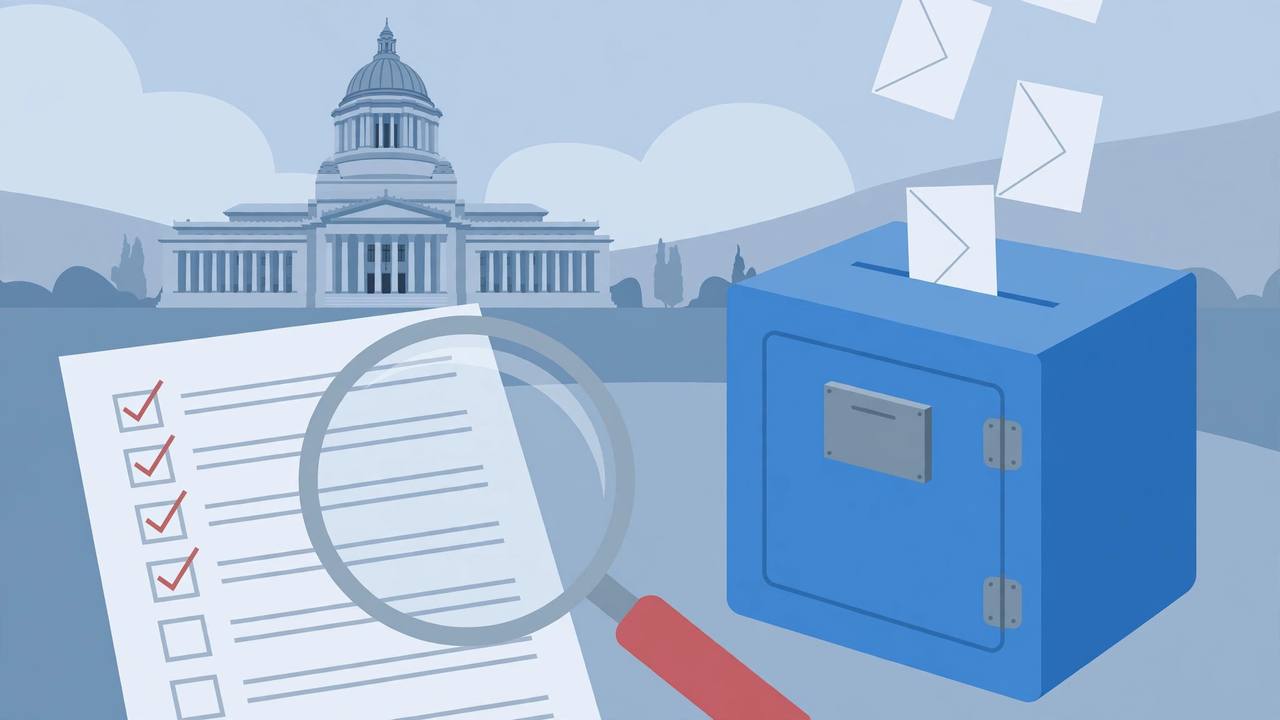
Washington state has formally refused the U.S. Justice Department's demand to set aside the ballots of more than 400 voters the federal government says may be noncitizens — and says its first check of the federal list found United States citizens on it. Secretary of State Steve Hobbs disclosed the findings on Wednesday, October 28, in a written response to the Justice Department, which had threatened emergency court action if the state did not comply by noon that day, Democracy Docket reported.
“A preliminary investigation confirms what your letter acknowledges: This list includes United States citizens and is not reliable,” Hobbs wrote. He said refusing to process a registered voter's ballot without individualized proof of ineligibility would be “both irresponsible and illegal.” The refusal is the newest development in a confrontation that began two days earlier, and it sets up a possible emergency court fight six days before the November 3 midterm elections.
What the Justice Department demanded on Monday
On Monday, October 26, the Justice Department wrote to Hobbs saying the Department of Homeland Security had identified more than 400 people who federal officials believed were or had been noncitizens and who, in the letter's words, had voted in Washington elections “with a high level of confidence.” The department told the state to review the list within 24 hours and, if any listed voter returned a ballot, to instruct election officials not to verify or tabulate it until citizenship could be determined. If Washington did not comply, the letter said, the United States would seek emergency relief in court.
Acting U.S. Attorney Neil Floyd announced the demand at a Seattle news conference, saying the roughly 405 voters identified had cast about 1,500 votes in earlier elections and calling the list “the tip of the iceberg,” the Associated Press reported. Floyd said investigators matched publicly available registration records against Homeland Security data, acknowledged the review used a limited sample, and said the department expected to send another list before Election Day. He also acknowledged some people on the list may since have become naturalized citizens. Washington has more than 5 million registered voters and mails a ballot to every one of them, so the list covers a tiny fraction of the rolls — but Hobbs's office noted one listed voter last cast a ballot in 1994.
What the state's own review found
Hobbs said the state's preliminary review quickly exposed multiple problems. A “significant number” of people on the federal list are either not currently registered to vote or have inactive registrations, he wrote, contradicting the federal suggestion that all of them would receive ballots in the 2026 election. The state also identified “many” people on the list as U.S. citizens, and Hobbs warned the citizens already found could be only the “tip of the iceberg” of voters who would be wrongly disenfranchised if the state followed the demand — turning the U.S. attorney's own phrase back on the department.
Hobbs also attacked the quality of what the department sent. Federal officials provided no explanation of how the data was collected, identified no underlying sources and supplied no supporting documentation, he wrote. The list arrived as a PDF containing a printed spreadsheet rather than a usable electronic file, omitted fields such as voter identification numbers and addresses that would help the state match records, and included duplicate entries. The Justice Department's letter also misstated Election Day as November 2; the election is November 3. “Basic factual errors like this are unacceptable and risk confusing voters,” Hobbs wrote.
The legal argument on each side
Hobbs argued that halting ballots on the basis of the unverified federal list could itself break federal law, pointing to Voting Rights Act protections against refusing to count qualified voters' ballots and to the National Voter Registration Act, which restricts systematic removals from the voter rolls within 90 days of a federal election — the so-called quiet period. He invited the Justice Department to bring individualized evidence against any specific voter it believes is ineligible. “But these processes require proof, not just allegations,” he wrote, urging federal officials to reconsider what he called their “deeply flawed data” rather than pursue a late-breaking lawsuit against the state.
The federal side, as Floyd presented it on Monday, is that the identifications were made “with high confidence,” that prosecutors anticipate charges in at least some noncitizen-voting cases, and that holding the listed ballots aside until citizenship is confirmed protects the election. The Associated Press noted the Washington demand came less than two weeks after a similar demand in California, where a federal judge this week rejected the department's bid to set aside about 20,000 ballots — a sequence that has made state-federal control of voter lists one of the central legal fights of this election season, with control of the U.S. Senate and House at stake on November 3.
For Washington's large immigrant and naturalized-citizen communities — including Punjabi families across the Seattle, Tacoma and Yakima areas — the details matter practically, not just politically: a list built from name-matching can sweep in citizens who naturalized years ago, and Hobbs's position is that no Washington ballot will be held back on a name alone without individual proof. Voters who are citizens do not need to take any new step because of the federal list, under the state's stated position.
The Justice Department's noon Wednesday deadline has passed with the state refusing, so the next move is the department's: it can file the emergency court action its letter threatened, drop the demand, or return with individualized evidence, as Hobbs invited. Ballots for the November 3 election are already being returned across Washington. Awaaz Punjab will follow any court filing.
Sources: Democracy Docket (Oct. 28, 2026), reporting Secretary of State Steve Hobbs's written response and the Justice Department letter; Associated Press (Oct. 26–27, 2026) on the federal demand and Acting U.S. Attorney Neil Floyd's news conference; Washington State Standard via the Issaquah Reporter (Oct. 27, 2026).