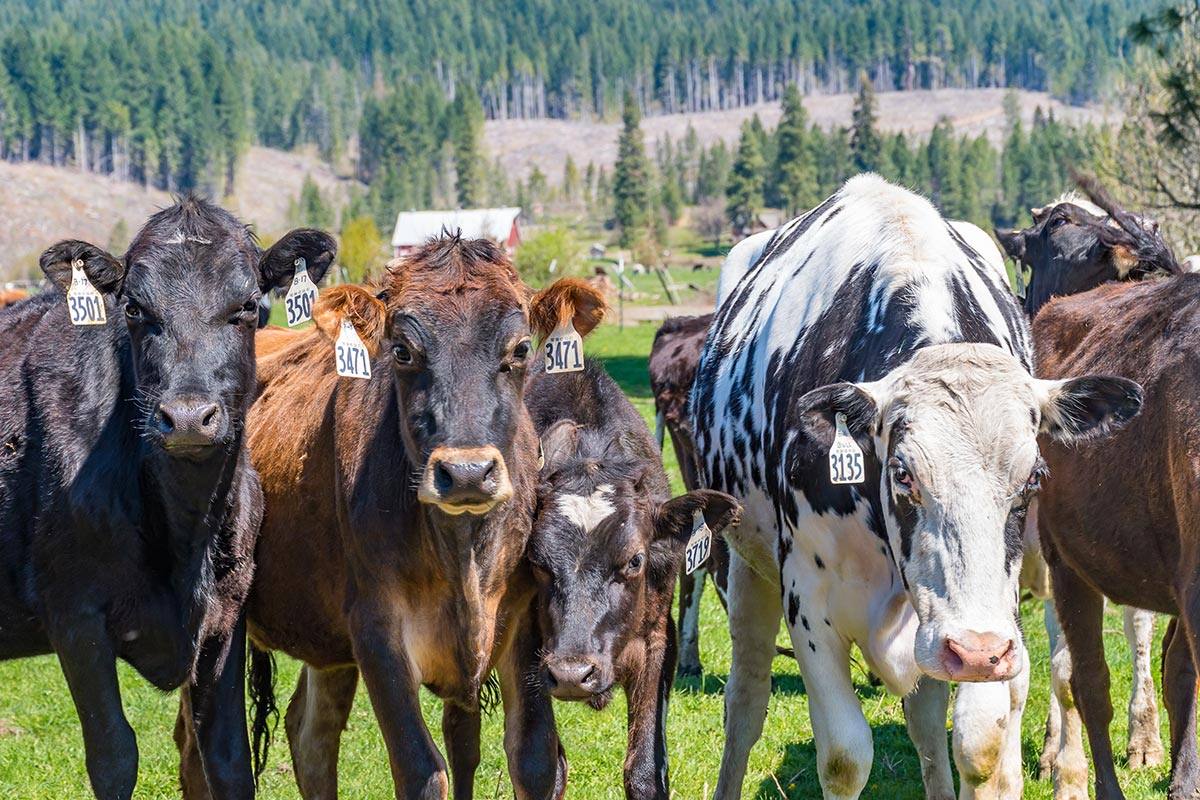
A resident of Yakima County, in central Washington state, has died of bird flu after being exposed to infected dairy cattle, county health officials have announced — the first death from the virus in the United States in a year, and the first in the country linked to a dairy farm. The Yakima Health District said the person, who had underlying health conditions, had been hospitalized with severe illness and died on Sunday, November 1.
Source: Associated Press via STAT
The health district withheld the person's name, age and gender out of respect for the family's privacy, and it has not released further details about exactly how the patient was exposed to cattle. The Centers for Disease Control and Prevention (CDC) confirmed the person was infected with the H5N1 strain of avian influenza.
The third US bird-flu death since 2024
This is only the third human death from highly pathogenic avian influenza in the United States since early 2024, when the virus was first found to have jumped into dairy herds, according to health officials. It is the second recorded in Washington state: another Washington resident died in November 2025, but from a rarer strain of the virus called H5N5. The Yakima County patient was one of three people in the region diagnosed with bird flu after exposure at a dairy; in the same announcement, the health district reported a third confirmed human case — a resident who has not been severely ill and has not been hospitalized.
The CDC analyzed the genetic sequence of the virus taken from the person who died and found no changes that would make the virus spread more easily between people or cause more severe illness, a CDC spokesperson said on Monday. More than 70 human infections have been reported in the United States since the beginning of 2024, according to the CDC — 72 cases as of October 15 — and there is no known person-to-person spread. The agency says the risk to the general public remains low.
An outbreak that went from two herds to dozens in under a month
Washington confirmed its first infections in dairy cattle on October 8, at two Yakima County dairies. By October 26, the Benton Franklin Health District reported the virus had also infected cows at a dairy in neighbouring Benton County. The Yakima Health District says 33 dairy herds in the county have recently tested positive for H5N1, and the U.S. Department of Agriculture's Animal and Plant Health Inspection Service confirmed six more Washington cases on October 30, bringing the statewide total to 40 infected herds — the fifth-highest count of any state, the Capital Press reported.
Source: Capital Press
Agriculture officials say the virus moves between cattle through infected animals and through contaminated milk, equipment, vehicles, clothing, footwear and the people who move between farms. Wild birds can carry avian influenza, but the Washington State Department of Agriculture does not consider them the primary source of the strain now affecting dairy herds. Most infected cows recover within four to six weeks, officials say, but infected cows shed the virus in their milk.
“While this is a serious and heartbreaking outcome, the risk to the general public remains low,” said Dr. Dave Atteberry, health officer for the Yakima Health District, who noted that avian influenza can cause severe illness particularly in people with underlying health conditions. Dr. Steven Krager, health officer for the Tri-Cities area, pointed to how differently the virus behaves in birds and cattle: about 90 percent of infected chickens die, while mortality in cattle is much lower, at roughly 2 to 3 percent.
What it means for dairy workers, milk haulers and farm families
Health officials are direct about who faces the greatest risk: dairy workers and anyone else with close or prolonged contact with infected animals, or with barns, milking equipment and other environments contaminated by the virus. That includes people who milk and handle cattle, clean barns, haul milk and equipment between farms, or handle sick and dead birds — work done every day in the Yakima Valley, one of Washington's biggest dairy and farming regions, about 140 miles southeast of Seattle. The Yakima Health District says it is working with the state health department to identify people who were in close contact with the infected patients and monitor them for symptoms such as eye redness and irritation, fever and a sore throat.
Officials recommend that dairy workers wear disposable coveralls and hair coverings, gloves, masks, safety goggles and rubber boots or boot coverings when working around infected animals, and the CDC urges anyone handling sick or dead birds or cattle to use respiratory and eye protection and gloves. On milk, the advice is equally clear: infected cows shed the virus in their milk, so raw milk and raw-milk cheese from affected areas are unsafe to consume, while pasteurized milk remains safe to drink, the Capital Press reported, citing health officials. The state agriculture department has also warned against letting pets drink raw milk or eat raw meat or dead birds, noting that cats are particularly susceptible to the virus.
Governor Bob Ferguson said he was being briefed on the situation and that his team was coordinating with public health and agriculture officials, and workers at affected farms have been advised to take safety precautions. Some independent experts say the death should push the response further: Jennifer Nuzzo, director of the Pandemic Center at the Brown University School of Public Health, said she was concerned about the timing of the case, and Gregory Gray, an infectious-disease specialist, said he believes it is time to vaccinate U.S. dairy cattle against the virus, according to Healio's interviews with both experts.
Source: Healio
What happens next
For now, the work is monitoring and containment: health officials are tracing and watching close contacts of the three human cases for symptoms, the state agriculture department and USDA continue herd testing as the count of infected farms is updated, and the CDC continues to check the virus for genetic changes that could make it spread between people — changes it says it has not found. No new restrictions on the public have been announced, and officials continue to assess the risk to the general public as low; the next facts to watch are whether any further human cases are confirmed in central Washington and how far the herd outbreak spreads beyond Yakima and Benton counties.