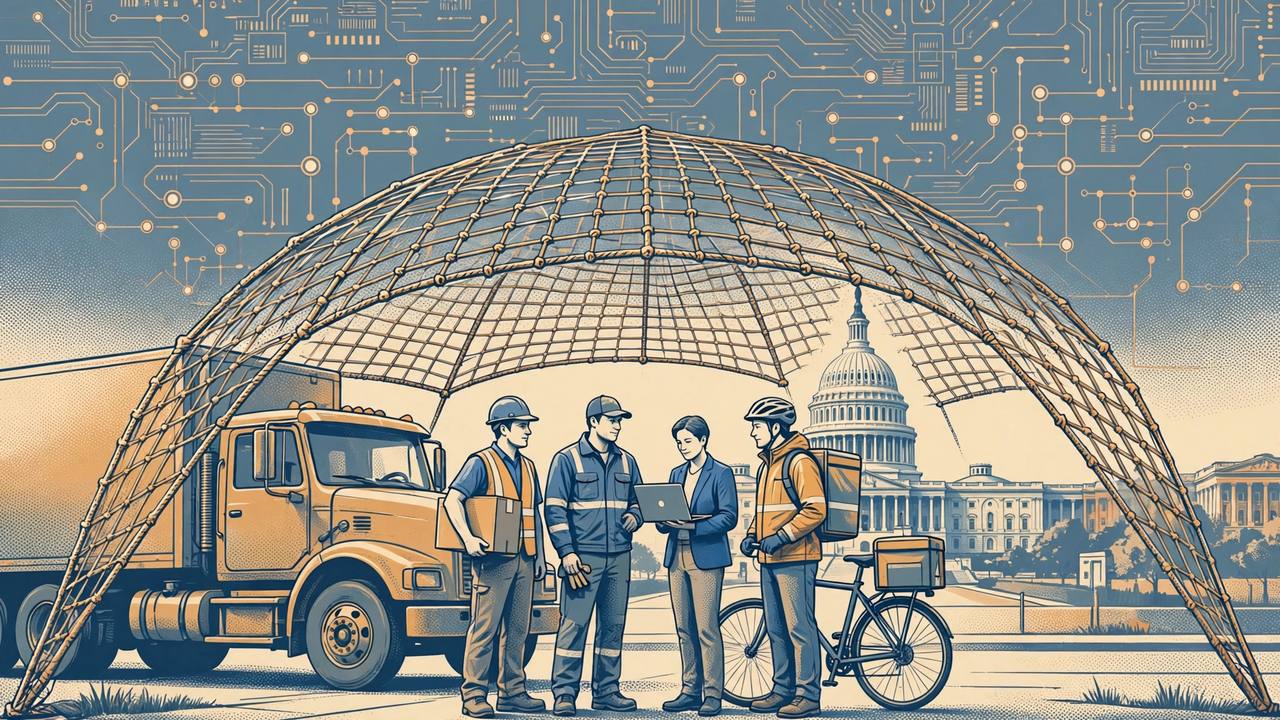
WASHINGTON — As fears grow that artificial intelligence could put large numbers of Americans out of work, lawmakers in Congress have introduced a series of bills to strengthen the safety net for displaced workers, the Associated Press reported. The newest came on Friday, October 23, when Senator Ron Wyden of Oregon, the top Democrat on the Senate Finance Committee, unveiled the Stability and Opportunity for Workers Act alongside Senate Democratic Leader Chuck Schumer and Senators Michael Bennet and Elizabeth Warren.
Source: Associated Press
"Americans feel the looming fear of AI job losses, and Congress has a responsibility to help the country prepare," Wyden said in the Senate Finance Committee's announcement. "The support meant to protect workers from financial devastation when they lose their jobs is brittle and out of date, and needs to be updated before the next economic crisis." Under the bill, unemployment benefits would extend to 52 weeks if the unemployment rate reaches 8.5% — double the current standard of up to 26 weeks — and workers displaced by AI disruption would receive education and retraining support toward higher-paying jobs, Wyden's office said.
Source: US Senate Finance Committee
The proposal would also set stronger minimum standards for benefits, broaden the types of workers covered by regular unemployment insurance — including gig workers — and create a jobseeker's allowance so people outside the traditional system do not fall through the cracks, according to the committee. A companion proposal from Wyden would eliminate federal tax breaks for data-center construction and impose an excise tax on data centers to help fund worker assistance.
Source: US Senate Finance Committee
Wyden's bill is part of a wider push. Other measures before Congress include proposals to tax AI companies and proposals requiring companies to report AI-driven layoffs, the AP reported. The debate has been fuelled by warnings from technology leaders themselves: last year Anthropic chief executive Dario Amodei told Axios that AI could wipe out half of all entry-level white-collar jobs and push unemployment to between 10% and 20% within one to five years, and Microsoft co-founder Bill Gates has warned that advances in AI could put millions of jobs at risk. An AP-NORC poll published earlier in October found nearly 80% of Americans consider protecting workers in the AI age extremely or very important.
Source: Associated Press
Those projections have not materialized so far: economists note that AI has not yet created major workforce displacement, and AI-related layoffs to date have been concentrated in the tech industry, the AP reported. Most of the worker-protection bills have stalled on Capitol Hill, where Republicans have largely followed President Donald Trump in taking a hands-off approach to artificial intelligence, and Trump aides have dismissed suggestions that AI could cause mass layoffs. The bills are proposals only — none of the expanded benefits exists unless Congress passes them and the president signs them into law.
Source: Associated Press