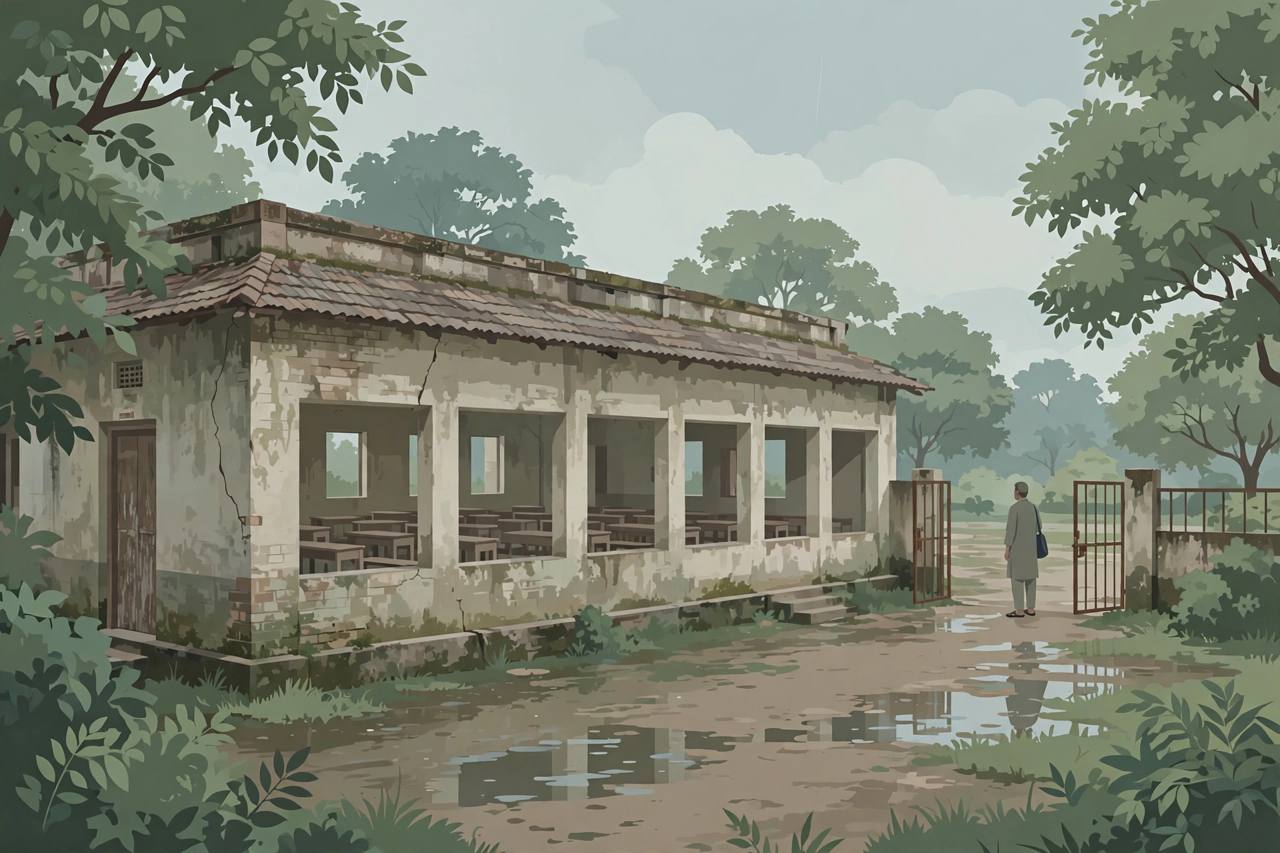
The West Bengal government is examining whether schools that currently report no student enrolment can be revived through public-private partnerships (PPP) or converted for other public uses, following a district-level assessment of their buildings, land and infrastructure.
Source: Education Post
The state School Education Department has asked district administrations to examine the 4,133 schools that reported zero enrolment in the 2025-26 UDISE+ data. District-level committees are expected to assess the location, condition and available infrastructure of each property before recommending how it should be used.
According to a state education department official cited by IANS, the government is considering the PPP model for at least some of these institutions. A decision on the proposal is expected within the next month, although the official indicated it is unlikely to apply to all 4,133 schools.
Schools not considered suitable for PPP projects could instead be considered for other public purposes, including training centres, health facilities or administrative use, depending on local requirements and the condition of the properties.
The state government has said the figures themselves need verification. School Education Minister Dipak Barman said discrepancies in data uploaded by some schools could have contributed to institutions being shown as having teachers but no students, and physical inspections have been ordered before any decision on the properties.
Source: Education Post
The issue is linked to the uneven distribution of teachers in the state: UDISE+ data records 19,502 teachers against the 4,133 zero-enrolment schools, while 6,769 other schools have only one teacher each for a combined 2,29,569 students. The state is also considering transferring teachers from zero-enrolment schools to nearby schools facing shortages.
For now, the future of the 4,133 schools will depend on the physical verification and district-level assessments, with separate decisions expected on which institutions can be revived, which may go to PPP projects and which are better suited to other public purposes.