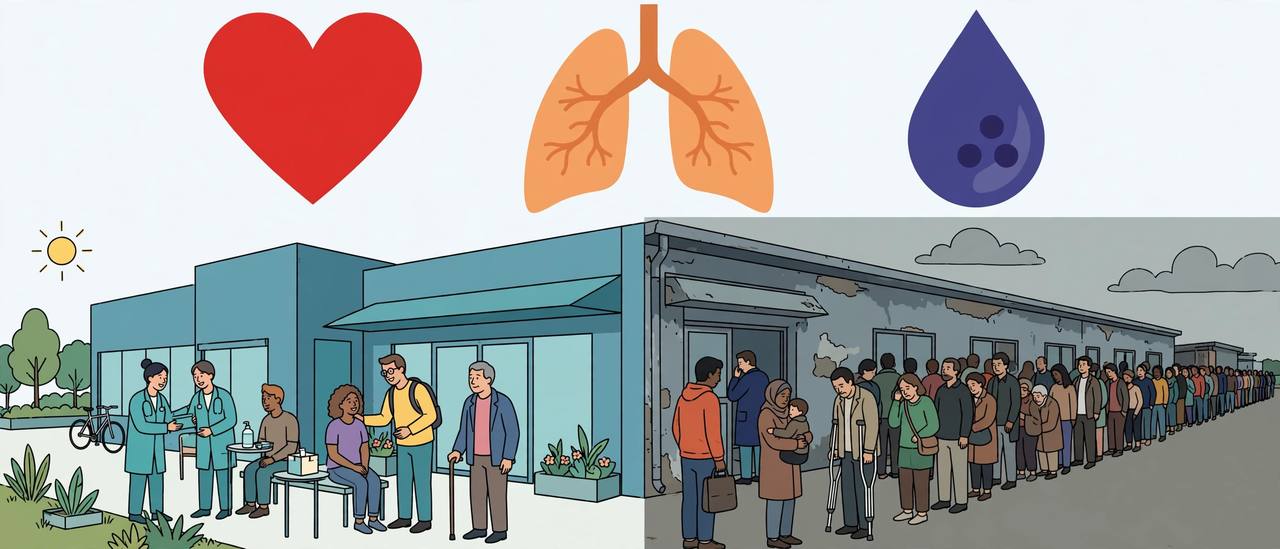
The World Health Organization on Tuesday published 'State of inequality: noncommunicable diseases and their risk factors', its most comprehensive global assessment of how chronic diseases are distributed within countries. Drawing on ten years of national data collected between 2013 and 2022, the report examines four major diseases — cancer, cardiovascular diseases, chronic respiratory diseases and diabetes — and the main risk factors behind them, including tobacco and alcohol use, obesity, unhealthy diets, insufficient physical activity and air pollution.
The scale of the problem is vast. Noncommunicable diseases account for about three-quarters of all deaths worldwide and eight of the ten leading causes of death, with cardiovascular diseases the biggest killer by far, claiming almost 20 million lives a year. The report tracks how disease burden, prevention and care differ by age, gender, economic status, education, place of residence, disability status, employment and migration status.
Its central finding is that socioeconomic status influences health at every stage — from first exposure to risk factors, through diagnosis and treatment, to long-term management of a condition. In low- and middle-income countries, less-educated populations suffer higher rates of hypertension and diabetes, the report found.
The gaps are stark for women and for rural communities. Cervical cancer screening rates are very low among the poorest and least-educated women; tobacco use remains higher among less-educated men than among more educated men; and people in rural areas have significantly more limited access to hypertension diagnosis and cancer screening than those in cities.
'This is the first effort to systematically measure inequalities in NCDs and their risk factors on a global scale,' said Ahmad Reza Hosseinpoor, who leads the WHO's health inequality monitoring team. 'The findings show which populations are being left behind.' Alongside the report, the WHO published an advocacy brief, 'The hidden inequalities behind noncommunicable diseases: from evidence to action', urging governments to use inequality data to target prevention and care at the groups facing the greatest disadvantage.
Sources: World Health Organization, 'State of inequality: noncommunicable diseases and their risk factors', published 20 October 2026 (who.int); MedicalXpress, 'Inequality is major factor in impact of noncommunicable diseases: WHO', 20 October 2026.