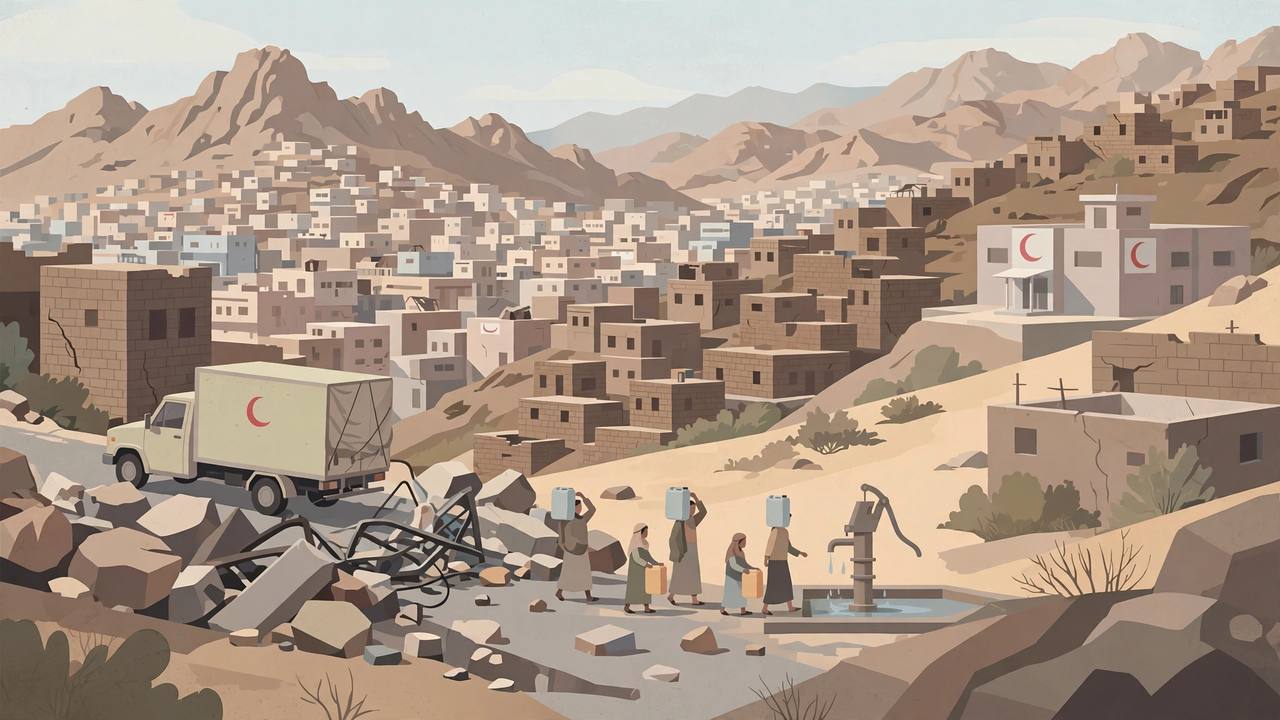
More than 250,000 people have now fled renewed fighting in Yemen, the United Nations said on Tuesday, citing particular concern for those sheltering in the southwestern city of Taiz and the wider governorate, where access is 'essentially blocked'. The warning, delivered at the UN press briefing in Geneva and reported by UN News, follows the resumption last month of clashes between Houthi fighters — formally known as Ansar Allah — and the internationally recognised government based in Aden, ending the relative calm brought by the 2022 truce.
The UN Human Rights Office said the encirclement of Taiz was alarming. 'The Houthis' closure of the only supply route linking Taiz to Aden is placing civilians at grave risk, blocking humanitarian aid and cutting off essential supplies,' UN High Commissioner for Human Rights Volker Türk said, appealing for humanitarian relief to be allowed into the city immediately. His spokesperson Thameen Al-Kheetan said commodity prices had multiplied, leaving many people without food or other basic necessities, and that civilians wishing to leave must be allowed to do so freely and safely. UN News reported that 32 civilians have been confirmed killed across the governorate, including women and children, and warned of a rising risk of death and injury as fighting moves closer to densely populated areas of the city.
'Taiz is certainly the number one concern at the moment in an ocean of concerns,' said Akhil Iyer, UNICEF's representative in Yemen, briefing journalists from Aden. Since the latest escalation in September, an estimated 120,000 people — more than half of all those newly displaced across Yemen — had been displaced to Taiz, many arriving in overcrowded camps or communities with little or no food and almost no clean water, he said. UNICEF has screened more than 168,000 children in Taiz this year and found more than 52,000 acutely malnourished. Diesel shortages threaten to halt the water pumps serving an estimated three million people, the cost of trucked water has tripled since the escalation, and the World Food Programme says wheat flour stocks in affected areas of Taiz are nearly exhausted, in a governorate where 10 of its 16 districts were already classified at emergency levels of food insecurity.
The health system is close to breaking point, the agencies said. WHO spokesperson Tarik Jašarević said 12 hospitals in Taiz had approximately four days of fuel remaining, their oxygen cylinders were in 'daily deficit', and 115 of 127 essential medicines had stocks sufficient for about a week or less. Cholera was rising sharply across Yemen, he said, from 221 suspected cases in the week of 6–12 September to 673 in the week of 4–10 October, alongside more than 20,000 measles cases and 400 diphtheria cases. UNHCR spokesperson Matthew Saltmarsh said more than 250,000 people were displaced internally between 1 August and 17 October, that the agency had provided cash assistance to some 2,000 families and shelter to over 3,000 families, and that some 65,000 refugees and asylum-seekers in Yemen — most from Somalia and Ethiopia — also urgently need support.
For Punjabi and Indian readers, Yemen's slide matters beyond the map: the Red Sea and Gulf region hosts lakhs of Indian and Punjabi workers, and renewed fighting there threatens shipping, oil supplies, flights and the remittances that connect the region directly to Punjab. The UN agencies called on all parties to protect civilians and children, safeguard water systems and health facilities, and allow humanitarian access, as required under international humanitarian law.
Sources: UN News; UN Geneva press briefing, 20 October 2026 (UNICEF, WHO, UNHCR and OHCHR statements); UNifeed / OHCHR statement on Taiz.