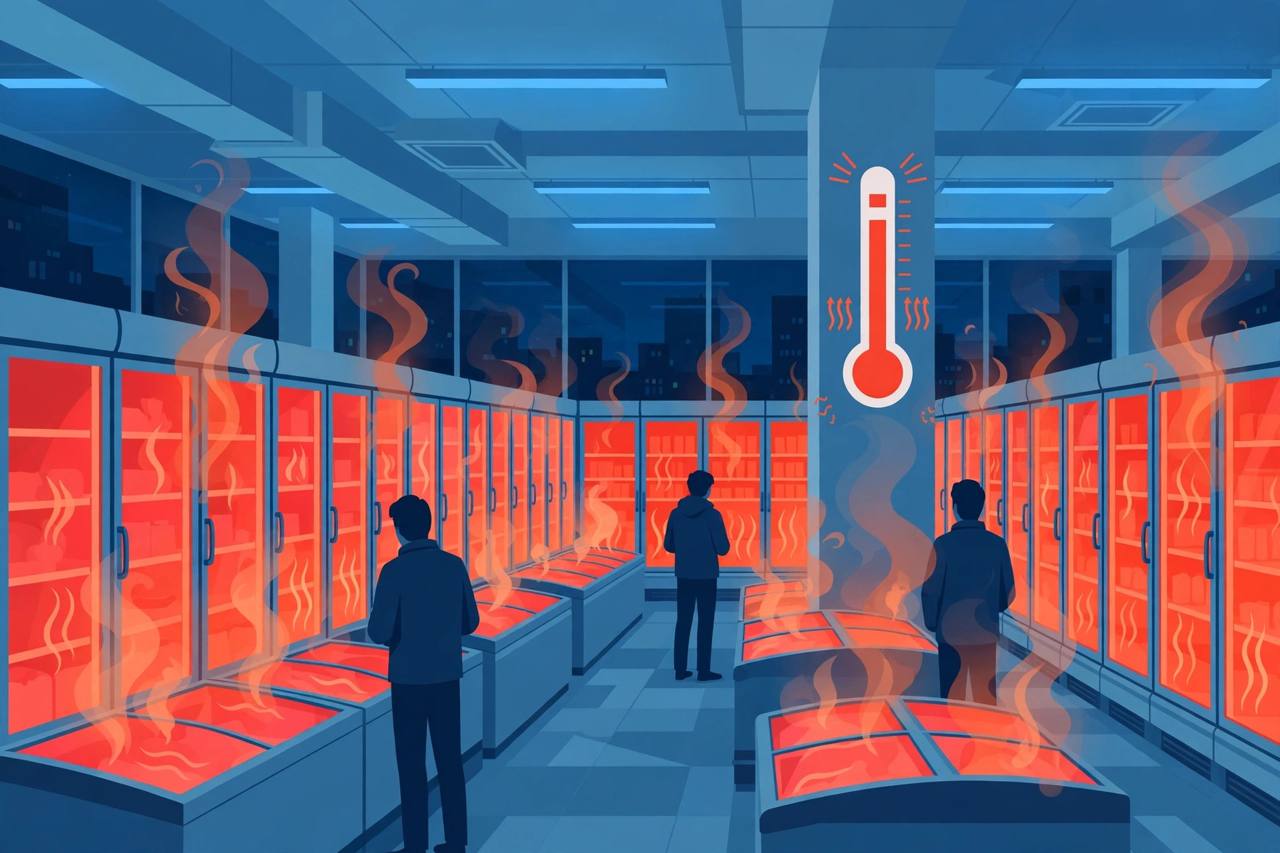
BRUSSELS/STOCKHOLM — Fridges and freezers in dozens of supermarkets in Belgium and Luxembourg were hit by an IT incident overnight, while Swedish grocers ICA and Coop reported similar temperature spikes, with one store blaming a cyberattack, Reuters reported on Monday. The wave follows a similar attack in France last month, in which police said hackers seized control of cooling units at hundreds of supermarkets, raising temperatures as high as 50 degrees Celsius (122 degrees Fahrenheit) and causing fires and food losses.
Source: Reuters, Nov 2
Ahold Delhaize said an “IT incident” had hit fridges and freezers in dozens of its supermarkets in Belgium and Luxembourg. The Delhaize chain realised on Monday that temperatures in its cooling systems had increased, spokesperson Sarah De Meester said. Stephan Moelans, chief executive of Belgian refrigeration company Sabcobel, which operates Delhaize's systems, told the Belga news agency the incident was a cyberattack in which the units' evaporators were switched to defrost mode. A spokesperson for Colruyt Group, which operates Spar stores in Belgium under franchise, said five shops had their fridge systems attacked.
Source: Reuters, Nov 2
Sweden and Estonia report the same pattern
The head of Sweden's national cybersecurity centre, John Billow, told Reuters it was working on several incidents involving refrigeration systems in grocery stores around Sweden. One ICA store said on social media that the temperature of its refrigerators and freezers had been “hacked” overnight and set to 50 degrees Celsius, and later said the store had since opened. At an ICA Baronen store in Stockholm, a notice said all the shop's freezers were broken due to a cyberattack; the store's sales manager said the attack happened at 2 a.m. and was noticed at 5:30 a.m. Privately held Coop told Swedish daily Aftonbladet that six of its stores had been affected. An Estonian supermarket chain was also affected, with temperatures set to 50 degrees, technology supplier Kitman Coldtech told public broadcaster ERR, Reuters reported.
Source: Reuters, Nov 2
Security Affairs, summarising the same Reuters reporting, said the attackers appear to have triggered the refrigeration systems' forced defrost function remotely in continuous mode, and noted that Delhaize said about 40 of its Belgian stores were affected. Ahold Delhaize had also reported a cybersecurity incident to Dutch police last month after detecting suspicious activity in its infrastructure, Reuters reported.
Source: Security Affairs; Reuters, Nov 2
Awaaz Punjab reported the first wave in October, when France said about 700 supermarket stores were hit after hackers turned fridges into ovens — the attack this new wave closely mirrors. Read the France fridge-attack report
What is solid
- Fridges and freezers in dozens of stores in Belgium and Luxembourg and in stores in Sweden overheated overnight on Monday — confirmed by Ahold Delhaize, Colruyt, ICA and Coop and reported by Reuters.
- In Sweden, one ICA store said its units were set to 50°C, Coop said six stores were affected, and Sweden's national cybersecurity centre said it was working on several refrigeration incidents.
What is only claimed
- Whether every incident was a cyberattack is not officially settled: Ahold Delhaize calls its case an “IT incident” under investigation, while refrigeration operator Sabcobel called it a cyberattack and a Swedish store blamed hackers. No group has claimed responsibility and no attacker has been identified.
What happens next: the chains are investigating, and the pattern — the same defrost-mode trick used in France in October, now across Belgium, Luxembourg, Sweden and Estonia — underlines how internet-connected cold-chain controls in ordinary shops have become an attack surface. For Punjabi and Indian families shopping and working in European supermarkets, the immediate cost is the one shoppers saw in France: spoiled food thrown away, some stores closing while units are checked, and higher losses for the chains.
Source: Reuters; Security Affairs, Nov 2