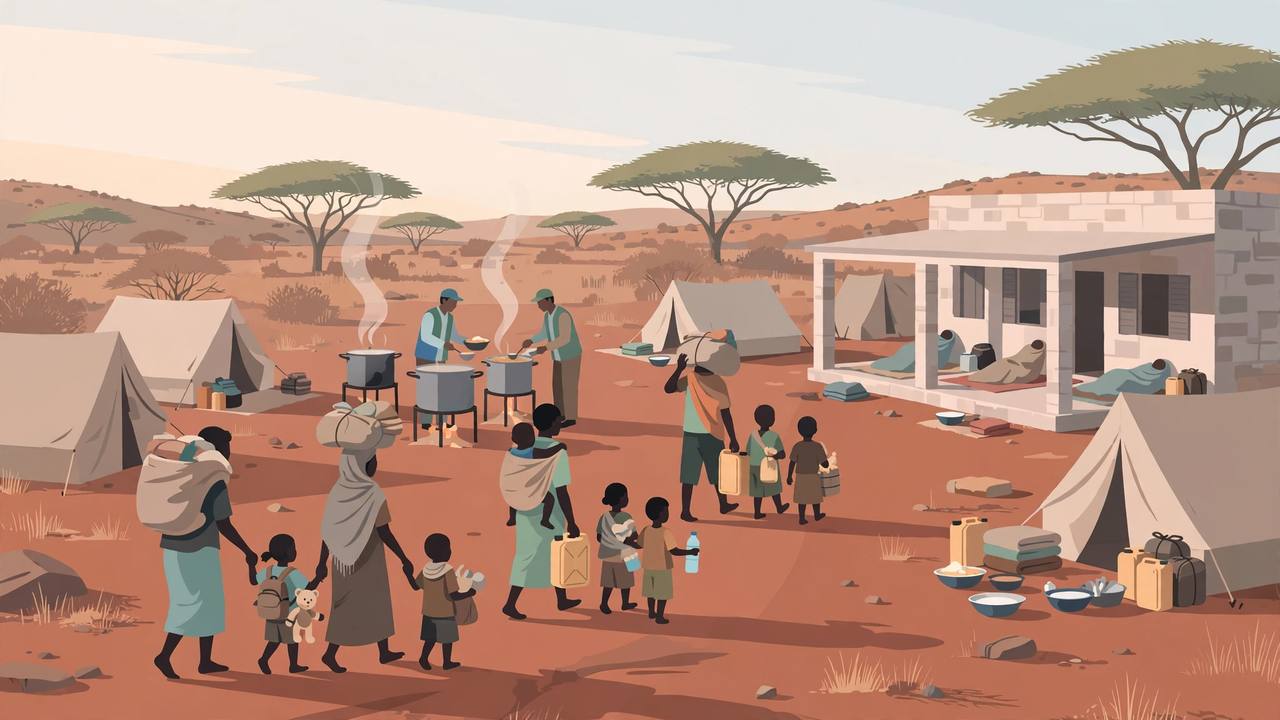
The United Nations has released emergency money for the Moyale displacement crisis on the Kenya-Ethiopia border. UN Emergency Relief Coordinator Tom Fletcher announced on Friday, November 6, that he had allocated $3 million from the UN Central Emergency Response Fund (CERF) to help humanitarian partners urgently deliver life-saving food, water, shelter and health care to displaced families in northern Kenya, The Eastleigh Voice and People Daily both reported. "Intercommunal violence in southern Ethiopia has forced nearly 50,000 people to flee into Kenya," Fletcher said in a statement announcing the allocation.
This story follows the October influx that Awaaz Punjab reported as it built up: fighting that began around Moyale in mid-to-late October drove families across the border into Moyale in Kenya's Marsabit County, and by October 28 the UN-cited figure had reached about 36,000 people. The new funding decision is the latest development in that same emergency — not a new exodus — and the arrival total has since risen to nearly 50,000.
Source: People Daily, Nov 7 2026 — UN allocates Ksh330M as Ethiopia violence forces nearly 50K into Kenya
Awaaz Punjab's earlier report on the influx, when the UN figure stood at about 36,000 people, is here: 36,000 flee Ethiopia's Moyale fighting into Kenya, UN says
Where the families are, and what they need
According to the IOM, about 50,000 people had crossed into Kenya by October 29, and authorities and humanitarian agencies warned the number could rise as insecurity persisted; the arrival figures remain subject to verification as registration and assessments continue. Many of those fleeing are women and children. Some families are being hosted by relatives and host communities in Moyale, while others are sheltering in schools and other public facilities. The immediate needs are food, safe drinking water, emergency shelter, health care, sanitation and protection services, both outlets reported.
Source: People Daily, Nov 7 2026; The Eastleigh Voice, Nov 7 2026
UNHCR, the UN refugee agency, has deployed an emergency team to Moyale and is working with the Government of Kenya — through the Department of Refugee Services — alongside IOM, UNICEF, the World Food Programme, the Kenya Red Cross Society and county authorities. UNHCR said it is mobilising emergency relief supplies, including essential household items and temporary shelter materials, to support nearly 12,000 people initially, with efforts under way to scale up assistance as needs grow.
Source: UNHCR statement via UN Refugees, Nov 4 2026; People Daily, Nov 7 2026
A Punjabi aid kitchen on the ground
Among the relief efforts under way in Moyale is one with a direct Punjabi connection: Khalsa Aid International, the UK-based Sikh humanitarian charity, said in a video posted on November 7 that its volunteers travelled about 800 kilometres to Moyale and, working alongside Kenya Red Cross staff, are running a hot kitchen serving breakfast, lunch and dinner at a shelter housing more than 5,000 displaced people — about 70 percent of them women and children, the charity said. That is Khalsa Aid's own account of its mission; the wider funding and arrival figures above come from the UN agencies and the Kenyan outlets cited.
Source: Khalsa Aid International, Instagram, Nov 7 2026 — Moyale humanitarian mission video
Security on the Kenyan side, and why people fled
Kenya has heightened security along its northern border. Inspector-General of Police Douglas Kanja visited Moyale on November 6 and assured residents that surveillance and patrols had been strengthened to prevent the violence from spilling into Kenyan territory, both outlets reported; Kenyan reporting on the crisis says three Kenyans have been killed and more than 20 injured since the clashes erupted on the Ethiopian side. The violence reflects longstanding tensions involving communities in Ethiopia's Oromia and Somali regional states: the latest escalation began in October, when a Somali regional administration office opened and its flag was raised in a disputed locality in the twin border town, according to the conflict monitor ACLED as cited in Kenyan coverage.
Source: The Eastleigh Voice, Nov 7 2026; People Daily, Nov 7 2026
What is solid
- UN Emergency Relief Coordinator Tom Fletcher allocated $3 million from CERF on Nov 6 for the Moyale response — reported by both The Eastleigh Voice and People Daily, quoting Fletcher's statement.
- About 50,000 people had crossed from Ethiopia into Kenya by Oct 29, according to the IOM via both outlets; the figure remains subject to verification as registration continues.
- UNHCR, UNICEF, IOM and WFP are jointly seeking $8.9 million to support up to 50,000 people for three months, with contingency planning for up to 80,000 arrivals.
What is only claimed
- The Kenyan-shilling value of the $3 million: The Eastleigh Voice gives Sh389.85 million, while People Daily gives KSh330 million at a stated rate of KSh110 to the dollar. Awaaz Punjab reports the dollar figure, which both outlets agree on, and does not adopt either shilling conversion.
- Exact arrival totals are still being verified through registration, so the ~50,000 figure is an estimate by local authorities and the IOM, not a final count.
What happens next: the CERF money is meant to move quickly through aid partners already working in Moyale, while the four agencies' $8.9 million appeal will decide whether food, shelter and health support can be sustained for three months — and whether the response can grow if arrivals approach the 80,000 contingency figure. For the families in Moyale's schools and shelters, and for the Marsabit host communities sharing limited water and services with them, the deciding factors remain the security situation across the border in Ethiopia and how fast the pledged money reaches the ground.