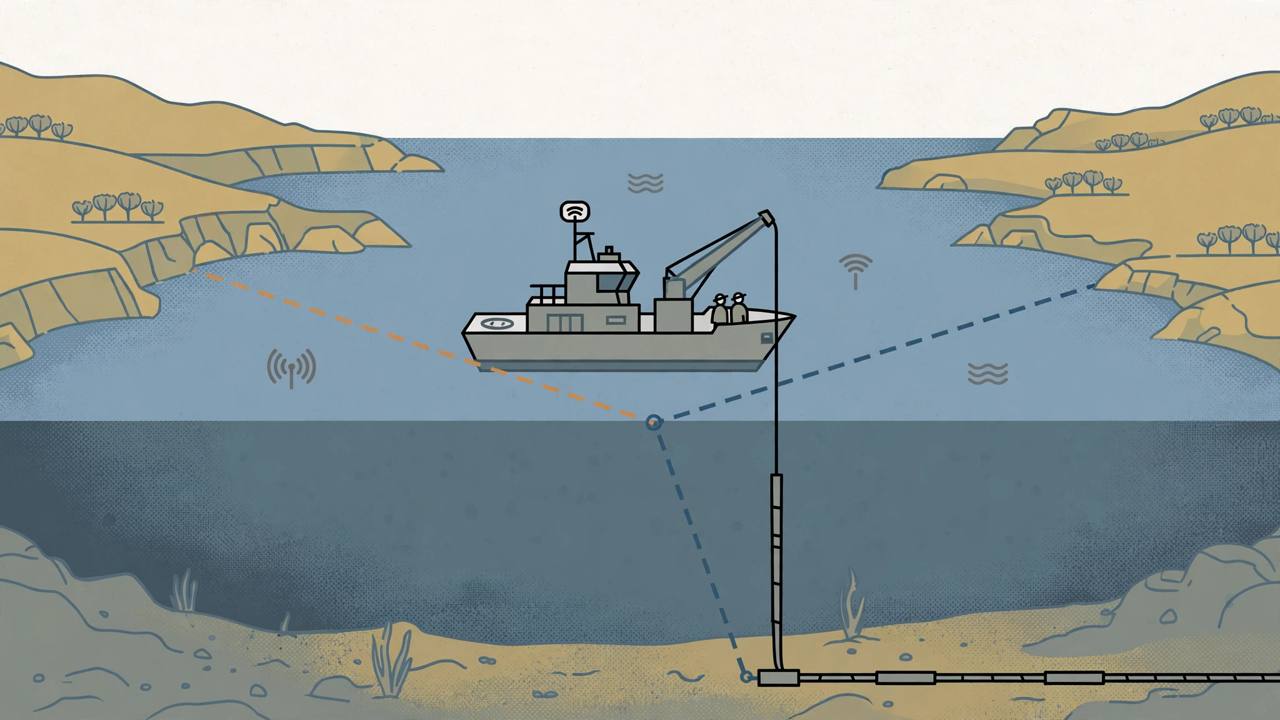
ATHENS / ANKARA — Türkiye and Greece gave conflicting accounts on Saturday, November 7, of whether their dispute over seabed surveys for a €1.9 billion electricity cable linking Greece and Cyprus had been settled, one day after the two sides traded rival navigational warnings in the Eastern Mediterranean. Turkish Foreign Minister Hakan Fidan told the Greek daily Kathimerini that "everything is normal, everything is fine," and Turkish diplomatic sources told the newspaper the disagreement over the maritime notices had been resolved. Fidan offered no details of any agreement, and no agreed terms, exchanged letters or contact channel for the survey vessel have been published by either side.
Source: Turkish Minute (Nov 7), reporting Kathimerini
Athens disputed the implication that anything had changed. Greek diplomatic sources told the Proto Thema news website on Saturday that Greece alone has the authority to issue the relevant permits and will continue acting under international law, and that how Türkiye handles its own notices internally is a matter for Ankara. Türkiye has not withdrawn its continental-shelf claim, and Greece has not accepted any Turkish permit requirement — so the underlying question of who may authorise work in the contested waters remains open, whatever was settled about the notices.
Source: Bosphorus News strategic brief (Nov 7)
How the row flared on November 6
The flare-up began on Friday, November 6, when Greece authorised marine surveys and cable-laying work for the Great Sea Interconnector (GSI) and issued a navigational warning — a NAVTEX — for the work. Greece's Foreign Ministry said Foreign Minister George Gerapetritis signed the permit after an interministerial committee gave a favourable opinion, following an application by French cable maker Nexans on behalf of the project company. The Greek notice, HA15-1411/26, covers planned operations by the French-flagged vessel Abeille Marengo through March 6, 2027, and the Republic of Cyprus issued its own Larnaca notice 345/26 for a subsequent period in waters it claims.
Source: Greece Ministry of Foreign Affairs, via Bosphorus News (Nov 6)
Türkiye answered the same day with Antalya counter-NAVTEX 1105/26. In Foreign Ministry statement No. 214, Ankara said the surveys lacked the consent required for waters within the continental shelf Türkiye registered with the United Nations on March 18, 2020, described the planned marine research by the French-flagged vessel as unauthorised, and asserted that it had cancelled the Greek and Cypriot navigational warnings. The ministry demanded that research in the areas it claims be coordinated with Turkish authorities. Gerapetritis had said in a November 4 interview that Greece would neither seek Turkish permission nor formally notify Ankara.
Source: Türkiye Ministry of Foreign Affairs statement No. 214 (Nov 6), via Bosphorus News
The ship, the cable and the seabed underneath both
The Abeille Marengo has been waiting at Heraklion, the port on Crete, and Greek reports say its departure is now expected no earlier than Monday, November 9 — later than the weekend start indicated earlier — heading for waters near Kasos, the Greek island south of Karpathos, where the remaining survey work for the cable route lies. Neither the Greek permit nor the notices confirm that surveys have resumed or that any cable has been laid this week; the published notices concern proposed operations. What the vessel actually does next — and whose instructions it follows in the contested area — is the practical test of the two governments' competing accounts.
Source: Turkish Minute (Nov 7); Bosphorus News (Nov 7)
The GSI is meant to end Cyprus's energy isolation by connecting its grid to Greece's through Crete, with a planned later extension to Israel, and it has been repeatedly delayed by financing disagreements as well as by the maritime dispute. The seabed it must cross is claimed under two incompatible legal maps: the controversial 2019 Türkiye-Libya maritime agreement, which Athens rejects, and the Greece-Egypt maritime memorandum that followed it. Greece and Türkiye confronted each other sharply at the UN Security Council over the same boundary dispute only the previous week, and in July 2024 Turkish warships shadowed a survey vessel working off Kasos. A separate submarine telecom project, the East to Med Corridor, drew its own Turkish counter-notice the same week — Ankara contested that notice too, while having previously recorded consent to specified surveys by the same vessel in areas it claims.
Source: Turkish Minute (Nov 7); Bosphorus News (Nov 7)
The cable row unfolded against a busy diplomatic week on Cyprus. UN personal envoy Maria Angela Holguin is due to bring Turkish Cypriot leader Tufan Erhurman and Republic of Cyprus President Nikos Christodoulides together on November 9, with possible new crossing points between the two communities on the agenda, and Nicosia separately condemned Fidan's November 6 visit to northern Cyprus as illegal. In the Aegean, figures attributed to the Hellenic National Defence General Staff recorded six Turkish unmanned aircraft on November 7, with eight alleged breaches of flight-information rules and four alleged incursions into Greek national airspace — Greek military figures, reported as Athens' account, with no armed aircraft or engagement reported and no established connection to the cable surveys.
Source: Bosphorus News strategic brief (Nov 7)
What is solid
- Greece authorised the GSI surveys on November 6 and issued NAVTEX HA15-1411/26 for the Abeille Marengo's planned operations through March 6, 2027; Cyprus issued Larnaca notice 345/26 (Greek and Cypriot authorities, via Bosphorus News).
- Türkiye's Foreign Ministry, in statement No. 214 and counter-NAVTEX 1105/26, objected that the surveys fall inside the continental shelf it registered with the UN on March 18, 2020, said they lacked its consent, and asserted it had cancelled the Greek and Cypriot notices.
- Fidan told Kathimerini on November 7 that "everything is normal, everything is fine," and Turkish diplomatic sources described the notice dispute as resolved (Kathimerini, via Turkish Minute).
- Greek diplomatic sources said the same day that Greece alone licenses the work and will continue under international law (Proto Thema, via Turkish Minute and Bosphorus News).
What is only claimed
- Whether anything was actually 'resolved': Ankara's account says the notice dispute is settled; Athens disputes that its authority changed in any way, and no agreed terms have been published by either side.
- Who has the legal right to authorise surveys in the survey area: Türkiye rests on its 2020 UN-registered continental-shelf claim and the 2019 Türkiye-Libya agreement; Greece rests on its own licensing and the Greece-Egypt memorandum. Neither side accepts the other's map.
What happens next
The next evidence will be physical, not verbal: whether the Abeille Marengo leaves Heraklion on Monday as Greek reports expect, where it works, and whether Türkiye issues fresh notices or vessels in response. A narrower understanding limited to how Athens notifies Ankara of survey work remains possible, but it would not settle the continental-shelf dispute itself, which has stalled the €1.9 billion cable before and sits underneath every East Mediterranean energy project in the contested waters — including Cyprus's gas plans and the separate Türkiye-northern Cyprus pipeline that Nicosia challenged at the UN in a letter that resurfaced in this week's coverage. For now, the cable that is supposed to plug Cyprus into Europe's grid is waiting in a Cretan port while two NATO allies argue over whose permission it needs to sail.