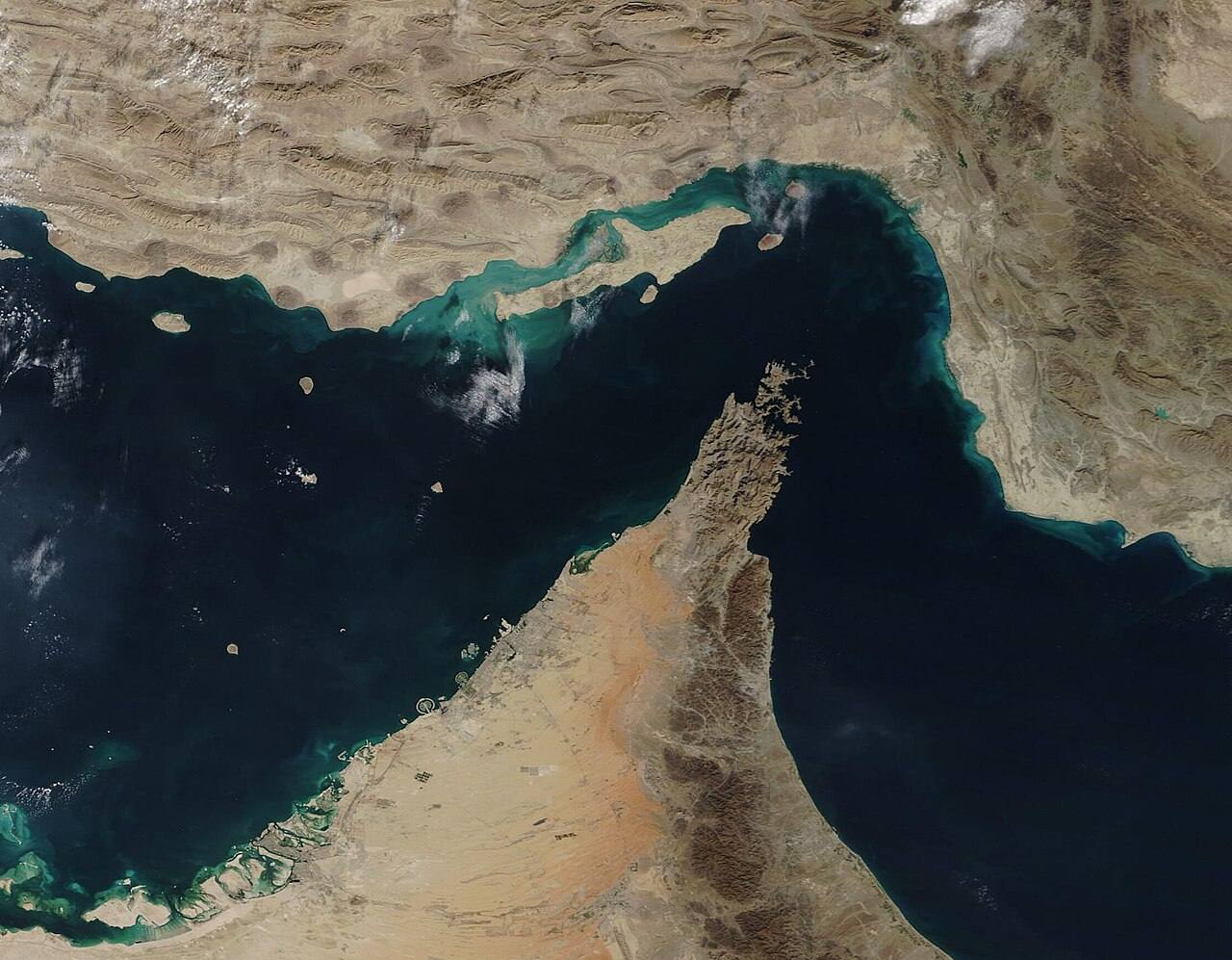
Navigational aid systems in the south of the Strait of Hormuz were destroyed and no unauthorised vessels transited the maritime route overnight, an unnamed Revolutionary Guards Navy official told Iranian state media on Monday, November 9, Reuters reported from Dubai.
Source: Reuters via DevDiscourse
That single sentence is the whole of the official claim as reported. The unnamed official did not say who destroyed the navigation aids, did not specify whether they were physical markers, electronic systems or another kind of maritime infrastructure, and did not say when the damage occurred. The statement also gave no figures for how many vessels did transit the strait overnight, and it did not say that all shipping had stopped — only that no vessel Tehran considers unauthorised had crossed.
Source: Reuters via 985 The River
This is an Iranian official's claim, carried by Iranian state media and reported by Reuters. The destruction of the navigation aids has NOT been independently verified, and the Reuters report carried no comment from the US military, the UK Maritime Trade Operations agency or any shipping company. Awaaz Punjab is reporting that the claim was made — not that the destruction is established fact.
A weekend of competing claims in the strait
The statement follows a weekend in which the Guards said oil tankers had struck mines and caught fire after using what Iran calls unauthorised southern routes through the strait — claims Reuters said it could not confirm. The United States, for its part, confirmed a separate, documented action: US Central Command said an American aircraft fired precision munitions at the stern of the St. Kitts-flagged merchant vessel M/V Huda on Saturday, November 7, disabling it in the Gulf of Oman after it tried to break the US naval blockade of Iran. A tanker was also reported, by the UK Maritime Trade Operations agency, to have been hit by an unknown projectile while transiting outbound through Hormuz over the weekend.
Source: Reuters; Bloomberg via Energy Connects
On Sunday, Iraq said it had reached an understanding with the US to move its crude exports through a shipping lane near Oman. Read: Iraq-US Hormuz oil exports via the Oman lane
Why the strait matters
The Strait of Hormuz, between Iran and Oman, is the world's most important oil chokepoint: roughly one-fifth of global oil and gas shipments passed through it before the war that began on February 28. US Energy Information Administration figures cited in market reporting put Hormuz oil flows at 21.6 million barrels a day in the last quarter of 2025, falling to 4.9 million barrels a day in the second quarter of 2026 — yaani flows fell to less than a quarter of their pre-war level. Any damage to the navigation systems that guide tankers through the narrow, mined and contested waterway raises the risk for every crew and cargo still using it.
Oil, talks and the Gulf workforce
Markets, for now, took the claim in stride. Brent crude fell 64 cents, or 0.64%, to $97.67 a barrel on Monday after US President Donald Trump told CNN on Sunday that fresh US strikes on Iran were 'highly unlikely' as long as talks to end the conflict progress — even as he said the US could knock down 38 Iranian bridges 'in literally one hour' if a strong agreement is not signed. Qatar, which is mediating between Washington and Tehran, has denied reports that the talks have failed, and Qatar's prime minister was due at the White House on Monday for the Iran mediation effort. For the lakhs of Punjabi and Indian workers across Saudi Arabia, the UAE, Qatar, Kuwait, Oman and Bahrain, the state of the strait is not an abstraction: it decides oil prices, flight routes, port work and the remittances their families depend on — which is why every verified development there, and every unverified claim clearly labelled as one, matters to this audience.
Source: Reuters via Business Today; Awaaz Punjab live coverage
Oil fell at Monday's open as Trump's remarks eased strike fears. Read: Oil falls at Monday open, Brent at $97.67
What is solid
- An unnamed Revolutionary Guards Navy official told Iranian state media that navigation aids in the south of the strait were destroyed and no unauthorised vessel transited overnight — reported by Reuters on November 9
- The US confirmed its forces disabled the merchant vessel M/V Huda in the Gulf of Oman on November 7 for trying to break the naval blockade
- Brent crude eased to $97.67 a barrel on Monday, Reuters reported
What is only claimed
- That navigation aid systems were in fact destroyed — no independent confirmation, no identified perpetrator, equipment or time in the Iranian statement
- Iranian claims over the weekend that tankers hit mines and caught fire on unauthorised routes — Reuters said it could not confirm them
- That no unauthorised vessel crossed overnight — this is Tehran's own characterisation of traffic in a waterway where the two sides dispute who may authorise passage
What happens next
Watch for three things: any statement from US Central Command or UK Maritime Trade Operations confirming or disputing damage to navigation aids; tanker-tracking evidence of whether transits through the southern strait actually paused; and the outcome of Monday's Qatar mediation contact at the White House. Until at least one of those lands, the navigation-aids claim stays exactly what it is — an allegation from one side in a contested waterway.