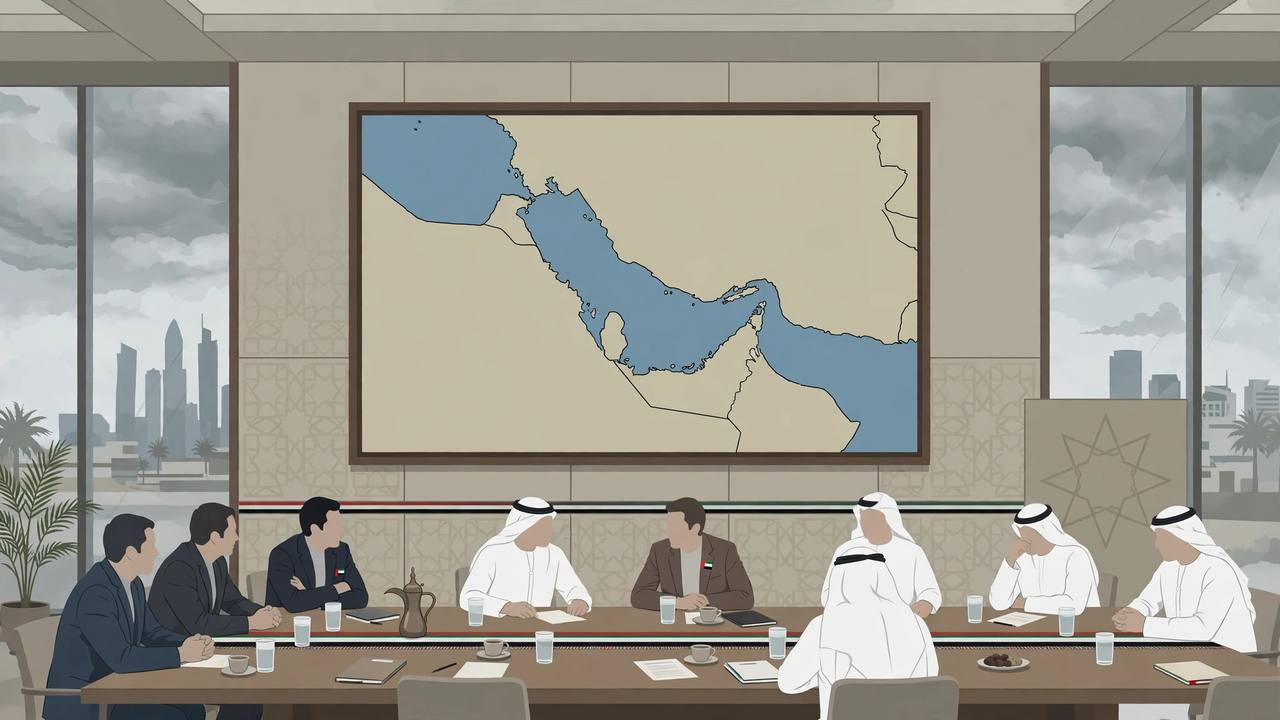
ABU DHABI — The United Arab Emirates' most senior diplomatic voice has warned that the Gulf and the wider region face a long period of uncertainty, because a comprehensive political settlement between the United States and Iran to end the more than eight-month war now appears difficult to reach. Anwar Gargash, diplomatic adviser to the UAE president, delivered the assessment on Monday, November 9, in an address to the Abu Dhabi Strategic Debate, a geopolitical conference in the Emirati capital, Reuters reported.
Source: Reuters, Nov 9 2026
"We should … prepare for a long period of uncertainty in which neither a decisive resolution nor stable regional order can be taken for granted," Gargash said, in the clearest public signal yet from a Gulf capital that neither a quick end to the war nor a return to the old regional order should be expected soon.
Source: Reuters, Nov 9 2026
Defence, deterrence and partners — the UAE's answer
Gargash said the consequences of the US war with Iran "may persist for a long time", and that this would require the UAE to invest in its "defensive capabilities, the maintenance of credible deterrence, and stronger international security partners". He said the war had demonstrated the importance of the UAE's defence and security cooperation with Washington, and he thanked France, Israel, Greece, Egypt and India for their "support and solidarity" — noting that some countries helped defend the UAE against Iranian attacks earlier this year, when Tehran retaliated against Gulf states.
Source: Reuters, Nov 9 2026
He also restated a foundational Emirati position: the UAE opposed the US war with Iran from the outset. That opposition has not stopped Abu Dhabi from hardening its own defences, and Monday's remarks framed the Emirates' policy as a twin track — build deterrence for a long confrontation, while keeping diplomacy open for as long as it takes.
Source: Reuters, Nov 9 2026
Diplomacy will continue — some of it 'transactional'
A prolonged period of regional uncertainty would require sustained diplomatic engagement by the UAE with Iran and other regional and international partners, Gargash said. Some of that engagement in the near term might be transactional by necessity, he added, without specifying what that might entail. The remark suggests Abu Dhabi expects step-by-step, interest-based dealings with Tehran — on shipping, security incidents and de-escalation — rather than one grand bargain, while the comprehensive settlement he described remains out of reach.
Source: Reuters, Nov 9 2026
Gargash's warning matches the message from Washington a day earlier, when Secretary of State Marco Rubio said he did not believe a breakthrough in diplomatic efforts to end the war was imminent and called Iran's demands outrageous. Read: Rubio says no breakthrough imminent on Iran talks
What is solid
- Anwar Gargash told the Abu Dhabi Strategic Debate on Monday that the region should prepare for prolonged uncertainty and that a comprehensive US-Iran political settlement appears difficult — reported by Reuters from Abu Dhabi.
- Gargash said the UAE opposed the US war with Iran from the outset, would invest in defensive capabilities, credible deterrence and stronger security partners, and thanked France, Israel, Greece, Egypt and India for support; some of those countries helped defend the UAE against Iranian attacks earlier this year.
- On November 1 at Manama, Gargash had said the UAE was 'braced for the worst' amid fears the US was on the verge of striking Iran and Tehran would retaliate against Gulf states — the Abu Dhabi remarks are a new, separate address, not a repeat.
What is only claimed
- Whether any near-term US-Iran understanding is possible remains disputed between the parties: Washington says talks continue but no breakthrough is imminent, Tehran has put its own proposals on the table, and Gulf officials quoted in this story describe only their assessment that a comprehensive settlement looks difficult — no side has declared the diplomatic track closed.
Why it matters for Punjabi and Indian workers in the Gulf
The UAE and its Gulf neighbours host lakhs of Punjabi and Indian workers, whose jobs, remittances and safety are directly tied to how this war ends. A settlement that stays out of reach means the risks those workers have lived with through 2026 — missile and drone alerts, disrupted shipping through the Strait of Hormuz, pressure on oil-linked economies and on flights in and out of the Gulf — do not lift quickly. Gargash's emphasis on sustained engagement with Tehran, even if transactional, is the part of Monday's speech most directly tied to their security: it signals Abu Dhabi intends to keep channels to Iran open precisely to prevent the kind of retaliation that reached Gulf cities earlier this year.
What happens next
No new talks round was announced alongside Gargash's remarks. The diplomatic calendar still runs through Washington and the mediators working the US-Iran file, and Rubio's Sunday assessment — no breakthrough imminent — now has a Gulf echo. For the region's governments, Monday's message was preparation, not panic: invest in defence, deepen partnerships, keep talking to Tehran, and plan for an unsettled order that, in Gargash's words, cannot be taken for granted either way.