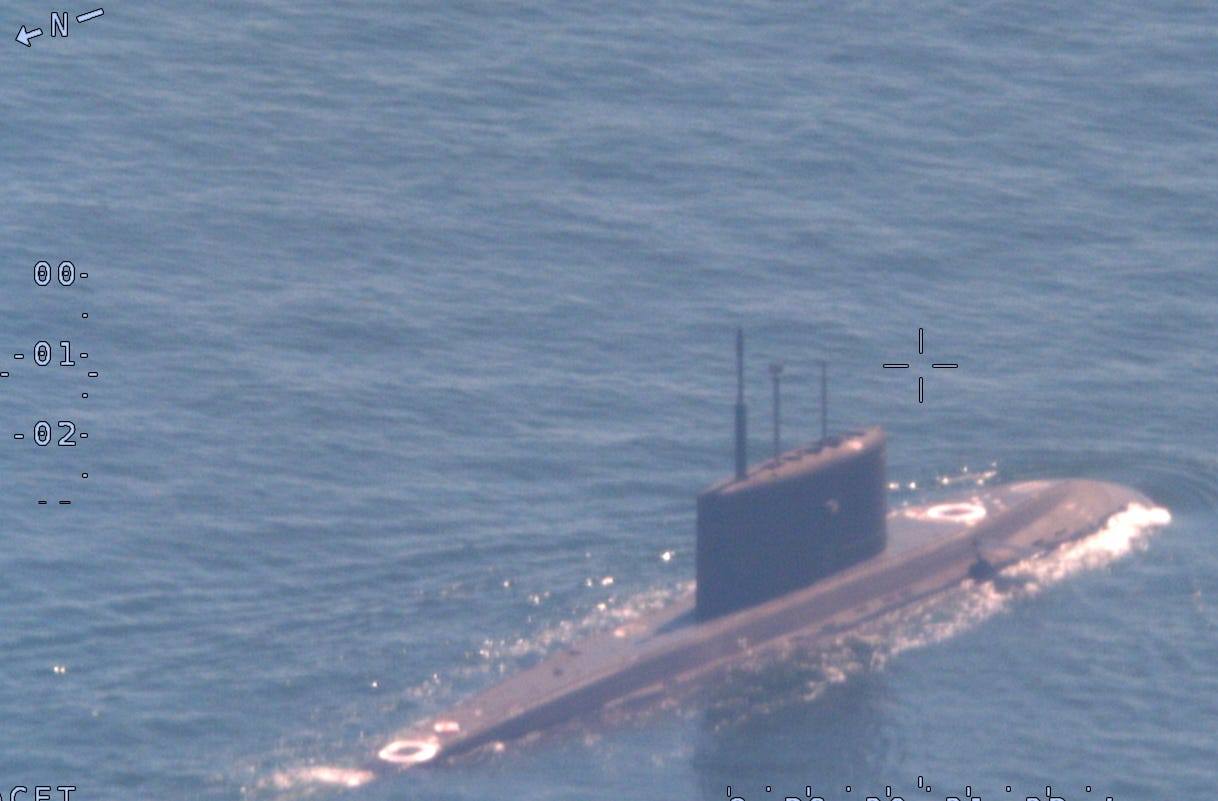
LONDON — The United Kingdom and nine Northern European allies are preparing to step up military operations against Russian submarines suspected of spying on critical underwater infrastructure across the North Atlantic, Arctic and Baltic Sea. According to the Financial Times, ten NATO members — Britain, Denmark, Estonia, Finland, Iceland, Latvia, Lithuania, the Netherlands, Norway and Sweden — will strengthen naval, air and ground operations through the UK-led Joint Expeditionary Force (JEF) to closely monitor Russian submarine movements. Member states are expected to formalise the arrangement on Tuesday, November 10, aboard the British aircraft carrier HMS Prince of Wales, expanding their existing military cooperation rather than forming a new alliance.
Source: Financial Times, Nov 8 2026, via Mazech
The joint effort responds to increased Russian naval activity near the undersea communication cables, pipelines and shipping routes that link Europe, North America and Africa — the fibre-optic lines that carry the world's internet traffic, financial transactions and military communications between continents. It follows reports that US, British and Norwegian forces disrupted a suspected Russian operation: a Reuters investigation published in September revealed that the three allies had confronted Russian deep-sea vessels near Norway's Svalbard archipelago, where, according to two Western officials, the Russian vessels were testing technology designed to disable undersea communication cables without leaving identifiable evidence. Allied forces disrupted the exercise and forced the Russian vessels to withdraw before it was completed; no undersea cables were damaged.
Source: Financial Times via Mazech; Reuters investigation, September 2026
'We see you' — the April submarine hunt
Britain's heightened vigilance stems from an operation in April 2026, when its military tracked three Russian submarines near critical undersea cables and pipelines in the North Atlantic. The vessels included an Akula-class attack submarine and two specialised submarines belonging to Russia's Main Directorate of Deep-Sea Research, known as GUGI. British Defence Secretary John Healey said Royal Navy warships and RAF surveillance aircraft monitored the submarines for more than a month, warning that the specialised vessels could survey underwater infrastructure in peacetime and sabotage it during a conflict. Addressing Russian President Vladimir Putin directly, Healey said: 'We see you, we see your activity over our cables and pipelines.'
Source: Financial Times via Mazech, Nov 9 2026; SSBCrack News, Nov 8 2026
The surface fleet is only part of the picture. UNITED24 Media reported that an inquiry conducted in October tracked 17 Russian fishing boats exhibiting more than 500 erratic or unusual patterns close to the submarine lines connecting the UK to continental Europe and America — the kind of slow, repeated passes over cable routes that Western navies associate with mapping, and potentially preparing to interfere with, the lines. Russia has not publicly responded to the JEF reports in the coverage so far, and Moscow has routinely denied Western accusations of sabotage planning in the past; those denials are part of the record, but no Russian statement on this specific pact had been reported by Monday morning.
Source: UNITED24 Media via Newsy Today, Nov 8 2026
'The most dangerous period I've known in my adult life'
In a recent interview with the Financial Times, Britain's Chief of the Defence Staff, Air Chief Marshal Sir Richard Knighton, acknowledged that the UK needed to 'catch up with our European allies' in responding to Russia, and described the wider security climate in stark terms: 'This is the most dangerous period I've known in my adult life.' Knighton has said a primary objective of the arrangement is holding back Russian submarines to prevent attacks on shipping in wartime. The pact is scheduled for signature aboard HMS Prince of Wales, the Royal Navy carrier currently docked in Oslo, Norway — itself a signal, since Norway last year bought British-built Type 26 frigates, a class designed specifically for anti-submarine warfare, to counter the underwater threat in the High North.
Source: Financial Times interviews, via Mazech and Newsy Today, Nov 8-9 2026
What is solid
- Ten NATO members will expand naval, air and ground cooperation through the existing UK-led Joint Expeditionary Force to monitor Russian submarines, with formalisation expected on November 10 aboard HMS Prince of Wales — reported by the Financial Times and carried independently by multiple outlets.
- In April 2026, Royal Navy warships and RAF aircraft tracked three Russian submarines — an Akula-class boat and two GUGI deep-sea research submarines — near North Atlantic cables and pipelines for more than a month (Defence Secretary John Healey, on record).
- A September Reuters investigation reported that British, Norwegian and US forces confronted Russian deep-sea vessels near Svalbard that Western officials said were testing cable-disabling technology; the vessels withdrew and no cables were damaged.
What is only claimed
- The claim that the Svalbard vessels were testing technology to disable cables 'without leaving identifiable evidence' comes from two unnamed Western officials cited by Reuters; Russia has not confirmed it and routinely denies sabotage allegations.
- No Russian government response to the JEF pact itself had been reported as of Monday morning, November 9; the pact also still awaits its formal signing on November 10.
What happens next
The ten defence ministers or their representatives are expected aboard HMS Prince of Wales on Tuesday to sign the expanded arrangement, after which the JEF — a framework that already pools the ten nations' forces for rapid deployment in Northern Europe — will fold submarine tracking, seabed surveillance and cable protection into its standing work across the North Atlantic, the Arctic and the Baltic. The practical test will be whether the allies put more anti-submarine aircraft, frigates and seabed sensors into the water on a permanent rotation, and how Moscow answers: Russian submarine activity has also reached the Mediterranean, where Algeria has hosted Russian vessels on at least three occasions for official naval engagements with no reported link to espionage, and melting Arctic ice is opening shipping routes that raise the stakes along Russian and Canadian waters alike. For readers in Canada and the Punjabi diaspora, the cables at the centre of this story are not abstract: they carry the internet traffic, bank transfers and remittances that move every day between North America, Europe and South Asia — which is why ten governments are now treating the seabed as a front line.