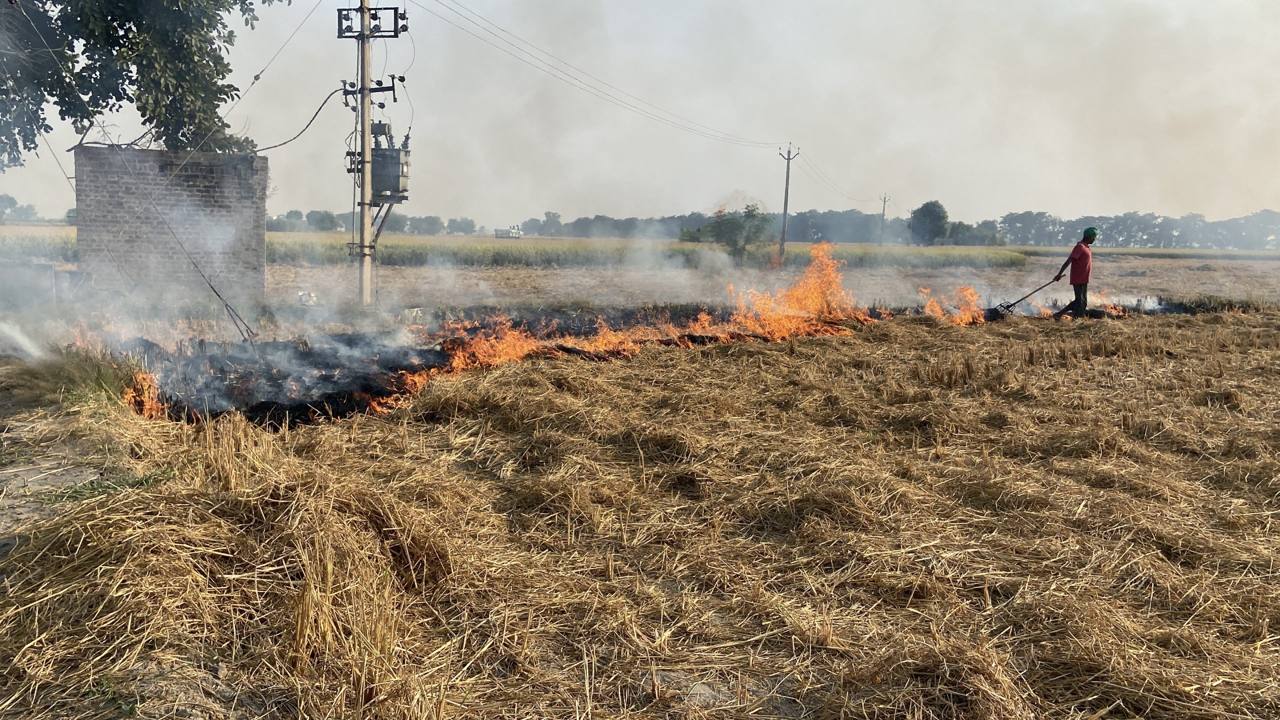
Chandigarh, November 9: Punjab recorded 1,152 incidents of stubble burning on a single day — Diwali, Sunday, November 8 — the sharpest one-day spike of this paddy season, according to monitoring data compiled under the Indian Space Research Organisation (ISRO) protocol and reported by India Today and Hindustan Times on Monday. The Diwali-day count took the season's total since September 15 to 4,459 incidents.
Source: India Today via News89
The new figure is a steep jump from the previous statewide tally reported a day earlier — 3,307 incidents through November 7 — and the Diwali count alone is nearly double the season's earlier single-day high of 584 fires on November 3. Read the earlier tally: 3,307 cases through November 7
The Commission for Air Quality Management (CAQM) said that, as of November 8, a total of 4,459 stubble-burning incidents had been recorded in the state. Physical inspections were carried out at 2,998 sites, and evidence of stubble burning was confirmed at 1,310 locations, the commission's figures show.
Source: CAQM via DevDiscourse
Tarn Taran still leads the districts
At the district level, Tarn Taran reported the highest number of incidents with 654, followed by Ferozepur with 592, Sangrur with 488, Bathinda with 406 and Patiala with 288, according to the CAQM report. Evidence of burning was found at 306 locations in Tarn Taran and 247 in Ferozepur. Reports based on the ISRO-protocol monitoring separately put Tarn Taran's incident count at 684; the district leads the tally under either count.
Fines imposed, about half recovered
Environmental compensation has been imposed in 1,228 cases, with fines totalling Rs 62.55 lakh levied, of which Rs 32.60 lakh — about 52 per cent — has been recovered so far. First Information Reports (FIRs) have been registered in 884 cases under Section 223 of the Bharatiya Nyaya Sanhita (BNS), 'red entries' have been made in the land records of 1,017 farms, and proceedings under Section 14 of the CAQM Act have been initiated against 18 officers.
Source: CAQM via NewKerala
The spike came as harvesting nears completion: according to the CAQM report, harvesting has been completed on 91.40 per cent of Punjab's total 32.87 lakh hectares of paddy area. Hindustan Times linked the rush to clear fields to Punjab Agricultural University's recommended wheat-sowing deadline of November 15, which leaves farmers a narrowing window to prepare their fields.
Air quality stays very poor in Punjab cities
Central Pollution Control Board readings cited in reporting on the spike put several Punjab cities in the very poor air-quality range, including Mandi Gobindgarh at AQI 399, Ludhiana at 313 and Jalandhar at 298, even as Delhi woke to severe air a day after Diwali.
BJP leader's 'conspiracy' claim, labelled
Delhi minister and BJP leader Kapil Mishra on Monday alleged — his claim, not an official finding — that about 1,200 stubble-burning incidents took place in Punjab on Diwali day, up from 125 locations on November 7, and termed it a 'conspiracy against farmers, against Diwali, against Delhi, against Punjab', speaking to ANI. He urged Chief Minister Bhagwant Mann to investigate the fires and file FIRs. The officially reported Diwali-day count is 1,152. No response from the Punjab government to Mishra's allegation had been reported at the time of publishing.
Source: ANI via DevDiscourse
What happens next: the CAQM has already reviewed the stubble situation with senior administrative and police officials from Punjab's districts and called for stronger monitoring and enforcement. With the season total now at 4,459 and the wheat-sowing window closing on November 15, the coming week will show whether the Diwali spike was a one-day peak or the start of a heavier late-season run.
Source: Jugti