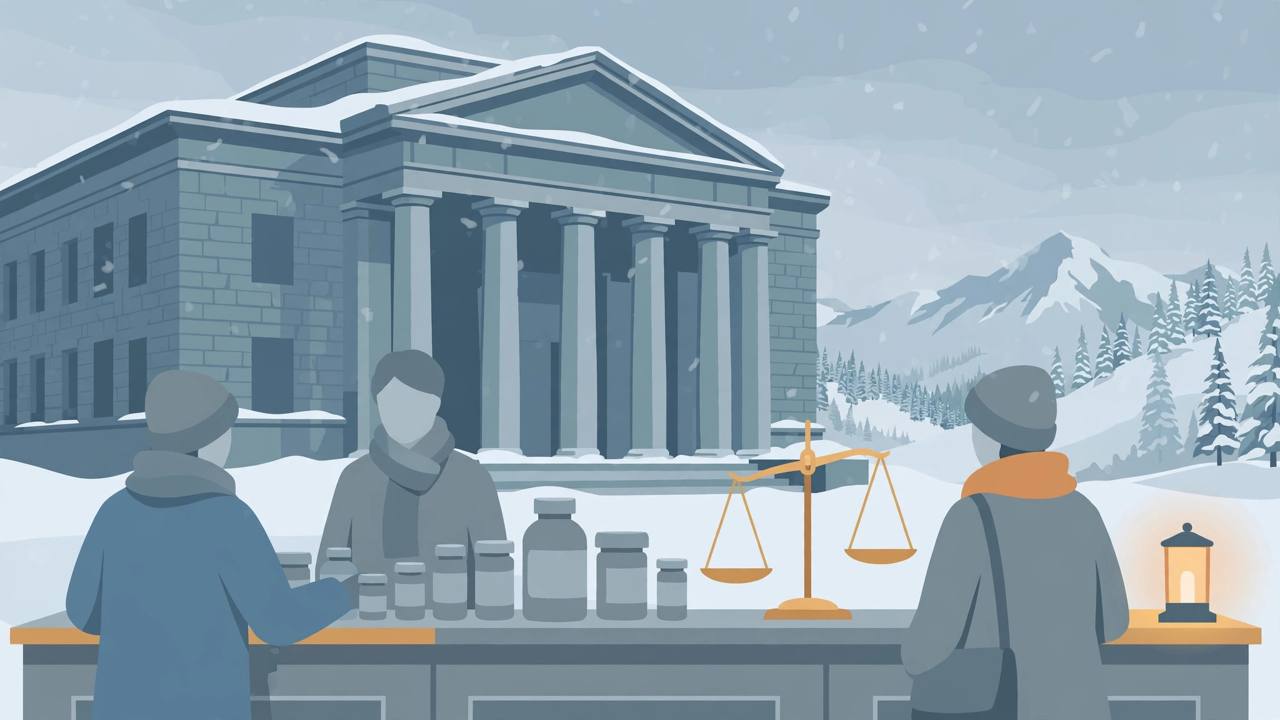
The Alaska Supreme Court ruled unanimously on Friday, November 6, 2026, that the State of Alaska's public-nuisance lawsuit against major pharmacy operators over opioid dispensing can move forward, reinstating a claim that a lower court had thrown out. The decision, in State of Alaska v. Albertsons Companies, Inc., et al., case No. S-19048, affects pharmacies operating under the Albertsons and Safeway banners and Kroger's Fred Meyer stores in Alaska.
Source: LAWS.com
The ruling does not find any pharmacy liable, and it orders no payment. It decides a narrower legal question: whether the state's case was properly dismissed at the pleading stage, before evidence was tested. The court held that it was not, and the public-nuisance claim now returns to the Alaska Superior Court for further proceedings, according to the opinion as reported by Reuters and LAWS.com.
Source: Reuters via The Dingo Dave
What the state alleges
The State of Alaska alleges — and the pharmacies dispute — that the chains failed to fulfil their legal obligations under state and federal controlled-substances laws when dispensing prescription opioids. According to the complaint, the pharmacies did not properly monitor or report suspicious prescriptions, which the state says increased the availability of opioids in Alaska and fed addiction and overdoses. These are allegations in a civil lawsuit, not findings of fact.
On that basis the state brought two kinds of claims: that the alleged conduct created a public nuisance, and that it violated the Alaska Unfair Trade Practices and Consumer Protection Act, known as the UTPA. The case is about pharmacy dispensing, monitoring and reporting duties — the systems a pharmacy is supposed to run before and after a prescription for a powerful painkiller is handed over.
How the lower court ruled, and what the Supreme Court changed
The case first went to the Alaska Superior Court, which granted the pharmacies' motion to dismiss the state's claims. The lower court ruled that the pharmacies' alleged actions did not constitute a public nuisance, and that the consumer-protection claims were barred because pharmacy operations are already governed by existing regulatory frameworks.
The Supreme Court split that result in two. It affirmed the dismissal of the UTPA consumer-protection claims, so that part of the state's case stays dismissed. But it reversed the dismissal of the public-nuisance claim, and it rejected a categorical rule that would bar public-nuisance claims simply because they arise from the sale of a lawful product, Reuters reported.
"The pharmacies' failure to fulfill their legal obligations when dispensing opioids unreasonably interfered with public rights protected by the common law." — Alaska Supreme Court, State of Alaska v. Albertsons Companies, No. S-19048, as quoted in reporting on the opinion. The court said the state had sufficiently articulated its claim to survive a motion to dismiss.
The epidemic the opinion describes in Alaska
The opinion, authored by Justice Pate, highlighted the severe impact of the opioid epidemic on Alaska. Reporting on the opinion notes that drug overdose deaths in the state have increased significantly over the past decade, with a notable rise in fatalities linked to prescription opioids, and that approximately 11.5 percent of the state's population needs treatment for substance use disorder, while the healthcare system has struggled to cope with the consequences of addiction.
Source: LAWS.com
Background: one front in a national wave of opioid cases
Alaska's lawsuit sits inside a much larger wave of American opioid litigation against drugmakers, distributors and pharmacy chains, in which governments argue that failures to monitor suspicious prescriptions helped fuel an epidemic of addiction. Just one day before the Alaska ruling, on November 5, a judge in Washington state ordered Albertsons to pay $900 million in a separate Washington case over pharmacy opioid dispensing — a ruling Albertsons said it disagreed with while considering an appeal, according to Reuters reporting carried by Becker's Hospital Review. That Washington judgment is a different case, in a different court, and it does not decide anything in Alaska; it shows, however, the scale of the liability pharmacy operators now face when these claims reach a decision on the merits.
The Alaska case is at a much earlier stage than the Washington one. No Alaska court has heard evidence on whether the pharmacies actually failed in their duties, and the Supreme Court's decision means only that the state gets to try to prove its public-nuisance claim. Reporting on the opinion notes that possible remedies, if the state eventually wins, could include measures such as funding addiction treatment or making the overdose-reversal drug naloxone widely available — possibilities the court discussed, not outcomes it ordered.
Why this matters beyond Alaska
For anyone who fills a prescription for a strong painkiller — including the many Punjabi and South Asian families, truck drivers and shift workers across the United States whose work involves physical strain and injury risk — the ruling matters because it strengthens the legal pressure on pharmacies to question, document and, where the law requires, refuse or report suspicious opioid prescriptions. Pharmacies that face nuisance liability have a reason to tighten those checks, which can mean more questions at the counter and closer monitoring of repeat prescriptions, even for legitimate patients.
What happens next
The reinstated public-nuisance claim returns to the Alaska Superior Court, where the case will proceed on that claim alone; the consumer-protection claims remain dismissed. Albertsons and Kroger may seek rehearing or later appellate review of the nuisance ruling, but no such step had been confirmed in the reporting available when this story was prepared. Readers should treat every allegation in the case as unproven unless and until a court decides the claim on the evidence.