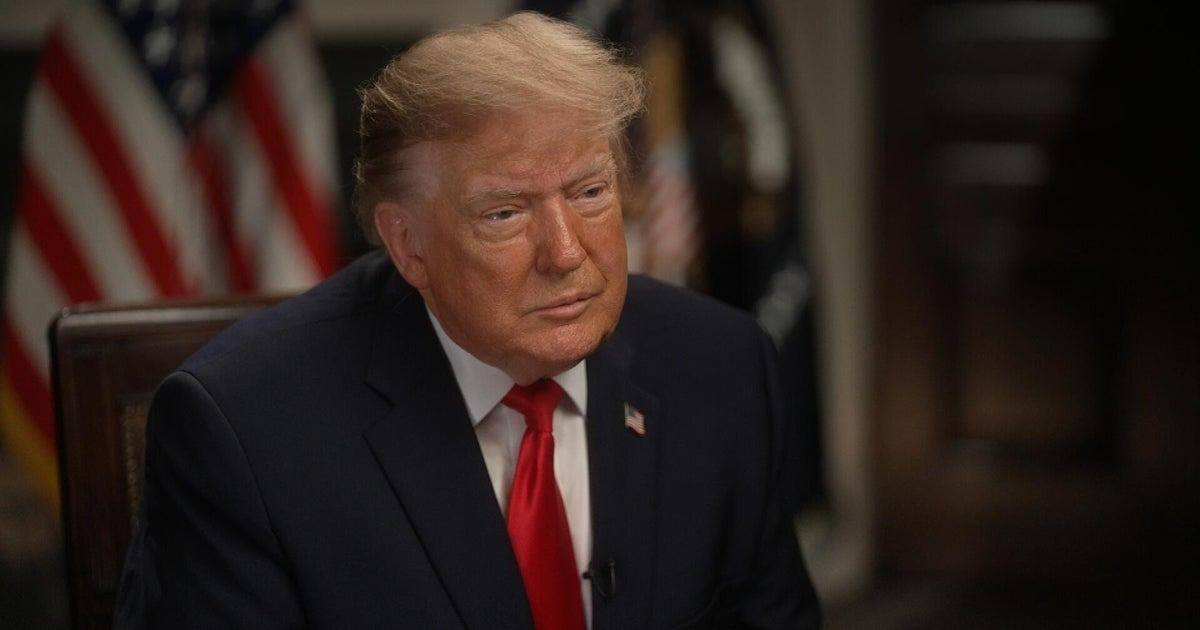
WASHINGTON — President Donald Trump has said his administration's deportation crackdown may have been “too tough” and that it hurt Republicans in the November 3 midterm elections, in his first major interview since his party lost control of both the House and the Senate. Speaking to CBS's 60 Minutes in an interview broadcast on Sunday, November 8, Trump said immigration had “both helped and hurt” his party, and that he would like to reach a deal with Democrats that could let some long-term undocumented residents stay in the United States.
Source: Associated Press reporting, via Headline USA
Asked by correspondent Ross Douthat whether the deportation policy had gone too far, Trump replied: “Too tough.” Pressed again, he added: “I think it might be too tough, yeah.” The interview was recorded on Friday, November 6, about an hour before Trump announced a major White House staffing change, according to CBS.
Source: CBS 60 Minutes interview, as reported November 8-9
"An A+ for closing the border" — but workers deported too
Trump drew a line through his own record. “I think I got an A+ for closing up the border,” he said, and claimed “very high marks for getting the bad ones out.” But he conceded: “I get hurt because we also took people that had good jobs, that created one violation, or breaking of the law, and that was that they came into the country illegally.” It was a sharp change of tone from a year ago, when he told the same programme that his administration's immigration raids had not gone far enough.
Source: 60 Minutes interview, via The Insight International (BBC/CBS reporting)
The voters' verdict behind that concession is visible in the polling. CBS News exit polling found 58 percent of voters believed the administration's immigration actions had gone too far, even though voters still trusted Republicans slightly more than Democrats to handle immigration, by 43 percent to 41 percent. An Associated Press voter survey put the share saying enforcement had gone too far at about 60 percent. CBS reported that Republican support fell sharply in South Texas and other heavily Latino areas that had moved toward the party two years ago.
Source: CBS News exit polling and AP voter survey, as reported November 8-9
The deal Trump floated: 10-15 years, a job, taxes paid
Trump gave no written proposal and no eligibility rules, but he sketched the shape of a bargain. People who have been in the country for 10 or 15 years could have an opportunity to stay, he suggested, while people he described as “killers” and “drug dealers” should still be deported. “The deal would be we would work something out. And I think it's something — I think that's something that's actually doable,” he said. He spoke of people who are “good people working in a landscaping company, or working in a hotel, or doing something, right? And in some cases, paying taxes.”
Source: Associated Press reporting of the 60 Minutes interview
Trump said he believed some Democrats wanted an agreement and that people had already contacted him; in the exchange he named James Talarico, the newly elected senator from Texas, without identifying the others he said had reached out. That is Trump's account of the contacts, not evidence that negotiations have produced agreed terms. Senate Democratic Leader Chuck Schumer reacted with scorn on social media on Sunday, posting: “Trump says his immigration crackdown went too far.” No Democrat has publicly agreed to the outline Trump described, and the arrangement he suggested has no published eligibility rules and no defined legal status.
Source: CBS reporting via Daily Inference; AP reporting
No slowdown on the ground: ICE told to aim higher, not lower
Whatever the president said on television, his enforcement machinery gave the opposite signal the same weekend. A Department of Homeland Security spokesperson told the BBC on Sunday that Immigration and Customs Enforcement was “NOT backing away or slowing down,” and a White House spokeswoman said the administration would not slow its efforts to arrest and deport “criminal illegal aliens.” Multiple US officials told CBS News they had received no instructions to reduce enforcement after the midterms.
Source: DHS spokesperson to the BBC; CBS News officials, via Daily Inference
Agency sources told CBS that ICE had recently been instructed to aim for about 19,000 arrests a week — roughly 2,700 a day, up from a previous target of 2,000 a day, an increase of about 35 percent. According to those sources, the higher target was set before the election. It measures what agents were asked to achieve, not how many people were actually arrested. CBS News has also reported that a large share of those arrested by the administration had no criminal records beyond immigration offences; the administration says it targets the “worst first,” while warning that anyone in the country illegally can be arrested and deported.
Source: CBS News agency sources, via Daily Inference
The Miller contradiction at the centre of the White House
Two days before the interview aired, on November 6, Trump named Stephen Miller — widely seen as the architect of the hard-line immigration crackdown — to replace Susie Wiles as White House chief of staff, effective Monday, November 9. Putting the crackdown's designer in charge of the White House staff while opening the door to a deal with Democrats leaves the administration pulling in two directions at once: an enforcement operation built for a broader sweep, and a proposed exception for some of the very people it can reach. Which direction wins will be decided by written instructions to ICE, not by an interview.
Source: CBS/AP reporting, via The Insight International and Daily Inference
What Democrats can — and cannot — do about it
Democrats will control both houses of Congress from January, and they have said oversight of ICE and the Department of Homeland Security is a priority for the new Congress. Theresa Cardinal Brown, a former Homeland Security immigration official under the Bush and Obama administrations, told CBS that Democrats could use subpoenas, oversight hearings and funding measures to try to constrain ICE. But she noted Trump would probably veto attempts to restrict enforcement, and that legislation he signed the previous year had already provided ICE with $75 billion through 2029 — which limits how much leverage a funding fight really gives them.
Source: Theresa Cardinal Brown to CBS News, via Daily Inference
There was at least one public Republican opening beyond the president. Congressman French Hill of Arkansas said on Face the Nation that immigration reform could offer scope for bipartisan work, identifying asylum, temporary protected status and issues affecting children of people with legal status as possible subjects, while stressing border security. Trump, for his part, also argued the main reason for the midterm defeat was that “I was not on the ballot,” and said voters “didn't like the war” with Iran or the rise in gasoline prices that followed it.
Source: Face the Nation and 60 Minutes, as reported November 8-9
Nothing has changed in law or in ICE operations today: no new status exists, no eligibility list has been published, and DHS says enforcement is not slowing down. What has changed is the politics — the president himself now says deporting long-settled workers went too far, and Democrats who will run oversight of ICE take over Congress in January. Families should treat any “deal” as unproven until the White House publishes written terms or instructions, and should beware anyone charging fees for a programme that does not yet exist.
What happens next: the first test is whether the White House turns Trump's suggested accommodation into a written proposal, or issues instructions changing whom ICE agents target. Democrats take control of Congress in January, with subpoena and hearing power over DHS. Awaaz Punjab will report any published proposal, enforcement instruction or congressional hearing date as soon as it exists.