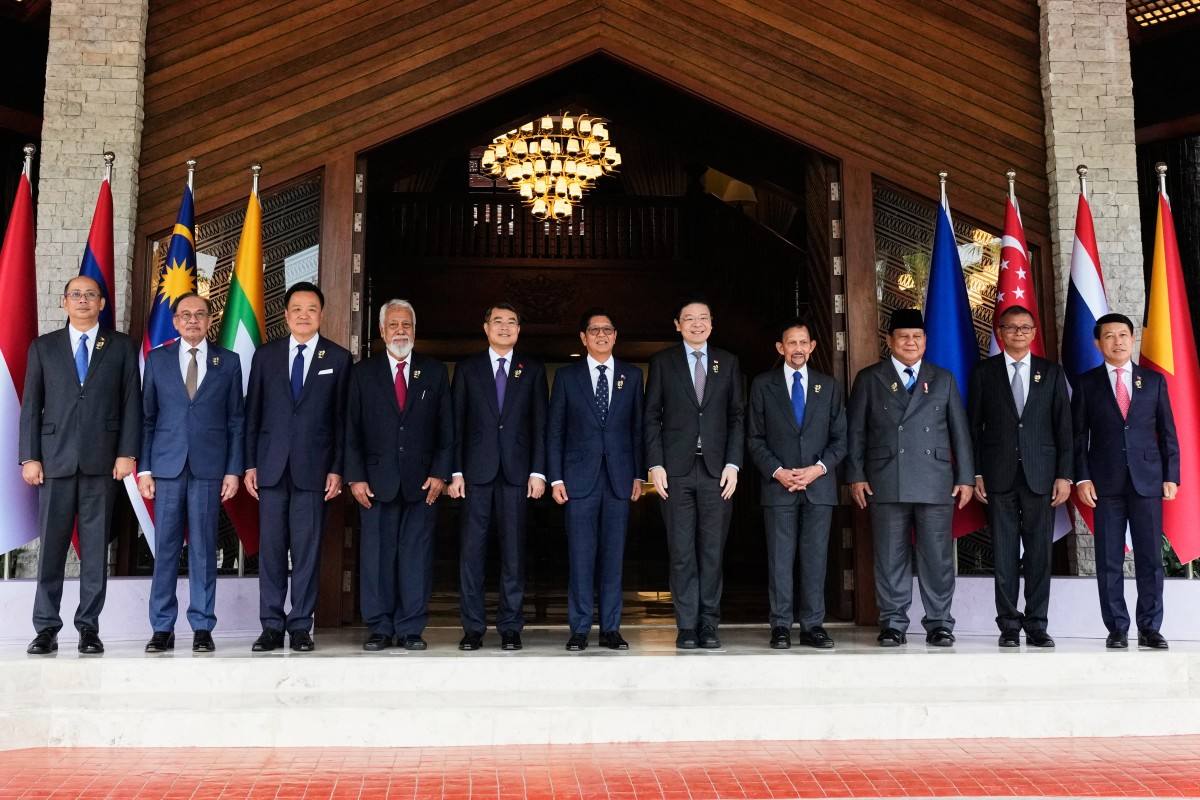
Southeast Asian leaders on Sunday adopted a joint decision that keeps Myanmar barred from full political representation at ASEAN's top meetings, while opening a conditional path back if the country makes sustained progress on the bloc's longstanding peace plan, Reuters reported from Manila.
Source: Reuters
The decision, taken at the 49th ASEAN Summit in Manila, maintains Myanmar's representation at summits and foreign ministers' meetings at a non-political level until there is meaningful progress in implementing the Five-Point Consensus, known as the 5PC. Myanmar's participation in other ASEAN sectoral ministerial bodies and mechanisms should remain unrestricted at all levels, the leaders said in the decision reported by Bernama.
Source: Bernama via KLSE Screener
The leaders' decision is the formal outcome that followed Saturday's preview, when ASEAN special envoy Theresa Lazaro said there would be no easing of the bloc's approach while a review was still under discussion. Read the earlier report: ASEAN envoy said no easing on Myanmar
"Subject to sustained and concrete progress in the implementation of the 5PC by Myanmar, ASEAN may consider the gradual restoration of Myanmar's full political representation," the leaders said in the joint decision. They agreed to pursue what they called "calibrated engagement" through a "phased and progress-based" approach.
The bloc also encouraged efforts by individual ASEAN member states to engage constructively with all relevant stakeholders in Myanmar, in consultation with the ASEAN Chair, to advance substantive progress on the plan. Thailand and several other members have stepped up engagement with Myanmar in recent months, creating new pressure on the bloc to ease its ban on Myanmar's military-backed leaders attending high-level meetings, Reuters reported.
What the Five-Point Consensus requires
The Five-Point Consensus, adopted soon after Myanmar's military seized power in 2021, calls for an immediate end to violence and the launch of constructive dialogue among all parties, and offers ASEAN mediation and humanitarian assistance. The leaders on Sunday reaffirmed it as ASEAN's main framework for addressing Myanmar's political crisis and urged its full implementation, so the people of Myanmar can achieve an inclusive and lasting peace through a process they own and lead.
At the same time, the leaders expressed deep concern over insufficient progress in implementing the consensus, while acknowledging limited gains in aid delivery through the ASEAN Coordinating Centre for Humanitarian Assistance, known as the AHA Centre. They urged all parties in Myanmar, particularly the armed forces, security forces and armed groups, to de-escalate violence and halt targeted attacks on civilians and civilian infrastructure, and reiterated their call for a cessation of violence and a sustained nationwide ceasefire.
The leaders welcomed the AHA Centre monitoring mission of October 28, led by the ASEAN envoy, which marked the start of a month-long aid operation targeting more than 11,000 households, including in four priority townships the centre had yet to reach. They called for ASEAN aid to reach people displaced by fighting directly and urged international partners to increase funding for the centre's relief efforts.
Myanmar was represented at the Manila summit by Han Win Aung, director-general of its foreign ministry's ASEAN Affairs Department, while military chief and president Min Aung Hlaing was again excluded from the top-level gathering. Foreign Affairs Secretary Theresa Lazaro, who read out the leaders' statement after a closed-door retreat, said Myanmar's authorities must first fulfil the consensus demand to halt ongoing violence. "We want to see how Myanmar responds to that because right now there are still certain bombings and displacement of Myanmar people," Lazaro told journalists, as quoted by Philstar and reported by ANI.
Source: ANI / Philstar
What happens next
The leaders said they would review the decision at future sessions and mandated ASEAN foreign ministers to continue monitoring progress and report to the next ASEAN Summit. Senior officials were also tasked with continuing discussions on a proposal for a longer-term ASEAN special envoy on Myanmar. Myanmar has been in turmoil since the military ousted Nobel Peace Prize winner Aung San Suu Kyi's elected government, triggering the civil war. Its army-backed government wants to normalise ties with ASEAN, Reuters reported.