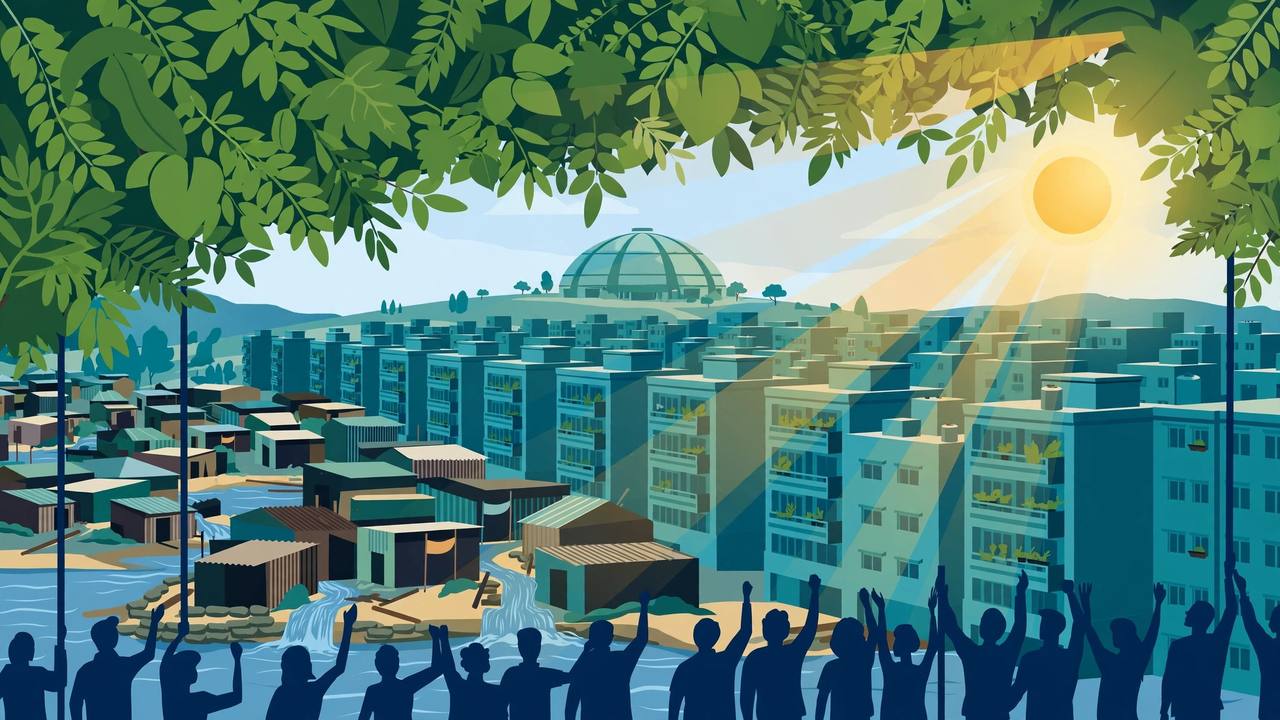
ANTALYA, Türkiye — Cities took centre stage at the COP31 climate summit on Thursday, November 12, as the Leaders' Summit of a UN climate conference dedicated a high-level dialogue to urban resilience, housing and climate action for the first time, UN News reported.
Source: UN News
The meeting brought together national and local leaders, financial institutions and other partners around a stark set of numbers: up to three billion people lack adequate housing, while more than one billion live in informal settlements, often exposed to floods, landslides and extreme heat.
"Housing is climate action. Urban planning is climate action. Access to basic services is climate action," UN-Habitat Executive Director Anacláudia Rossbach said, delivering remarks on behalf of Secretary-General António Guterres. She told UN News that protecting city residents also means drainage, sanitation, electricity and water, backed by better planning and financing — and called for greater attention to the poorest communities in informal settlements, who have the fewest resources to prepare for disasters or recover from them.
A new UN-Habitat analysis found that 80 per cent of national climate plans now contain well-developed urban measures, up from 50 per cent in the previous round. But the money is not keeping pace: cities need around US$4.5 trillion in climate investment every year through 2030 — yaani about 4.5 lakh crore dollars annually — while current financing covers only about one-fifth of that amount.
Mayors are moving faster than national negotiators. Sixty-nine mayors representing more than 250 million people committed to another year of climate action through the Yearly Offer of Action initiative, a 60 per cent increase from last year. Their plans include flood-warning systems in Addis Ababa, London's first dedicated heat plan and incentives to improve the environmental performance of 400 commercial buildings in Melbourne.
A new UN disaster-risk financing platform was also highlighted at the summit, aiming to unlock more than US$3 billion to protect 75 million people from climate shocks by 2030.
On the second day of the Leaders' Summit, developing nations renewed appeals for support. Seychelles warned that recovering from increasingly destructive storms and floods can leave small countries trapped in debt, while Nepal highlighted the growing dangers facing mountain communities as glaciers melt. Nepal, Bhutan and Kyrgyzstan joined Tajikistan and Pakistan in calling for greater protection of glaciers and mountain communities, and Nepal proposed a "Sagarmatha to the Sea" partnership linking mountain and coastal communities. UK Prime Minister Andy Burnham announced Britain's first special representative for climate security.
Outside the negotiation rooms, activist Greta Thunberg — attending a UN climate summit for the first time in years — told journalists the climate crisis is "already a matter of life and death" and that "the planet is not dying, it is being killed." Beside her, Nepalese parliamentarian Sagar Dhakal recalled digging people from the rubble after a deadly landslide near the Nepal-Tibet border, contrasting Switzerland's glacier monitoring and evacuations with Nepal's lack of resources.
Inside the talks, divisions persisted over adaptation finance and the future of fossil fuels, with small island nations demanding faster emissions cuts and fossil fuel-producing countries defending their development priorities, according to AP reporting from Antalya. What happens next: negotiators have a second week in Antalya to turn the leaders' city pledges into text — and the test will be whether the finance gap Rossbach described, four-fifths of what cities need, starts to close.