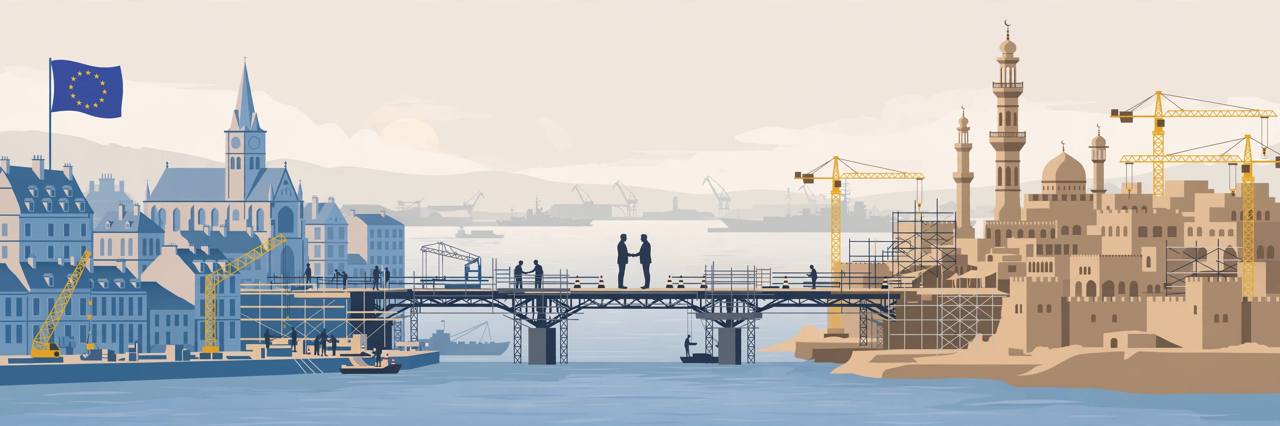
BRUSSELS/DAMASCUS, Nov 11 (Reuters) — The European Union is weighing a broad upgrade in ties with Syria, including security sector reform, investment and a revival of a long-frozen trade accord, according to an EU document seen by Reuters, as the bloc seeks to draw Damascus closer to Europe and counter lingering Russian influence after Bashar al-Assad's overthrow.
Source: Reuters (Bayer and Dalatey)
The discussion paper, prepared by the bloc's diplomatic service ahead of a November 16 meeting of EU foreign ministers, sketches one of Brussels' most ambitious efforts yet to normalise ties with Syria, less than two years after Assad's fall ended decades of authoritarian rule and reshaped regional alliances. The proposals are not yet adopted EU policy.
Source: The FINANCIAL (FinChannel)
The EU's diplomatic service said that while Syria's transition is moving forward, “challenges remain high and accelerated progress is needed” on issues such as economic recovery, national reconciliation, and the reintegration of internally displaced people and refugees, the document said.
Security reform — and the Russia question
Alongside plans to support security-sector reform, including trilateral cooperation with Jordan on the training of Syrian police recruits, the EU is seeking to step up its engagement with the country to limit “the malign influence of Russian and other foreign actors on Syria”, the discussion paper said.
Russia's intervention in Syria's civil war helped keep Assad in power for years and secured Moscow's strategic foothold on the Mediterranean. Since his overthrow, the Kremlin has been trying to secure a new deal with the current authorities to preserve access to the Tartous naval facility and the Hmeimim air base. The EU document said Moscow's influence had diminished post-Assad but its continued military presence and economic leverage remained a concern.
Opening the door wider to investment
Syria faces enormous reconstruction needs after nearly 14 years of civil war. Among the most striking proposals is a plan to revive an association agreement initialled in 2008 but never concluded, which would create a framework for free trade, political dialogue and broader cooperation; EU diplomats would seek a fresh mandate from member countries to negotiate revisions to the pact.
On the economic front, the EU is seeking to reintegrate Syria into Euro-Mediterranean cooperation frameworks and global trade networks, with a focus on transport, energy and digital connectivity. The bloc is encouraging the European Investment Bank to resume engagement with Syria and helping Damascus' efforts to become a shareholder in the European Bank for Reconstruction and Development, a step towards accessing reconstruction finance.
The proposed steps follow the resumption of the EU's 1978 cooperation agreement with Syria and the first high-level political dialogue between Brussels and Damascus in May. Brussels lifted the remaining economic sanctions on Syria in 2025 and restored the full application of the cooperation agreement in 2026, according to the reporting. The EU says it has mobilised about €41 billion in assistance for Syrians inside Syria and in neighbouring countries since the conflict began in 2011.
What happens next: foreign ministers consider the paper on November 16, and an EU-led coordination forum scheduled for November 17 in Damascus will focus on investment and private-sector engagement, laying the groundwork for a possible EU-Syria investment conference in 2027, the document said.