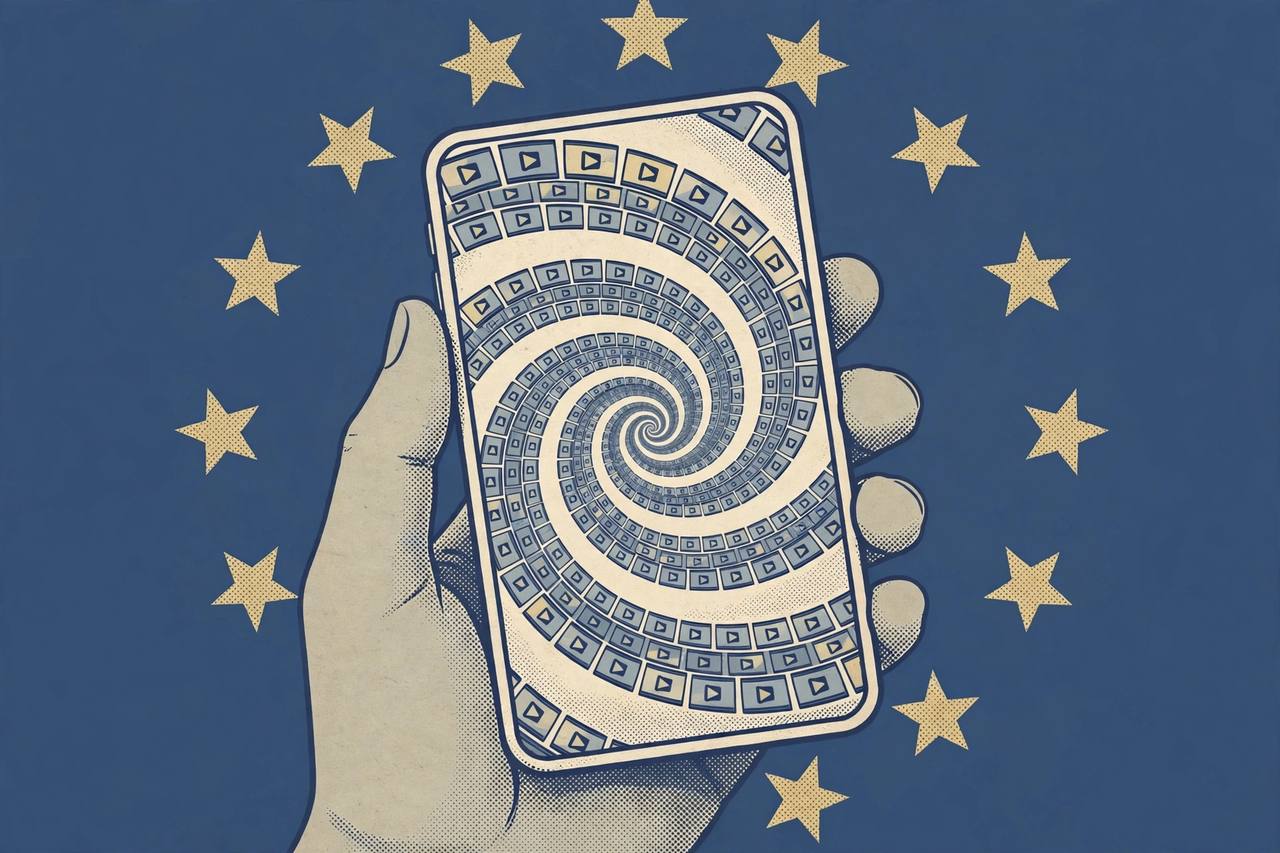
The European Commission said on Friday it has preliminarily found that TikTok's personalised 'For You' feed breaches the Digital Services Act (DSA), the European Union's law for large online platforms, because of what it called the feed's harmful 'rabbit hole effect'. The Commission said the recommendation system repeatedly exposes users to content related to sadness, isolation, mental health struggles and body image, which could negatively affect users' wellbeing, particularly minors and vulnerable adults, according to the Commission's press release reported by Qazinform News Agency.
The system works from engagement signals: the more a user watches or likes a certain type of content, the more similar videos the algorithm serves. A user who repeatedly interacts with weight-loss or body-image content may receive more and more of the same material, the Commission said. It warned that repeated exposure could increase anxiety and sadness, contribute to body dissatisfaction and lower self-esteem, and worsen existing eating disorders or other mental health conditions. The Guardian, reporting the same preliminary ruling on Friday, said the regulator found TikTok's algorithm 'can be harmful' and was leading young and vulnerable users 'down rabbit holes they cannot easily escape from'.
"Every time a user scrolls or likes a video on TikTok, the algorithm serves more of the same leading users down rabbit holes they cannot easily escape from," Henna Virkkunen, the Commission's Executive Vice-President for tech sovereignty, said in the Commission's statement, as reported in coverage of the findings. The platform has 189 million users across the European Union, The Guardian reported, and officials stressed that much of the content involved is legal in itself — the concern is the cumulative weight of dozens of similar clips served one after another.
Source: The Guardian, Nov 6 2026 — 189 million EU users; Virkkunen statement reported in Commission coverage
Safeguards judged not good enough
According to the preliminary findings, TikTok did not adequately assess the risks posed by its recommendation algorithm or implement sufficiently effective measures to address them. The Commission found that TikTok's existing safeguards, including measures to diversify recommended content and the 'not interested' button, were not sufficiently effective in reducing repeated recommendations, and that the algorithm continues to prioritise viewing time over users' stated preferences to see less of certain content. The Guardian reported the same pattern from the investigation: pressing 'not interested' on a video about eating patterns did not stop similar diet and body-image material, and restarting the feed gave only a brief break before the same kind of content returned.
The Commission said TikTok needs to redesign its 'For You' feed. Possible changes include giving greater weight to users' explicit preferences, disabling viewing time as an indicator for recommending content, improving access to content controls and regularly testing the algorithm. Reporting by Al Jazeera, carried by EuropeSays, put it the same way: the EU on Friday demanded TikTok overhaul the 'harmful' way the feed is designed, or face hefty penalties under the DSA.
What happens next
These are preliminary findings, not a final decision, and the Commission stressed they do not prejudge the outcome of the investigation. TikTok can now examine the Commission's investigation files and reply in writing, and the European Board for Digital Services will also be consulted. If the findings are confirmed, the Commission may issue a non-compliance decision and impose a fine of up to 6% of TikTok's total worldwide annual turnover. The case builds on earlier preliminary findings in the same investigation — on TikTok's addictive design in February 2026 and on the protection of minors in July 2026 — and is the first DSA case focused on a recommendation system's design itself.
What is solid
- The European Commission preliminarily found TikTok's For You feed in breach of the DSA over its 'rabbit hole effect', and said a confirmed breach could bring a fine of up to 6% of worldwide annual turnover — Commission press release, Nov 6.
- The Commission said TikTok's diversification measures and 'not interested' button were not sufficiently effective, and that the algorithm prioritises viewing time over users' stated preferences — Commission findings reported by Qazinform and The Guardian.
What is only claimed
- Whether the feed must actually be redesigned — TikTok has not yet replied; it can contest the findings, propose voluntary changes, or both, and no fine has been imposed.
- How large any eventual fine would be — 6% is the legal ceiling under the DSA, not a figure the Commission has set for this case.
A binding EU order to rebuild the For You feed would change what the app shows far beyond Europe's borders, because platforms rarely run entirely separate recommendation systems by region — and regulators in Canada, the UK and Australia, where lakhs of Punjabi and Indian families use the same app, are watching the DSA cases as a template for their own platform rules.
What happens next: TikTok's written reply is the next step. If the company offers binding changes to the feed, the case could settle without a fine, as an earlier advertising-transparency complaint against TikTok did last December; if not, Brussels moves toward a formal non-compliance decision — and the first major test of whether Europe can regulate not just what platforms show, but how their systems are built to keep people watching.