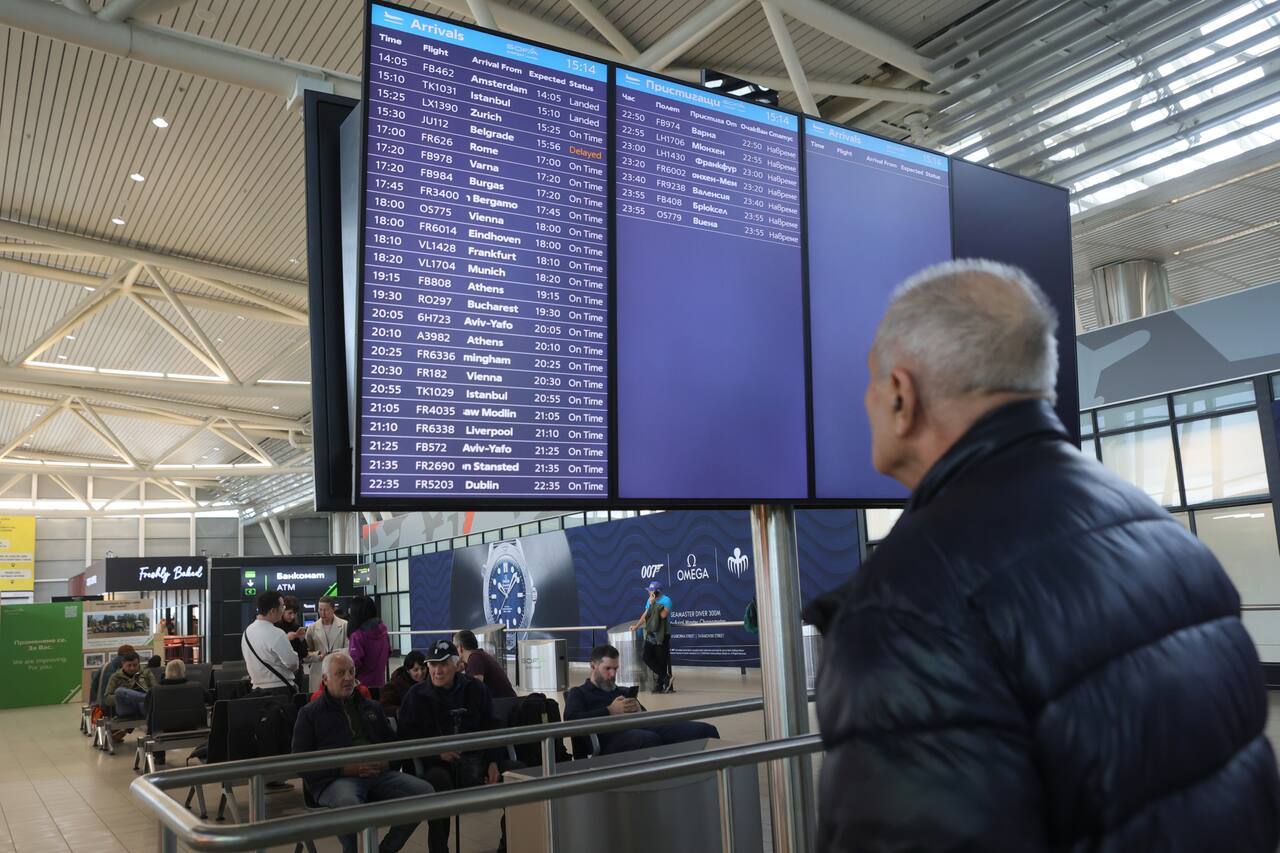
A series of hoax bomb threats hit European airlines from Ireland to Bulgaria on Thursday morning (November 5) for the second time this week, with some of at least 25 affected flights making unplanned landings or being escorted by fighter jets, Reuters reported from Rome, Brussels and Evreux. The Associated Press put the number of confirmed targeted flights at more than a dozen and reported that inspections have so far found no hazardous or suspicious materials. Britain's Transport Secretary Heidi Alexander told British broadcasters that flights across Europe have been hit by 'malicious hoax threats', while EU Transport Commissioner Apostolos Tzitzikostas, speaking to reporters in Dublin, said it was 'too early to draw conclusions on whether the reported incidents are linked', that national investigations remain ongoing, and that an EU information-sharing mechanism on aviation security had been activated.
Source: Reuters, November 5, 2026
Thursday's wave began with the diversion of Aer Lingus flight EI402 from Dublin to Rome to a French military airbase — the single-flight incident this site reported earlier in the day, now known to be only the first of at least 25. Read the earlier story: bomb threat diverts Aer Lingus EI402 to Evreux
Bulgaria, Spain, Prague, Italy: a morning of escorts and searches
Bulgaria's air force said its fighter jets escorted three airliners to the ground: Ryanair planes from Copenhagen and Madrid to Sofia landed as planned, while a flight from London to Sofia was diverted to Plovdiv, Bulgaria's second city, whose airport CEO Krassimir Peshev confirmed the safe landing. In Spain, authorities received three emailed bomb threats in under 20 minutes from around 9 a.m. (0800 GMT), involving two Air Europa departures from Madrid to Paris and four inbound Iberia flights from Rome and Milan, Spain's Guardia Civil said. Two easyJet flights from Britain, one flight from Ireland and one from Greece landed as scheduled in Prague after receiving bomb threats; Czech police said they had assessed the credibility of the threats as low, and AP reported searches of the four Prague planes turned up nothing. Italy's air force escorted a Finnair plane from Helsinki to its scheduled landing in Rome — Rome's airport operator said there had been no disruption to services — a second Finnair flight operated by Jettime landed as normal in Vienna, and the Italian news agency ANSA said two planes landed safely in Milan after receiving threats.
Source: Reuters, November 5, 2026
Elsewhere, a LOT flight from Warsaw landed as scheduled in Brussels after a security warning, while in Warsaw a LOT flight to Paris was stopped as it was taxiing towards take-off and passengers were transferred to another aircraft as a precaution, the Polish airline said. A Wizz Air flight from Milan landed safely in Bucharest, Romania's intelligence agency said, and Italian media reported a Wizz Air flight from Milan to Warsaw was diverted to Vienna; AP added that nothing was found on the Vienna-landed plane and it continued to Warsaw, and that an abstract threat concerning four other flights at Vienna Airport did not disrupt operations. Greece's Aegean Airlines confirmed two of its flights — Thessaloniki to Milan and Athens to Vienna — received bomb threats that proved to be hoaxes, Air Serbia said a Belgrade-to-Bucharest flight's threat was also a hoax, and in Denmark a military bomb disposal unit searched two planes at Copenhagen airport but found no devices, police said.
Source: Associated Press, November 5, 2026
Evreux: jets ordered up because the pilot 'didn't cooperate as expected'
The day's most dramatic episode remained the first. Aer Lingus flight EI402 from Dublin to Rome landed safely at Evreux airport, 100 km (62 miles) west of Paris, after French Prime Minister Sebastien Lecornu ordered warplanes to intercept it because the pilot 'didn't cooperate as expected with the authorities', his office told AP. Hours later the plane was still on the tarmac with a Red Cross vehicle nearby while explosive experts with dogs examined it; the regional prosecutor, Remi Coutin, said the pilot and co-pilot were being questioned, and French aviation security authorities opened an investigation. AP also reported a detail investigators will weigh: an email containing the threat to Rome-bound planes was sent on behalf of a group that describes itself as anti-feminist, according to a copy provided by an airport official and reviewed by AP, and an official from another European airport said the threat they received also came from a group calling itself anti-feminist and used some of the same language — though it was not clear whether the two threats came from the same group, and both officials spoke on condition of anonymity.
Source: Associated Press, November 5, 2026
Thursday's 25-flight wave is more than three times the size of Tuesday's, when at least seven flights and a cruise ship were targeted across Europe and no devices were discovered. Read the earlier story: Tuesday's seven-flight bomb-threat wave
'Stress-testing' Europe — and the unanswered question of who is behind it
No country has attributed blame for the threats, Reuters reported, but they come at a time when many European officials have accused Russia of masterminding sabotage and 'hybrid attacks' — often cheap, easily deniable and not expected to trigger an armed response. Denmark, Poland and Romania, all affected by Thursday's disruptions, have previously accused Moscow directly, Germany blamed Russia for an attack on Leipzig airport in August, and Britain has blamed Russia in the past but linked Iran to a suspected plot to attack a US air base; both Russia and Iran deny any involvement. Eric Schouten, head of the aviation security group Dyami, noted that most of the countries affected supported Ukraine in its war against Russia's invasion, and Eliran Almog, CEO of aviation cybersecurity firm Cyviation, said the repeated threats could serve both to disrupt operations and to observe how airlines, airports and authorities respond — in the same period as cyberattacks shut down supermarket refrigeration systems across Europe for the second time this week, also affecting French blood banks. Jacob Funk Kirkegaard, a senior fellow at the Bruegel think tank in Brussels, told AP the threats were 'stress-testing' how European governments and airport officials respond and whether their responses are coordinated, sowing 'chaos, uncertainty, about the reliability of air traffic across Europe'; Coventry University's Philip Baum put the possible cost of each disruption at as much as $250,000, before governments' own military-escort expenses. What happens next turns on the investigations now running in at least a dozen countries: whether the emails share a single source, and whether a third wave follows — after Monday's single diverted flight, Tuesday's seven and Thursday's 25, the pattern so far is escalation, and no authority has yet said who is sending the threats or why.
Source: Reuters; Associated Press, November 5, 2026
What is solid
- At least 25 flights were affected by bomb threats across Europe on Thursday morning, the second wave this week (Reuters); AP confirms more than a dozen targeted flights
- No hazardous or suspicious materials have been found in the inspections reported so far (AP; Czech and Danish police; airlines)
- Fighter jets escorted flights in Bulgaria and Italy, and French jets intercepted the Aer Lingus flight to Evreux (Reuters; AP; national authorities)
What is only claimed
- Who sent the threats is unknown — no country has attributed blame; the 'hybrid warfare' link to Russia is an accusation by European officials that Moscow denies
- The claim that Rome-bound threats were emailed for a self-described anti-feminist group rests on anonymous airport officials via AP; whether the threats share one source is unconfirmed
- Counts differ by source and hour (Reuters at least 25; AP more than a dozen confirmed) as reports arrive airport by airport