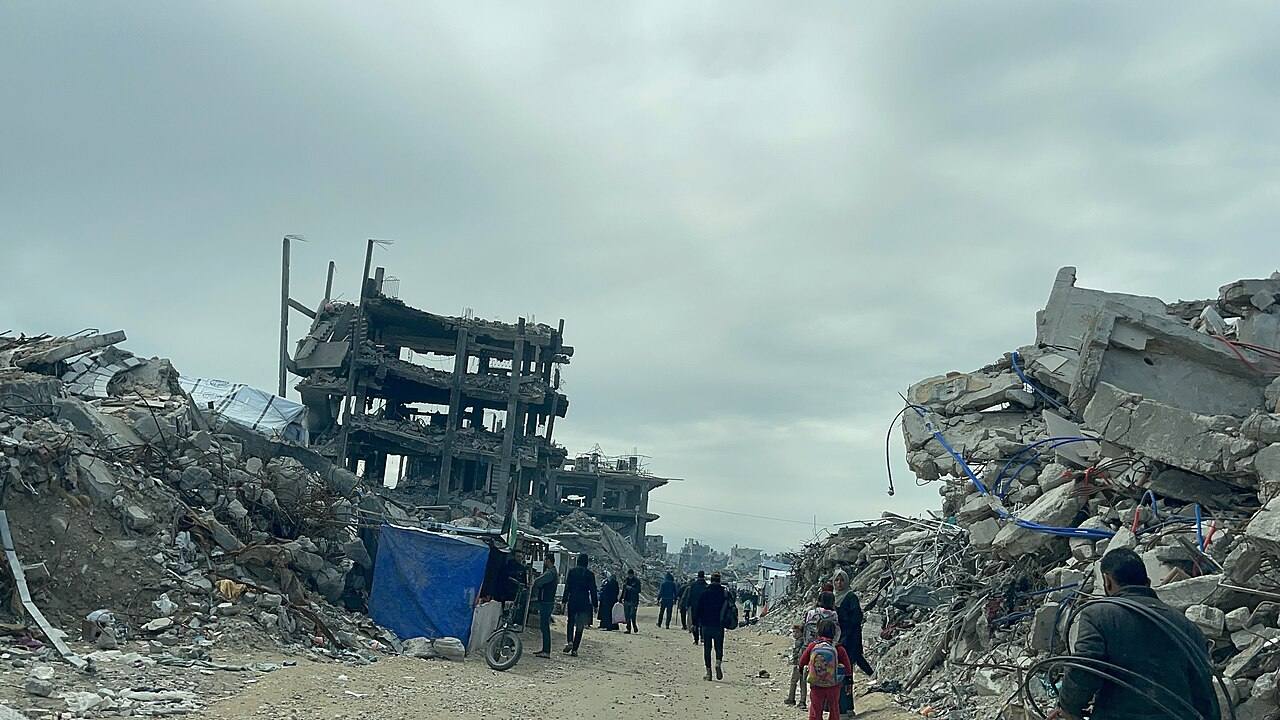
Palestinian families in northern Gaza on Sunday, November 15, buried 69 loved ones whose remains Civil Defence crews had recovered from beneath the rubble of destroyed homes in the Jabalia refugee camp and the town of Beit Lahia, Al Jazeera reported. Many of the dead had lain under their collapsed homes for two years.
Source: Al Jazeera
The remains were recovered in the Al-Hakoura area and near schools in Jabalia, and at several locations across Beit Lahia, neighbourhoods that were reduced to rubble during the war. The dead included members of the Abu Warda, Nabhan, Al-Yazji, Masoud and Al-Dibs families. Al Jazeera reported that the Nabhan family was finally able to bury relatives recovered from their home, and that Fatima al-Masri, 47, buried the remains of her husband and son after two years beneath the rubble.
Source: Al Jazeera
On Saturday evening, dozens of mourners had gathered in northern Gaza for a vigil honouring the recovered dead, the Associated Press reported. The remains, recovered over the past few weeks, were wrapped in white body bags draped with Palestinian flags, with candles placed on their chests as families said their final goodbyes.
Source: Associated Press via Press TV
More than 8,500 still beneath the rubble
Civil Defence spokesman Mahmoud Basal said more than 8,500 bodies remain trapped beneath the rubble across Gaza, and warned that with their current resources the crews can recover only around 1,000 bodies a year — meaning the search could take many years. Palestinian authorities estimate that more than 10,000 people are still buried under the rubble, according to the United Nations, the AP reported.
Source: Al Jazeera
The burials are part of a long-running Civil Defence recovery project. In its first phase, begun in late November 2025, crews recovered 333 bodies from the ruins of 54 buildings. A second phase began on July 19, 2026, targeting 147 destroyed homes across Gaza City, northern Gaza and the central governorate, where an estimated 1,072 bodies were believed to be buried. According to a September 21, 2026 report by the UN Office for the Coordination of Humanitarian Affairs (OCHA), Civil Defence teams recovered more than 630 bodies and sets of remains between November 2025 and September 2026.
Source: Al Jazeera / OCHA
Sunday's funerals were not the first of their kind. On October 18, families buried 75 people whose remains had been recovered from destroyed homes in Gaza City's Al-Daraj neighbourhood, after weeks of excavation. Recovery teams say the work is slowed by severe shortages of heavy machinery, fuel and specialised equipment, and that in many places workers must dig through massive concrete slabs by hand or with basic tools.
Source: Al Jazeera
The Civil Defence says restrictions on the entry of bulldozers, heavy machinery, spare parts, lubricants and fuel have further obstructed the recovery work. OCHA has called for additional heavy machinery, specialised equipment, spare parts and fuel to be allowed in so recovery operations can expand.
Source: Al Jazeera / OCHA
UN High Commissioner for Human Rights Volker Türk has warned that the remains recovered so far may represent only a fraction of the wider tragedy, and has stressed the importance of preserving forensic evidence, biological samples and burial-site records so victims can be identified and families can learn the fate of their missing relatives.
Source: Al Jazeera
What happens next: the second phase of the recovery project continues across Gaza City, the north and the centre of the territory. At the pace the Civil Defence says is possible with present resources, thousands of families face years more of waiting beside the ruins of their homes for a grave they can visit.