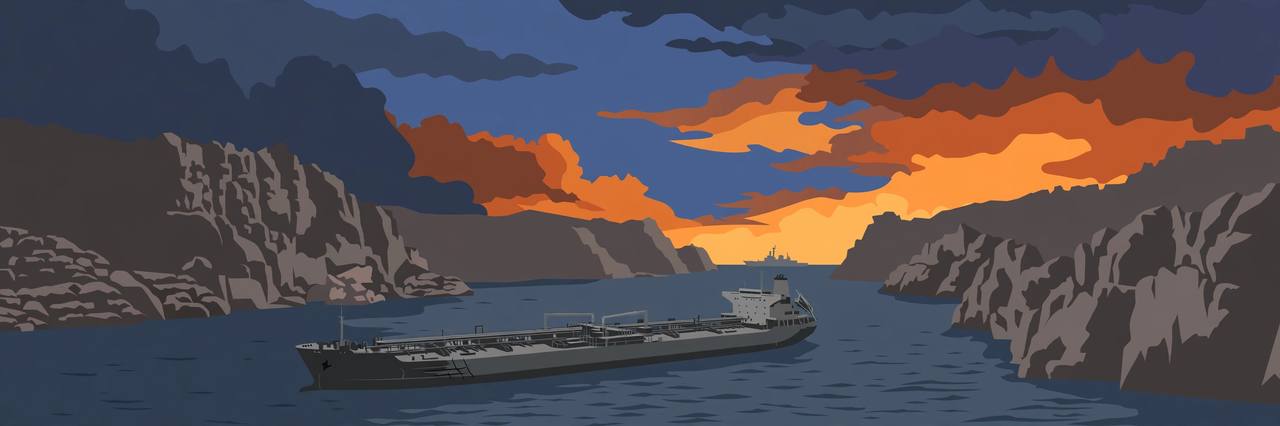
Iran said on Monday it would use "all available means" to counter the United States naval blockade of its ports, in the sharpest warning yet from Tehran as the war over the Strait of Hormuz enters its ninth month. Foreign ministry spokesman Esmaeil Baqaei delivered the message at his weekly press briefing in Tehran on November 23, saying Iran would "certainly not tolerate" the blockade and would use every tool at its disposal against it.
Source: Al Jazeera
"You should bear in mind that what the Americans have described as economic sanctions, an economic blockade and a naval blockade undoubtedly constitutes an act of military aggression against Iran," Baqaei said. "Under these circumstances, Iran is entitled, pursuant to Article 51 of the UN Charter, to use any means at its disposal to defend itself."
Source: CBS News
The United States imposed the blockade of Iranian ports on April 13, lifted it in June after Washington and Tehran reached a draft understanding, and restored it on July 14 after that agreement collapsed. Washington imposed the measure in response to Iran's push to block the Strait of Hormuz, the waterway that carries a large share of the world's seaborne oil. The US has since added a raft of economic sanctions and launched a task force to disrupt land routes into Iran.
Baqaei said the Strait of Hormuz could be reopened within two days if Washington met Iran's conditions, which include lifting the blockade. He dismissed reports that Iranian vessels were loading oil in an attempt to break the blockade, and said Tehran was examining measures to counter the blockade and sanctions and would carry them out in line with decisions by its leadership, without giving details.
Trump: strikes could resume after New Year
President Donald Trump told Fox News on November 22 that he was "inclined" to resume major strikes against Iran after the New Year if no deal is reached, and said Iran had fired more drones and missiles over the past seven days than in any week for more than a year. On the blockade, Trump said that if Iranian vessels tested it, "they'll all go down to the bottom of the sea, just like the rest of their navy."
Source: GlobalSecurity Iran War Day 269 update
Trump also claimed that Iran had killed 81,000 protesters. That figure has not been independently verified.
Tanker attacks at highest level of the war
Attacks on commercial shipping in and around the Strait of Hormuz have reached their highest levels since the conflict began, according to data compiled from reports to the United Kingdom Maritime Trade Operations (UKMTO) centre. More than 30 incidents were reported in October, the highest monthly total of the war, and at least 22 had already been logged in November by November 22. Between November 20 and 21, three outbound tankers were hit by unidentified projectiles near Khasab in Oman's Musandam Governorate, with fires reported aboard.
Source: UKMTO data via Liberty Beats
Iran's Revolutionary Guard Corps has claimed that two supertankers hit naval mines near Hormuz and caught fire, and has repeatedly claimed to have shot down US drones, including what it described as a 20th MQ-1-type drone. Neither claim has been independently verified by Western maritime or military authorities, and the attribution of many of the recent tanker attacks remains incomplete.
On November 21, an Iranian strike hit a civilian industrial site in Bahrain, wounding two people, one of them critically. The Revolutionary Guards said they had targeted US air defences. Bahrain rejected that justification, said the target was exclusively civilian, and reserved its right to self-defence under Article 51 of the UN Charter. Saudi Arabia, Kuwait and Qatar condemned the attack.
Nuclear inspections still blocked
Iran will continue to block nuclear inspections of its damaged sites until its seven conditions for ending the war are met, legislator Hassan Qashqavi said, according to Al Jazeera. Tehran has rejected UN inspection demands in the meantime, saying there is no protocol under which inspectors can return while the war continues.
What this means for Gulf workers and oil
Hundreds of thousands of Punjabi and Indian workers live and work in the Gulf states, and the fighting around Hormuz directly affects their safety, their flights home and the money they send back. Shipping disruption in the world's most important oil chokepoint has also kept oil prices high, with Brent crude trading around $92 a barrel on Monday. Yemen's Houthis said they attacked Saudi Arabia's Rabigh refinery on November 22, and Houthi-run television reported that the Red Sea port city of Mokha also came under fire on Sunday. Both claims remain unverified.
Background: a war now in its ninth month
The war began on February 28, 2026, when US and Israeli strikes killed Supreme Leader Ali Khamenei; his son Mojtaba Khamenei was later named to succeed him. The fighting has since drawn in Yemen's Houthis and spread across the region. Baqaei said Pakistan and Qatar continue to mediate between the sides, but no deal has been reached and both sides are hardening their positions.
What happens next
Three things to watch: whether Iran tests the blockade by sending tankers out from Kharg Island — reports say crews have been assigned to more than 14 tankers there, though no breakout attempt has been confirmed; what decision Trump takes after the New Year, when he has said he is inclined to resume major strikes; and whether mediation by Pakistan and Qatar can reopen talks before the next Hormuz incident pushes the two sides closer to open confrontation.
What is solid
- Baqaei's November 23 statement and quoted words at his Tehran briefing
- US blockade dates: imposed April 13, lifted in June, restored July 14
- UKMTO incident counts: more than 30 in October, 22 in November by November 22
- Bahrain strike on November 21 wounded two people, one critically
What is only claimed
- IRGC claims that two supertankers hit mines and that US drones were shot down
- Trump's claim that Iran killed 81,000 protesters
- Houthi claims of an attack on Saudi Arabia's Rabigh refinery