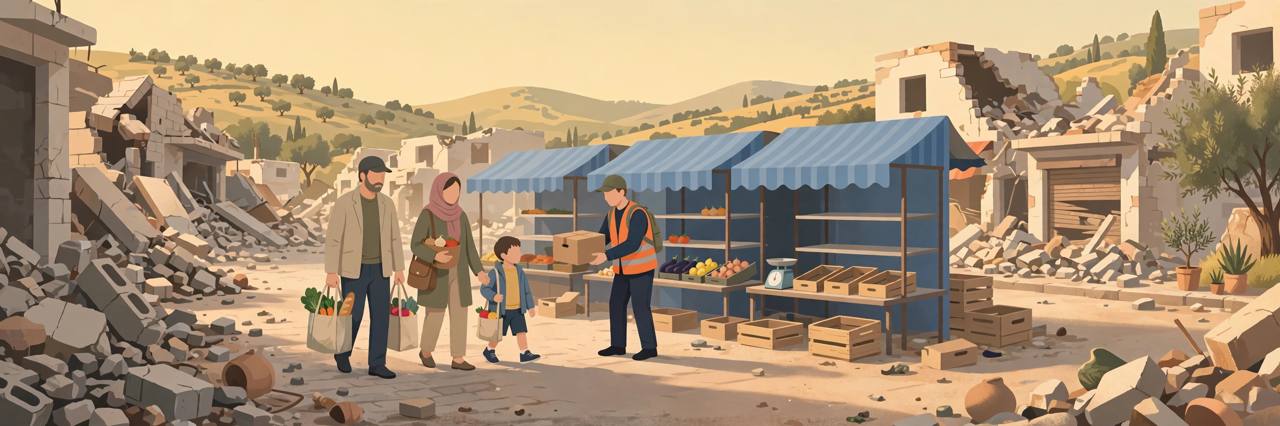
More than one million people in Lebanon are facing acute food shortages — nearly a quarter of the country's population — due to two consecutive conflicts in less than two years and a dire economic situation, according to the United Nations. The UN's Food and Agriculture Organization (FAO), the World Food Programme (WFP) and Lebanon's Ministry of Agriculture warned in a joint statement published on Wednesday, November 11, that the number is expected to rise to 1.15 million by the middle of next year.
Source: Al Jazeera
The figures come from the latest Integrated Food Security Phase Classification (IPC) analysis, conducted in September 2026 by the Ministry of Agriculture with technical support from the FAO, the WFP and other partners, the joint FAO-WFP release said. Although the current figure is below the 24 percent projected at the peak of the displacement crisis in the April 2026 IPC update, the agencies warned this should not be read as a sustained improvement in household food security, as successive crises have eroded livelihoods and families' ability to cope.
Source: FAO / WFP joint news release, Nov 11 2026
"When families have nothing left to fall back on"
"Employment opportunities remain limited, savings have been depleted, and debt remains high, while the cost of food, fuel and other essentials continues to strain household budgets," the joint statement said. Allison Oman Lawi, WFP representative and country director in Lebanon, said: "Some households can still draw on savings, borrow, cut expenses or find other ways to put food on the table. For others, those options are being exhausted. When families have nothing left to fall back on, even a small additional shock can push them deeper into crisis." Lebanon's Agriculture Minister Nizar Hani said: "These findings call for a coordinated national response that addresses urgent food needs while protecting livelihoods and restoring productive capacity."
Source: Al Jazeera / FAO-WFP joint statement
Two wars, a broken economy, and a fragile peace
Lebanon's authorities estimate the cost of the two wars between Israel and the Lebanese armed group Hezbollah since October 2023 at about $27 billion — yaani karib 27 arab dollar. The last war, launched in March, displaced more than one million people in Lebanon; that number has fallen to about 300,000 since violence subsided in June, Al Jazeera reported. Despite a United States-brokered framework deal signed between Israel and Lebanon's government in June to end the fighting, Israel is still occupying land in Lebanon, Al Jazeera reported; under the terms, Israeli forces were to withdraw and Lebanon's army was to take up positions in the vacated territory, while Lebanon was meant to disarm Hezbollah, which is not a party to the agreement.
Source: Al Jazeera
The fighting broke out as Lebanon struggled to recover from its worst-ever economic crisis, which began in 2019. Beirut has been seeking a bailout from the International Monetary Fund but has yet to implement the reforms the IMF demands to release the aid, Al Jazeera reported. The WFP says it has reached over one million conflict-affected people with emergency food and cash assistance since March 2026, on top of existing programmes for vulnerable families, and that it needs US$223 million up to January 2027 to sustain life-saving assistance and respond to rising needs.
Source: WFP Lebanon emergency page / Al Jazeera
What is solid
- 1.05 million people (21 percent of the population analysed) face IPC Phase 3 or worse in Sep 2026–Feb 2027, including 52,000 at Phase 4 — FAO/WFP/Ministry IPC analysis, released Nov 11
- The projection rises to 1.15 million (24 percent) by mid-2027, with 97,000 at Phase 4 — same IPC analysis
- WFP says it needs US$223 million up to January 2027 for Lebanon assistance — WFP
What is only claimed
- Displacement total: Al Jazeera reports about 300,000 still displaced, down from over one million in March; WFP's Lebanon page says more than 352,000 remain displaced — both are agency/media estimates, not a census
What happens next: the IPC projection is a warning, not a verdict — if no new case of fighting or economic shock hits, the agencies say sustained humanitarian and livelihood support could still hold the line, but on current trends one in four people in Lebanon will be in Crisis or worse food insecurity by mid-2027, with the Emergency caseload nearly doubling. The next test is funding: WFP's US$223 million requirement runs only to January 2027.