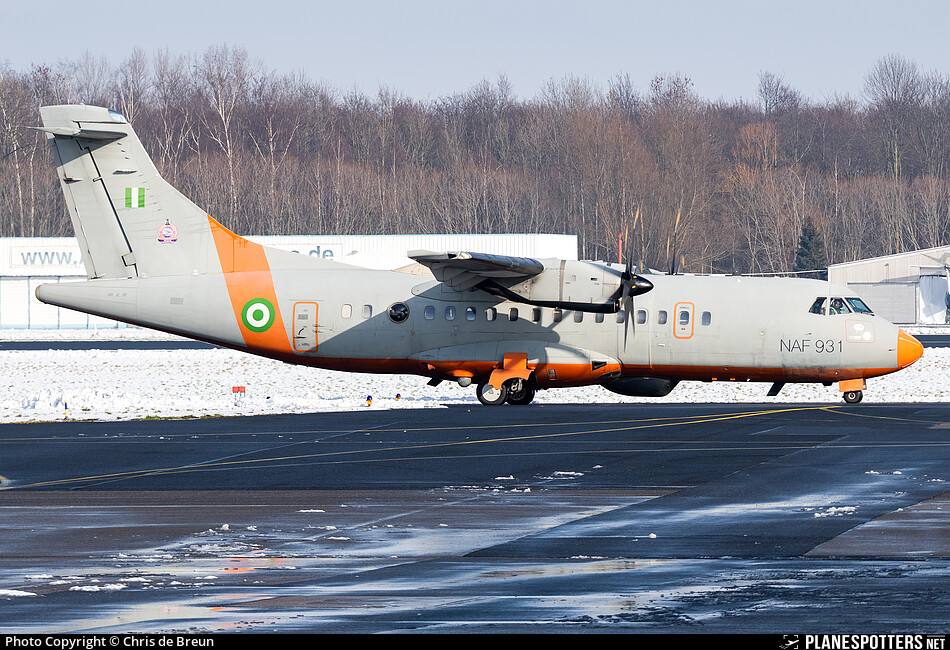
The Nigerian Air Force (NAF) has recovered the cockpit voice recorder (CVR) from its ATR-42 aircraft that crashed in a swamp near Igbokoda in Ondo State on October 5, killing all 25 people on board, the service announced on Friday, November 6 — just over a month after the accident.
Source: Premium Times / NAN
Air Commodore Ehimen Ejodame, the NAF Director of Public Relations and Information, said in a statement issued in Abuja that technical teams from the Air Force and the Nigerian Safety Investigation Bureau (NSIB) had confirmed the recovered cockpit voice recorder was intact.
Part of the aircraft's flight data recorder (FDR) — the other half of the system commonly called the black box — has also been retrieved, Ejodame said, while efforts to locate and recover the remaining portion continue. Recovery teams have also brought out additional aircraft wreckage, engine components and human remains from the site.
A month in the swamp at Igbokoda
The aircraft, an ATR-42 with registration NAF 931, was on a routine flight from Benin City in Edo State to Lagos on October 5 when it crashed into a swamp near the Nigerian Navy's Forward Operating Base in Igbokoda, in Ilaje Local Government Area of Ondo State. All 20 passengers and five crew members died.
Officials said the aircraft broke into two on impact and its main body sank in deep swamp water, reported at about 30 metres, which made recovering the dead and the aircraft's parts exceptionally difficult. The difficult terrain hampered the operation from the start, and the authorities were initially unsure how to approach the recovery, Premium Times reported.
"Operations are ongoing in challenging swamp terrain, with teams working to retrieve outstanding components and facilitate necessary technical examinations," Ejodame said. "Investigation is being conducted with due diligence to ensure comprehensive, evidence-based findings."
Families, identification and the host community
The Air Force said the recovery involved careful handling of human remains, with its Directorate of Identification and Classification undertaking the procedures needed for proper identification. Ejodame added that the NAF had sustained engagement with the families of the victims, recognising their need for information and support, and that engagement with the relevant authorities on environmental concerns raised by the host community remained an important part of the wider response. Residents of Igbokoda had raised alarm over human remains and aviation-fuel contamination in the local river in the weeks after the crash.
After the crash, President Bola Tinubu declared three days of national mourning and directed that national flags fly at half-mast across the country in honour of the victims.
What happens next
The cockpit voice recorder stores the crew's conversations and cockpit sounds, and together with the flight data recorder it is expected to help investigators establish the circumstances of the flight's final moments. The NAF has not announced any findings from the recorder, and the cause of the crash has not been established. "While appreciating the public's concern and interest, NAF appeals for continued patience and understanding as these critical processes require time, careful coordination and professional attention," Ejodame said, adding that the ultimate objective was not only to establish what happened but "to draw necessary lessons to strengthen flight safety, enhance ongoing airpower operations and further safeguard lives of personnel and citizens."
What is solid
- The NAF and NSIB technical teams have confirmed the recovered cockpit voice recorder is intact (NAF statement, November 6).
- All 25 people on board — 20 passengers and five crew — died when the ATR-42, NAF 931, crashed near Igbokoda on October 5.
What is only claimed
- The cause of the October 5 crash has not been established; no findings from the recovered recorders have been announced.