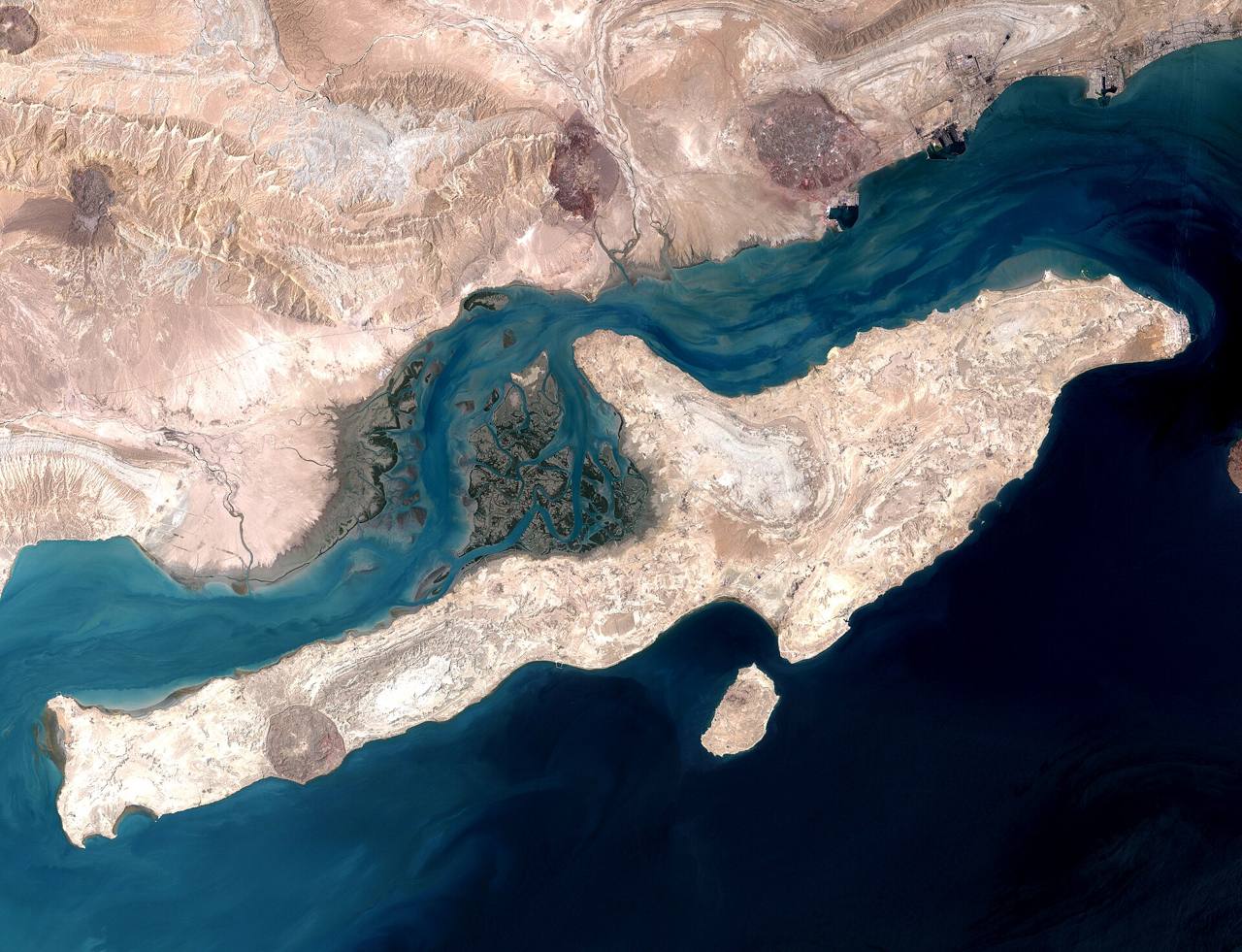
President Donald Trump said on Friday that the United States had carried out another round of limited strikes on Iran, hitting an air defence system on Qeshm Island in the Strait of Hormuz and describing the operation as minor, The Guardian reported.
Source: The Guardian, Nov 7, 2026
Speaking to reporters in West Palm Beach, Florida, on Friday evening, Trump said American forces had destroyed a newly built Iranian anti-aircraft installation in about fifteen minutes, possibly as little as five. "They built a little bit of an anti-aircraft device and we knocked it out in about 15 minutes, maybe five," he said.
Source: The Guardian, Nov 7, 2026
Earlier tonight Awaaz Punjab reported Iranian media accounts of two missiles striking Qeshm's Suza area, at a point when no source had established who fired them and no US statement had been carried. Trump's Friday-evening statement is the first US confirmation of a new strike on the island. The exact connection between the impacts Iranian media reported at Suza and the operation Trump described has not been independently established. Read the earlier two-missiles report from Qeshm
What Iran reported from the island
Iranian state media reported the sound of two explosions in the Suza area of Qeshm Island. The semi-official Tasnim news agency said early on Saturday that two missiles had struck the island, while the state news agency IRNA cited local witnesses who said they had heard an aircraft before two projectiles hit the Suza area, Reuters reported.
Source: Reuters via SRN News, Nov 7, 2026
Iranian officials had not released an official assessment of the damage, and there were no confirmed reports of casualties. Tehran had issued no detailed statement about what was hit or damaged by the time the reports were filed.
Source: The Guardian, Nov 7, 2026
The first strikes since the midterm defeat
The strikes on Friday were the first since the Republicans were dealt a heavy defeat in Tuesday's midterm elections in the United States. Voter dissatisfaction with the way Trump has handled the war on Iran, and with the higher fuel prices the conflict has helped to produce, contributed to the result, The Guardian reported. In the days since the vote, Trump has swung between threatening to destroy Iran and suggesting that an end to the war is close, and the differences between the two sides over Iran's nuclear programme remain the hardest issue to settle — Trump insists it must be resolved as part of any deal to end the fighting.
Source: The Guardian, Nov 7, 2026
This was not the operation Trump confirmed on Tuesday. That earlier confirmation, given to Fox News on November 3, concerned the November 2 strikes on a missile position Iran had spent about two months building. Friday's target, on Trump's own account, was a newly built device knocked out within minutes — a separate, later action on the same island.
Source: The Guardian / Clash Report, Nov 7, 2026
Talks continue in parallel with the strikes
Trump said on Friday that contacts with Iran were continuing, and a series of telephone calls between leaders in the Gulf and beyond in recent days has been aimed at easing tensions, amid concern that Trump could still order further strikes. Qatar has been mediating between Washington and Tehran. Defence Secretary Pete Hegseth spoke on Friday with his Qatari counterpart, Sheikh Saoud bin Abdulrahman Al Thani, about developments, and Trump held a separate call with Qatar's emir, Sheikh Tamim bin Hamad al Thani, on international efforts to end the tensions. Qatar's International Media Office denied reports that the negotiations had collapsed, saying both sides remained engaged in trying to reach an agreement.
Source: The Guardian, Nov 7, 2026
Vice President JD Vance has said Washington has made progress in the negotiations, while the Iranian foreign ministry spokesman, Esmail Baghaei, said in Tehran that the next move was Washington's to make; he said Iran's demands had been stated clearly and that they were reasonable and logical. Late on Friday, US Central Command also announced on X a reward of up to twenty million dollars, with possible relocation, for information about Iran's nuclear programme — a separate step Awaaz Punjab is reporting on its own.
Source: The Guardian, Nov 7, 2026
Why Qeshm and Hormuz matter
Qeshm sits at the mouth of the Strait of Hormuz, the narrow waterway through which a large share of the world's seaborne oil passes, and shipping through the strait has been disrupted since the war between the United States and Iran began in February. The island is home to a large underground missile facility, a naval base and a major desalination plant, and American forces have targeted it before. The latest action followed an earlier round of strikes on Monday, November 2, when explosions were heard on Qeshm and Hengam islands and in the nearby mainland area of Bandar Abbas; the American military described those strikes as defensive, aimed at weakening Iran's ability to threaten commercial shipping in the strait.
Source: The Guardian, Nov 7, 2026
Reuters reported that oil prices edged up following reports of the US strike on Qeshm Island. Brent crude had reclaimed $100 a barrel on Friday — $100.3 in one Friday report, up 2 percent — and US West Texas Intermediate rose to about $91.8, after fresh tanker attacks in and near Hormuz revived supply fears, yet both benchmarks were still on course for weekly falls of about 12 percent as traders also priced in a possible diplomatic end to the war; shipping through Hormuz was still running below 60 percent of normal capacity in market assessments cited on Friday. Every move in the strait lands first in the Gulf itself, where lakhs of Punjabi and Indian workers live and work in Saudi Arabia, the UAE, Qatar, Kuwait, Bahrain and Oman, and whose jobs, flights and remittances are the first things hit when the strait shuts or fuel prices jump.
Source: Reuters via WorldAttention; HDFC Sky / Oilprice.com Friday oil reports, Nov 6-7, 2026
What is solid
- President Trump confirmed on Friday evening, in West Palm Beach, that US forces carried out another round of limited strikes on Iran and destroyed a newly built anti-aircraft installation on Qeshm Island, which he described as minor (The Guardian)
- Iranian media reported two explosions and two projectiles in the Suza area of Qeshm, with witnesses hearing an aircraft first (Tasnim and IRNA, carried by Reuters); Iran has released no official damage assessment and no casualties are confirmed
- Qatar says its mediation between Washington and Tehran is ongoing and has denied reports the negotiations collapsed; Trump says contacts with Iran are continuing
What is only claimed
- Whether the two impacts reported at Suza are the same operation Trump described: the exact connection has not been independently established
- What was destroyed and with what effect: Trump's account is the only description of the target so far; Iran has not confirmed the damage
- Iranian state-media claims of US drones shot down over Qeshm in recent days: the United States has not confirmed them
What happens next
Iranian officials, including Supreme Leader Mojtaba Khamenei, have warned that Tehran would retaliate within and beyond the Middle East if Washington returned to full-scale fighting. For weeks Trump had suggested that a return to major military operations could follow the midterm elections. Admiral Brad Cooper, the head of Central Command, visited the White House last week to brief Trump on the conflict, and the military has moved additional missile defences and munitions into the region in recent weeks.
Source: The Guardian, Nov 7, 2026
Analysts who follow the conflict said the latest strikes were dangerous but did not mark a sharp change in approach. Jason Brodsky of United Against Nuclear Iran said the aim was to reduce Iran's ability to disrupt shipping and stop Tehran from harassing commercial vessels. Brett Erickson of Obsidian Risk Advisors said Iran had shown considerable restraint in responding to similar incidents and saw little reason to believe this strike would change Tehran's calculations. Gregory Brew of the Eurasia Group said Washington appeared to be actively contesting control of the strait by hitting Iranian targets along its coastline, and that the reluctance to publicise the strikes suggested the United States was wary of signalling a desire to escalate. What happens next remains unclear: Tehran has issued no detailed statement, the talks mediated by Qatar continue, and the dispute over Iran's nuclear programme is still unresolved.
Source: The Guardian, Nov 7, 2026
Qeshm guards the mouth of the Gulf. A confirmed US strike there — the first since the midterms — tests Iran's air defences around Hormuz, the Qatari mediation that is the only live channel between Washington and Tehran, and the oil price every truck driver and household from Punjab to Brampton pays at the pump.