On Wednesday night Nvidia's board met to decide whether to remove Jensen Huang, as Awaaz Punjab reported earlier. On Thursday the company announced the result: Huang has resigned, with immediate effect. Read the earlier report: the board meeting to decide Huang's future
Jensen Huang, who co-founded Nvidia in 1993 and led it for 33 years into the world's dominant supplier of artificial-intelligence chips, has resigned as president, chief executive and a member of the board, effective immediately, the company announced on Thursday.
Source: Reuters via American Bazaar
Chief financial officer Colette Kress will serve as interim chief executive while keeping her roles as executive vice president and CFO, and the board will consider internal and external candidates for the permanent job. The board also appointed Harvey C. Jones, a director since 1993 and a former chief executive of Synopsys, as Nvidia's first-ever chair.
Source: Nvidia announcement / Reuters via TechCentral
What the filing says — and does not say
In a Form 8-K filed with the US Securities and Exchange Commission, Nvidia said the board accepted Huang's resignation on Wednesday, 11 November, the night directors met to decide his future. Neither the filing nor the company's announcement gave a reason for the resignation, and the 8-K disclosed no severance or separation arrangements.
Source: Nvidia Form 8-K, via Brimco reporting
The investigation and the allegations
The resignation follows the board's decision on 8 November to open an independent investigation into reports that Huang had been targeted by a foreign intelligence operation. The New York Times had reported that US officials believed Alice Huang, a former executive at Singapore-based Nvidia customer Megaspeed, was a Chinese intelligence asset who had grown close to him. The two are not related. On Sunday, Huang told employees he had been unfaithful to his wife and apologised; the Times later reported a second relationship, with Kimberly Powell, Nvidia's vice president of healthcare, who reports to him.
Source: Sharecast / Reuters reporting
The espionage claim remains an allegation, and it is contested on the record. China's Foreign Ministry has rejected the espionage allegations, Singaporean authorities have said they did not identify Alice Huang as a Chinese intelligence asset, and Nvidia's board said on 8 November that it had no reason to believe national security or company secrets had been compromised. No public evidence has been presented that Huang passed information to Beijing. Megaspeed said on Thursday that it had cooperated with US Commerce Department inspections and was prepared to work with other US authorities, Reuters reported, citing its chairman and chief executive James Tan Yong Pong.
Source: Reuters, via Clique Press summary of Reuters dispatches
Markets and Washington react
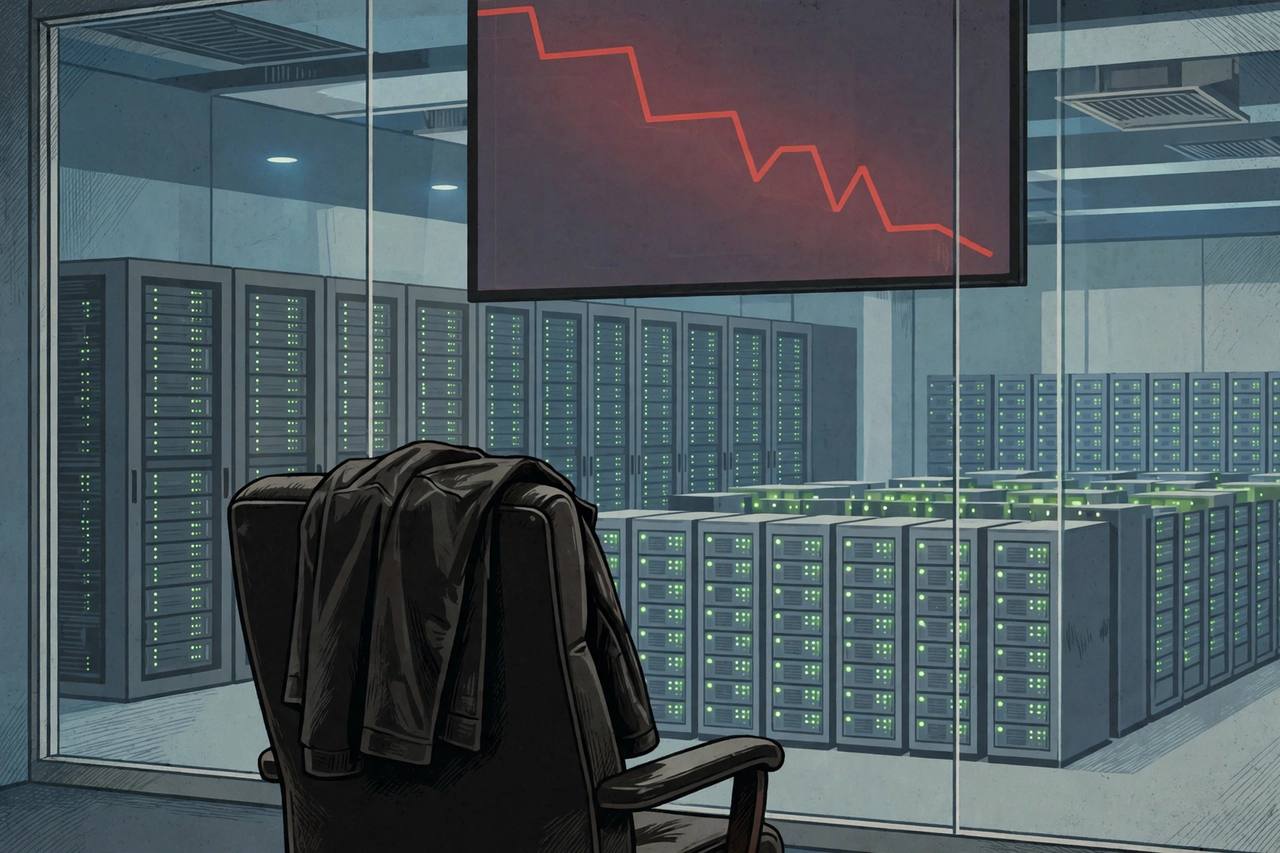
The market reaction was immediate: Reuters reported Nvidia shares fell more than 10% in premarket trading, and other reports put the intraday fall at about 13%, putting roughly $440 billion to $500 billion of market value at risk during the session — intraday figures, not a closing loss. Huang holds about 3.6% of the company, Reuters reported, making him its fourth-largest investor. In Washington, three House Republican committee chairs had already demanded a closed-door briefing on 18 November on Huang's dealings and Nvidia's defences against espionage, and scrutiny of Nvidia's China chip exports is expected to continue when Democrats take control of Congress in January.
Source: Reuters reporting via TechCentral and STechTimes
What happens next
Kress's first test comes quickly: Nvidia reports its third-quarter fiscal 2027 results on 17 November, the first earnings release in its history as a public company without Huang at the helm. The board's independent investigation continues, the permanent-CEO search is under way, and the company gave no timetable for either. What is settled is the transition itself: the founder era at the world's most valuable chipmaker ended on Thursday.
This story follows Awaaz Punjab's earlier report on the board's emergency meeting to decide whether to remove Huang. Read the earlier report