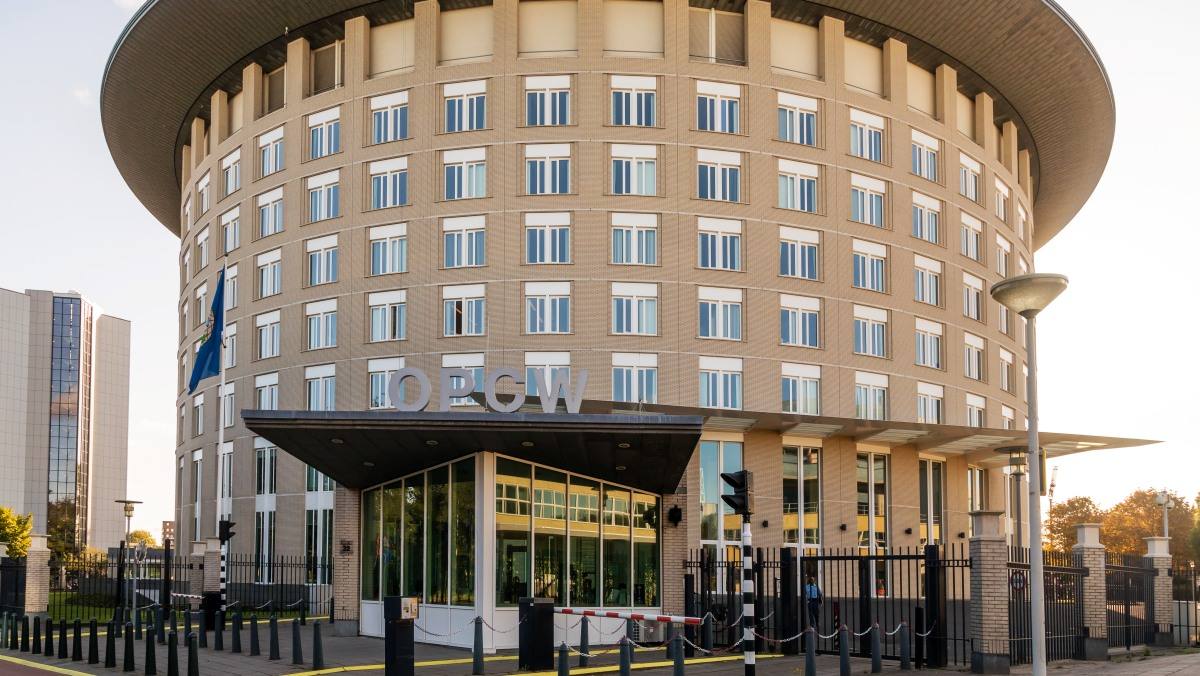
THE HAGUE — Officials from 34 countries and the European Union called on Russia on Wednesday to stop using riot-control gas on the battlefield in Ukraine, after the global chemical weapons watchdog confirmed that traces of tear gas were found in samples from a Ukrainian trench Kyiv said was hit by a Russian grenade.
Source: Reuters
The Organisation for the Prohibition of Chemical Weapons (OPCW) said its designated laboratories had confirmed the presence of CS, a riot-control agent, in samples collected at the scene, including grenade fragments and soil. The finding was the watchdog's own laboratory confirmation — not only Ukraine's allegation.
The joint statement was issued in response to a Ukrainian report circulated to all 193 OPCW member states gathered in The Hague this week. "We call for the immediate cessation of the use of any toxic chemicals and of riot control agents as a method of warfare in Ukraine," non-proliferation directors from Britain, France, Germany, Japan, New Zealand and the European Union, among others, said in the statement.
Who signed the call
The statement was signed by non-proliferation directors from 34 countries and the EU. Britain, France, Germany, Japan and New Zealand were among the named signatories, and the group urged that OPCW mechanisms be used to identify those responsible and hold them accountable.
Ukraine says it has documented more than 14,000 cases in which Russian forces used riot-control munitions since the full-scale invasion began in 2022, and says about 3,000 of its troops have needed medical attention after exposure. Those figures come from Kyiv and have not been independently verified.
Russia denies using chemical weapons illegally and has accused Kyiv of staging or fabricating such claims. Moscow did not immediately issue a detailed response to the OPCW laboratory finding or to the joint statement.
Last week, a Ukrainian investigation carried out with the OPCW's help concluded that Russian forces had dropped a tear-gas canister from a drone onto Ukrainian troops — the first time the banned weapons were formally linked to Russia's military. Read the earlier story
Why tear gas is banned in war
The Chemical Weapons Convention, which Russia has signed, bans the use of riot-control agents such as tear gas as a method of warfare. Police may use tear gas for law enforcement, but militaries are forbidden from using it on the battlefield — even though it is often described as non-lethal, it can kill in enclosed spaces and in high concentrations.
What is solid
- OPCW designated laboratories confirmed CS riot-control agent in grenade and soil samples from the scene.
- Officials from 34 countries and the EU issued a joint statement calling for an immediate halt.
- Ukraine circulated its report to all 193 OPCW member states meeting in The Hague.
What is only claimed
- Whether Russian forces fired the grenade — Kyiv says they did; Moscow denies illegal use.
- How widespread the use is — Ukraine alleges more than 14,000 cases since 2022; Russia rejects the claim.
The timing matters because OPCW member states are gathered in The Hague this week. The joint statement puts the laboratory finding on the formal record of the meeting and presses the watchdog's members to use its attribution and accountability mechanisms, rather than leaving the allegation as a bilateral dispute between Kyiv and Moscow.
What happens next will depend on whether the OPCW's members agree on further steps — a formal attribution process, new reporting requirements, or political pressure on Moscow. Russia's denial makes a quick admission unlikely, so the test now is whether the laboratory confirmation and the 34-country call change Russian conduct on the battlefield or lead to concrete action at the OPCW.