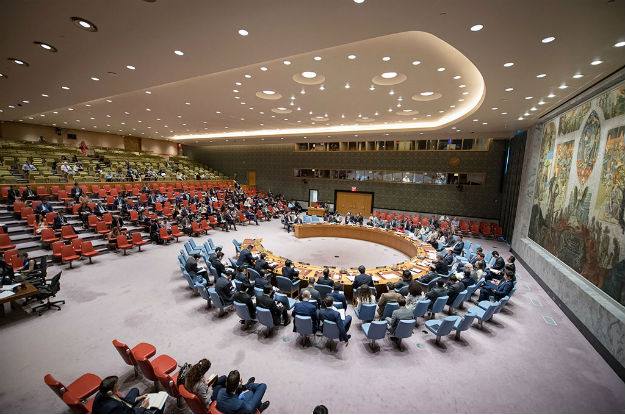
Pakistan told the United Nations Security Council on Tuesday, November 24, that decisions on the use of nuclear weapons must remain under human control and that artificial intelligence must never be used to target nuclear command, control and communications systems. Ambassador Syed Haider Shah, Pakistan's Permanent Representative to the UN, delivered the warning at a high-level open debate of the 15-member Council.
Source: The Diplomatic Insight
"This is most critical in the nuclear domain, where decisions on the use of nuclear weapons must remain under human control, and AI systems must never be used to target nuclear command, control and communications systems," Shah told the Council.
The debate, on conflict resolution in an era of rapid technological change, was held under Latvia's presidency of the Security Council. Shah said AI built into military systems is shortening the time leaders have to think in a crisis, raising the danger of errors and rushed decisions.
"As long as nuclear weapons exist, only humans should decide whether to use them," UN Secretary-General Antonio Guterres told the same debate, adding that when civilians die, nobody can blame the algorithm.
Why Pakistan raised it now
Pakistan argued that AI-enabled targeting and decision-support tools are no longer a future prospect but are already being deployed at scale in active conflicts around the world. Its delegation told the UN General Assembly's First Committee in October that without effective human judgement and control, such systems increase the risks of miscalculation and escalation, lower the threshold for the use of force, and erode compliance with international humanitarian law.
Shah called for inclusive, UN-led governance of military AI and for confidence-building measures to lower the risk of mistakes during a crisis. Pakistan's position is that military AI governance must be anchored in the United Nations, and that initiatives outside the UN cannot replace its legitimacy, inclusivity and universality.
India also spoke at the same debate, telling the Council that AI must stay human-centric and warning against technology being used for one-upmanship. Read that report here. India: AI must stay human-centric
Guterres repeated his call for talks on a legally binding treaty on lethal autonomous weapons, saying today's wars have become testing grounds for AI-based targeting, with algorithms now helping to shape life-and-death choices from gathering intelligence to picking targets. Pakistan's mission said human judgement and control must remain central to the design, development and deployment of emerging technologies.