Russian missiles crossed into Poland on Friday during a large-scale Russian attack on Ukraine, in the incident that led to NATO calling an emergency council meeting. Read our report on the incursion. Read the earlier report
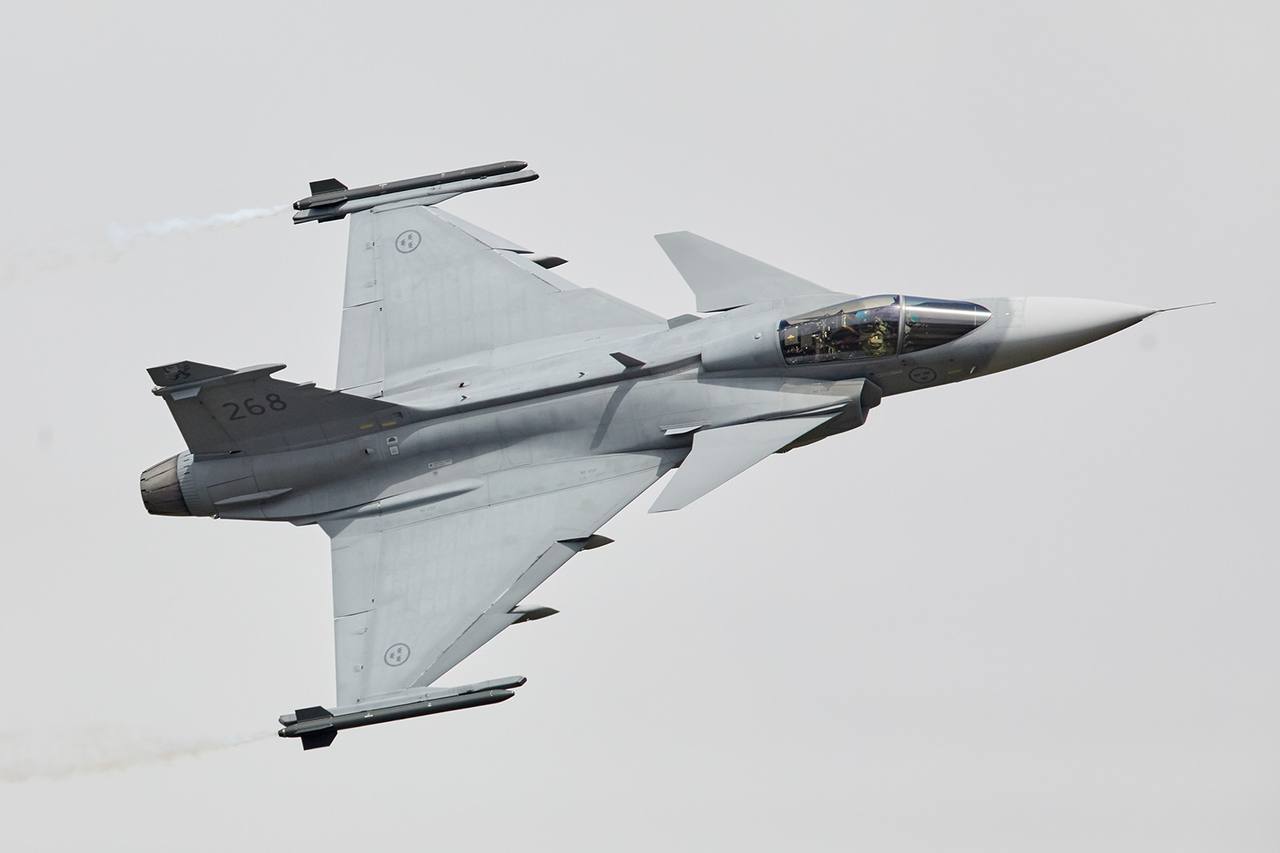
A Swedish Air Force pilot flying a JAS 39 Gripen fighter jet under NATO command was authorised to shoot down a suspected Russian cruise missile over Poland on Friday, November 20, but did not fire because severe weather prevented him from positively identifying the target, a senior Polish military commander has said.
Source: Air Data News
Lieutenant General Ireneusz Nowak, the operational commander of the Polish Armed Forces, told the Polish newspaper Rzeczpospolita that the pilot attempted to intercept an object believed to be a Russian Kh-101 cruise missile. Neither visual observation nor the aircraft's onboard electro-optical systems provided enough confirmation to engage it, he said.
Source: EuropeSays
What crossed into Poland
Polish radars tracked 11 objects approaching the border as potential threats during Russia's overnight attack on Ukraine. Three crossed into Poland — two suspected cruise missiles, believed to be Kh-101s, and one jet-powered drone — and came down in the south-east of the country. One missile fell in a field near Nowy Lipowiec, about 62 kilometres from the Ukrainian border; a second came down in Rudnik nad Sanem and the drone in Mlodochow. Nobody was hurt.
Two Swedish Gripens and two Polish Air Force F-16s were in the air over Poland through the night, supported by a Polish Saab 340 airborne early-warning aircraft and a Dutch air-to-air refuelling tanker. The Swedish Armed Forces confirmed its aircraft had tracked several targets over Polish territory during a mission lasting several hours. Deputy Air Force Chief Niclas Magnusson said the Swedish pilots had operated in exceptionally difficult weather and low visibility.
Source: Defence Matters
Why no shot was fired
The jets were operating under NATO's Combined Air Operations Centre at Uedem in Germany, which had issued a conditional authorisation allowing pilots to use their weapons once set identification and engagement conditions were met. Those conditions were not met: the pilot could not establish the necessary identification through either visual or electro-optical means, so he held fire — and none of the three objects that entered Polish airspace was intercepted. No missile was fired by any of the aircraft involved.
The episode illustrates the gap between detecting an airborne object and establishing enough identification to authorise destroying it. Cloud cover, precipitation and poor visibility can restrict optical and infrared observation — and bad weather made that difference decisive on Friday night.
The wider attack
The incursion happened during a large-scale Russian missile and drone attack on Ukraine overnight into Friday. President Volodymyr Zelenskyy said on Sunday that Russia had launched about 2,700 attack drones, nearly 1,460 guided aerial bombs and 165 missiles against Ukraine over the past week, with nearly every region coming under attack, as Moscow intensifies its campaign against the country's energy infrastructure.
Source: EuropeSays
What happens next
NATO has called an emergency council meeting for Monday, November 23, after the incursion. Secretary General Mark Rutte said in Warsaw that NATO will defend every inch of Polish territory. The failure to intercept the missiles — despite a NATO authorisation to fire — has exposed the operational limits facing NATO aircraft trying to intercept Russian weapons near the alliance's eastern border, and the debate over how to close that gap is expected to sharpen after Monday's council meeting.
What is solid
- A Swedish Gripen pilot under NATO command was authorised to shoot down a suspected Russian Kh-101 cruise missile over Poland on November 20 but did not fire because bad weather prevented positive identification, according to Poland's operational commander.
- Three objects crossed into Polish airspace — two suspected cruise missiles and a jet-powered drone — and none was intercepted.
- NATO has called an emergency council meeting for Monday, November 23.
What is only claimed
- Whether the object the Gripen pilot pursued was a Kh-101 cruise missile — Polish authorities describe it as suspected or believed to be one, and the identification was never confirmed.
- Whether NATO's engagement rules or its air-defence posture on the eastern border should change after the incident — allies have not yet agreed a public position.