Five children from one family were killed and at least one other child was injured on Sunday when a landmine left over from Syria's war exploded in the village of Umm Khazim in the Khan Sheikhoun countryside of southern Idlib province, in northwestern Syria, according to the state news agency SANA and the Syrian Civil Defense.
Source: SANA via Newscord
Toll revised as a wounded child died
Early reports put the toll at four children killed and two injured. Idlib Governor Mohammed Abdulrahman later said five children from one family had been killed and a seven-year-old child injured, after one of the wounded children died of his injuries. The dead children were aged between 8 and 15, according to SANA, and the injured were taken to hospitals in the city of Hama.
Source: SANA via Newscord
The mine is believed to have been left behind by forces of the former government of Bashar al-Assad, state media and the governor said, in an area that saw heavy fighting during the civil war. The Syrian Civil Defense, known as the White Helmets, was among the first responders at the scene.
Source: Wela TV
A danger that never left
Unexploded mines, shells and cluster munitions from more than a decade of war still kill and maim people across Syria almost every week. Coordination data led by the United Nations Mine Action Service recorded 1,337 incidents caused by explosive remnants of war between the fall of the Assad government on 8 December 2024 and early September this year, leaving 2,375 people dead or injured — including more than 850 children.
Source: SANA via Newscord
The same day, a 13-year-old boy was killed by explosive war remnants in the village of Asem in the Daraa countryside, according to SANA and the government newspaper Al-Thawra. Earlier in the week, an explosion in a school courtyard in Hasaka province in northeastern Syria killed one child and injured 19 others, officials said.
Source: SyriaNow / SANA
Clearance work continues
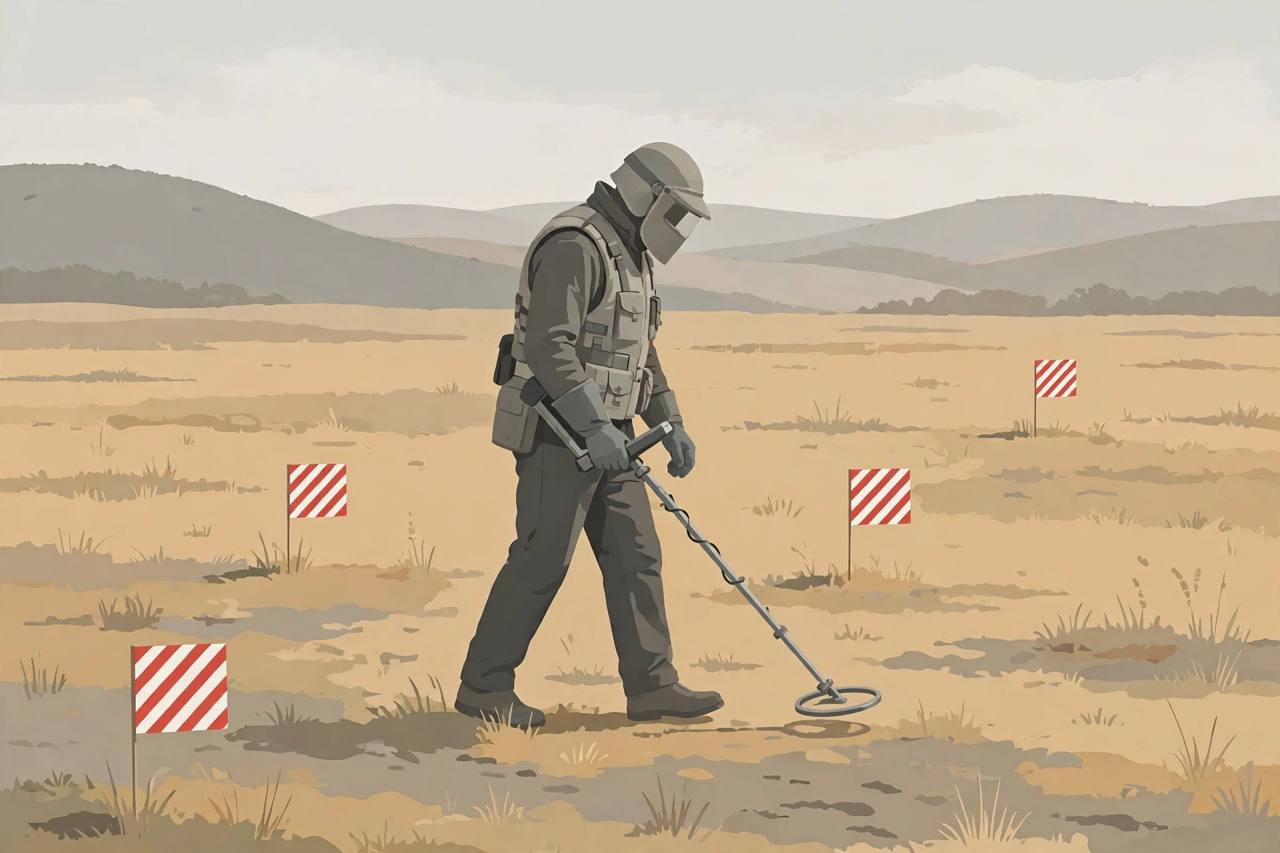
Syrian authorities and international organisations have continued field operations to detect and remove mines and unexploded ordnance, with teams working village by village in the worst-affected provinces. But clearance is slow, dangerous work, and much of the countryside remains marked as unsafe — while children, who often do not recognise the devices, pay the highest price.
What happens next
The injured children are being treated in hospitals in Hama. No names of the victims have been released.