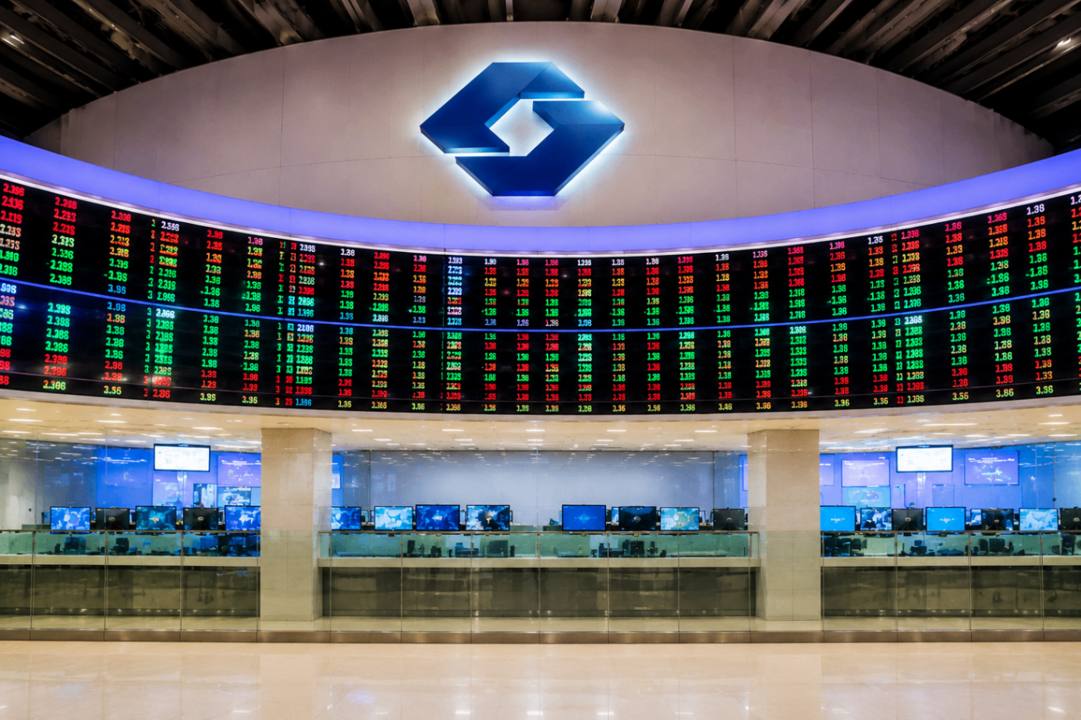
Taiwan's Financial Supervisory Commission (FSC) announced on Saturday, November 21, that from Monday, November 23, no short sale of a listed stock may be executed below the previous session's closing price — the regulator's third intervention this month as the island's stock market reels from the global AI sell-off.
Source: Bloomberg
The five-measure package widens curbs the FSC put in place on Thursday, November 19, which barred below-close shorting only in stocks that had already fallen 3.5 percent or more in a day. The new rule removes that threshold entirely, applying to all listed and over-the-counter stocks and Taiwan Depositary Receipts.
The minimum margin short sellers must post rises from 130 percent to 150 percent of the sale, and the commission suspended securities firms' applications to list put warrants on the Taiwan Stock Exchange and Taipei Exchange. Short selling above the previous close remains possible, and investors may still sell shares they own.
Worst week since 1991
The intervention follows a brutal week for the Taiex, Taiwan's benchmark index. It fell 2,393.60 points, or 6.23 percent, on Friday, November 20, to close at 36,033.29 — its lowest close in nearly seven months and its third-largest one-day point drop on record. For the week it lost 17.5 percent, the steepest weekly fall since 1991, and it now sits about 28.5 percent below its October record peak.
TSMC, the world's largest contract chipmaker and the market's heavyweight, fell 4.76 percent on Friday to NT$2,000 after touching NT$1,970 during the session. Taiwan's NT$500 billion National Financial Stabilization Fund — yaani lagbhag $15 billion — has been buying shares since November 6, its tenth intervention that day, and the fund said foreign investors had been net sellers for several sessions, though the selling was gradually easing.
The fund blamed doubts about the AI industry — potentially tighter US regulation of artificial intelligence, the returns on massive capital spending, company-specific factors and margin-financing risks — for several days of sharp declines in US stocks that spilled into Taiwan and other Asian markets.
Asia moves together
South Korea held an emergency meeting on Sunday of its finance minister, central bank governor and financial regulators, and said it would begin preparations right away so its market stabilisation funds could act. South Korea's Kospi fell 5.2 percent on Friday. China cut the minimum margin ratio on its Shanghai, Shenzhen and Beijing exchanges from 100 percent to 80 percent, effective November 30, and cut trading fees; the Shanghai Composite fell nearly 3 percent last week to a 16-month low.
The S&P 500 in the United States has closed in a correction, more than 10 percent below its record, after another sharp drop on Wall Street on Friday. Taiwan's stock exchange met 10 brokers on Sunday to discuss cutting the margin maintenance ratio from 130 percent to 120 percent.
Premier Cho Jung-tai convened economic and financial officials on Saturday, November 21. The Cabinet said the sell-off largely mirrored global market losses and that Taiwan had no underlying structural economic problems, according to the Taipei Times. Analysts cautioned that short-sale curbs cannot by themselves reverse a decline driven by doubts over AI spending and high US technology valuations.
Friday's 6.23% plunge and the 17.5% weekly loss that forced the regulator's hand. Read the earlier report
Monday's open will be the first test of the new ban, with the measures carrying no expiry date — the commission said they would be adjusted as conditions warrant.
Source: Focus Taiwan