US President Donald Trump favours tightening the economic campaign against Iran over launching another major military offensive, Israel Hayom reported on Saturday, November 21, citing three diplomatic sources familiar with the deliberations. The report says the president has weighed four options for the next phase of the confrontation — and has come down on the side of squeezing Tehran's oil money rather than ordering new bombing.
Source: Israel Hayom (via Political.org)
According to the report, Trump's advisers laid out four approaches: negotiate an agreement with Tehran, launch another major offensive, carry out limited strikes on Iranian nuclear and military facilities, or intensify the economic campaign. The president is reported to favour the last of these, with backing from Secretary of State Marco Rubio, Treasury Secretary Scott Bessent and Commerce Secretary Howard Lutnick.
Source: US News Pulse
The blockade at 130 days
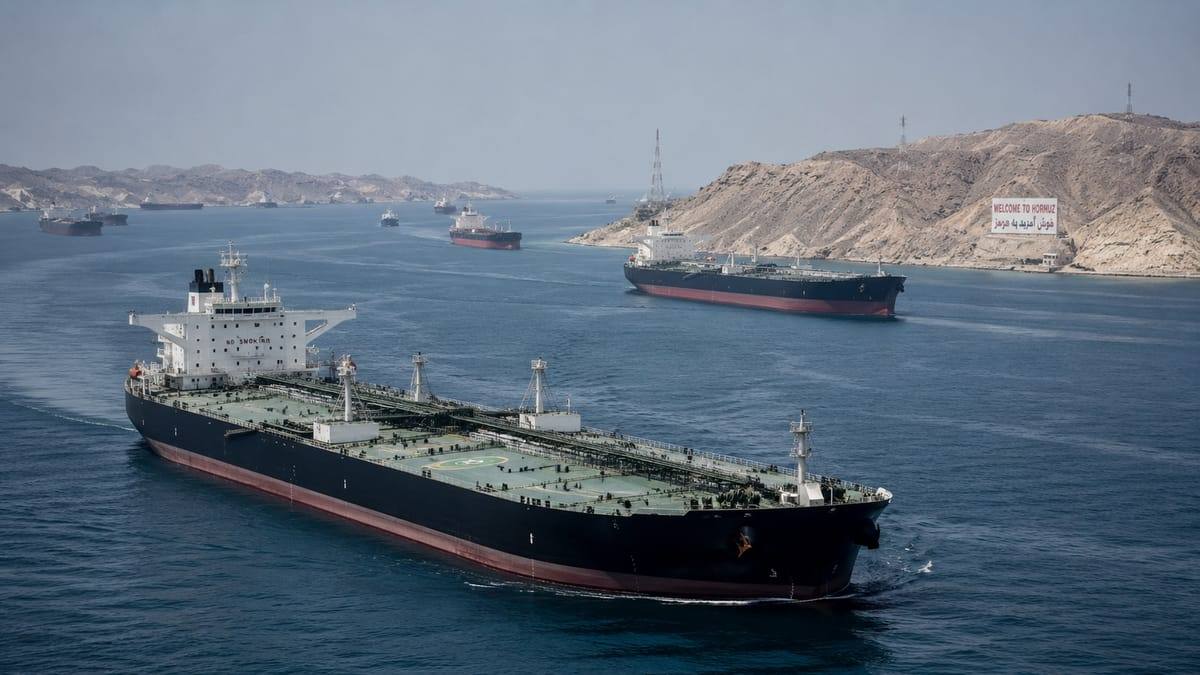
The economic campaign is built around the US naval blockade of Iran, which the US Central Command said on Saturday had reached 130 consecutive days. CENTCOM estimates the blockade has prevented more than $25 billion in Iranian crude exports — yaani lagbhag ₹2.2 lakh crore — since it began. Shipping through the Strait of Hormuz was running about 65 percent below pre-conflict levels in mid-November, according to a UK maritime security report.
Source: Political.org
On Friday, November 20, the Treasury Department sanctioned four Iranian oil trustees as part of Operation Economic Outcast, the sanctions campaign launched in August to choke off Iran's oil revenues. About two weeks ago, CENTCOM also announced Task Force Iron Gate, aimed at disrupting illicit revenue, weapons shipments and sanctioned materials crossing Iran's land borders and the Caspian Sea.
The new focus of the squeeze, the report says, is Iran's oil-smuggling routes through Iraq, where crude is disguised as Iraqi or Kurdish oil and routed towards ports in Syria or Turkey. Washington is pressing Gulf governments to help shut those routes down while keeping the naval blockade in place and protecting commercial shipping through the Strait of Hormuz.
What Trump himself has said
Trump's own public remarks in recent days have pointed in the same direction. On Wednesday he told Fox News he still wants a deal with Iran, but one that lasts, and warned the US would "finish it off" soon, one way or another. On Thursday he told Israel's Channel 12 that he is "not rushing to make any decisions on Iran" and that the US would see what happens after the new year. On Friday he said Washington wants a real deal rather than a fake one. Around November 9 he had described another offensive as "highly unlikely", and Rubio has said strikes were not needed because the sanctions campaign was working. Vice President JD Vance declined this week to endorse renewed strikes.
The military option has not gone away, however. CBS News reported on Friday, November 20, that the United States and Israel are considering a new assault on Iran in the near term, and that American forces already in the region could launch one within two to four days of an order. CBS said Israel is worried about how fast Iran is rebuilding its ballistic missile production and moving military and nuclear sites underground, but that it remains unclear whether Trump wants to order new military action at all. A decision, in other words, has not been announced — and the president could still change his mind.
Source: PlanetShift News (summarising CBS News, November 20)
The war began on February 28, 2026, when the United States and Israel launched a joint attack on Iran. A fragile ceasefire has formally held since April, though the two sides have exchanged fire since, including American strikes on Iran's Qeshm Island and Iranian attacks on Kuwait and Bahrain. Iran's demands for talks include ending the war on all fronts, unfreezing Iranian assets, lifting oil sanctions and ending the US counter-blockade of Iranian ports. Tehran says messages are still being passed to Washington through intermediaries and that it remains open to diplomacy — and on Sunday Trump said there would not be a strike against Iran "today".
The standoff flared again on Saturday, when Bahrain accused Iran of striking a civilian industrial facility and two tankers were hit in the Strait of Hormuz. Read the Bahrain story here
For the lakhs of Punjabi and Indian workers living in the Gulf, the choice between bombs and blockade matters either way. A new bombing campaign would put Gulf cities, airports and workplaces back in the firing line, as the attacks on Bahrain showed; a grinding blockade keeps shipping disrupted, flights uncertain and oil prices swinging, which feeds straight into remittances, jobs and the cost of living back home in Punjab. Gulf states have been pressing Washington to hold off strikes, and Israel's prime minister has been pressing in the opposite direction — a tug-of-war that is now playing out in public.
What is solid
- The US naval blockade of Iran reached 130 consecutive days on November 21, according to CENTCOM.
- CENTCOM estimates the blockade has stopped more than $25 billion in Iranian crude exports.
- The US Treasury sanctioned four Iranian oil trustees on November 20 under Operation Economic Outcast.
- Trump has said publicly he is in no rush to decide and could wait until after the new year.
What is only claimed
- Whether Trump has firmly chosen the economic route — the claim rests on three unnamed diplomatic sources cited by Israel Hayom, and no White House decision has been announced.
- Whether the economic squeeze can force Tehran to accept Washington's terms — negotiations have stalled because Iran refuses to accept them.
- The Revolutionary Guards' claims about the damage its strikes did to US positions and radars in Bahrain, which US Central Command has disputed.
What happens next turns on three things: whether Gulf governments help Washington close the Iraq oil-smuggling routes, whether Tehran accepts terms it has so far refused, and whether the hawks pressing for a new air campaign — including Israel's prime minister, who has pushed Trump for a four-to-seven-day campaign — win the argument. Until one side gives way, the blockade grinds on, the tankers keep sailing through a strait under fire, and the war stays one decision away from flaring up again.