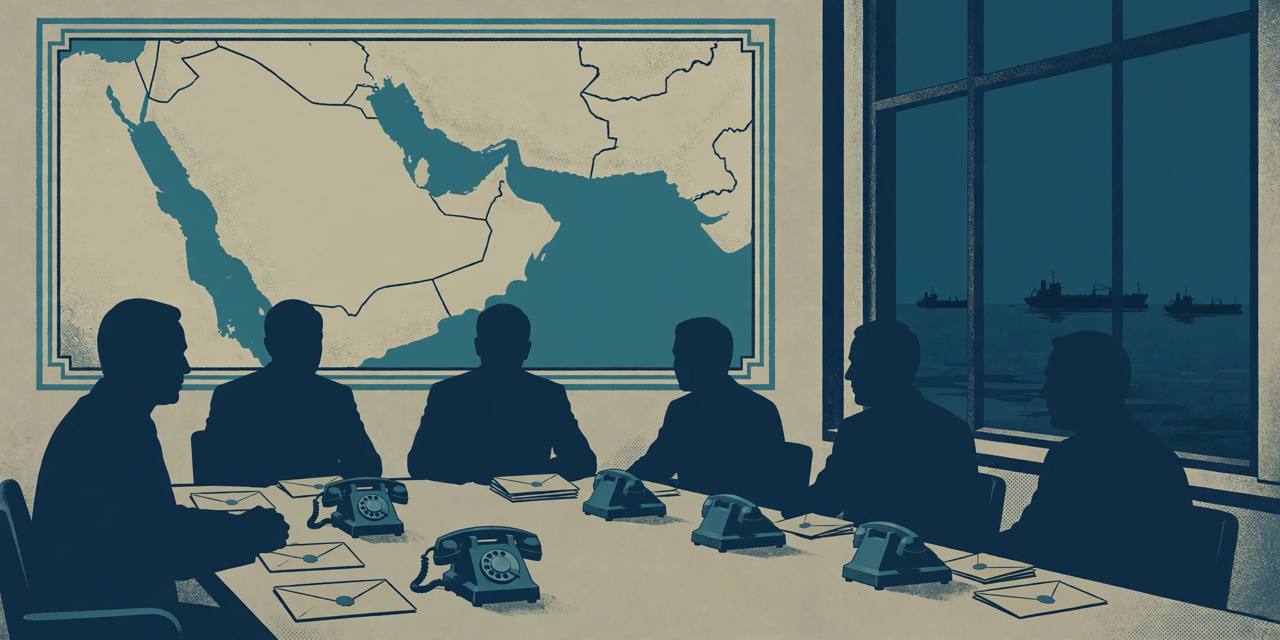
WASHINGTON — US Vice President JD Vance has spent the past two weeks directly engaged in indirect negotiations with Iran aimed at brokering a new ceasefire and resuming stalled nuclear discussions, Axios reported on Friday, November 7, citing two sources with knowledge of the matter. The report, by Axios correspondent Barak Ravid, puts the vice president — not the State Department — at the centre of the effort to end the US-Israel war on Iran, which began on February 28. Vance's direct involvement lifts the quiet diplomatic track to the highest levels of the Trump administration.
Source: Axios, via The Hindu BusinessLine (Nov 7)
Behind closed doors, Vance has maintained almost daily discussions with Qatari Prime Minister Sheikh Mohammed bin Abdulrahman Al-Thani, Pakistan's Chief of Army Staff Field Marshal Asim Munir and other mediators, Axios reported. White House special envoy Steve Witkoff and presidential adviser Jared Kushner are also engaged in the diplomatic track. BPI News, citing two Pakistani security sources familiar with the negotiations who have briefed it through earlier stages of the talks, independently reported the same picture: Vance in constant contact with the Qatari and Pakistani mediators, with discussion now focused on whether a working-level technical meeting between American and Iranian officials can be arranged in the coming days.
Source: BPI News (Nov 7)
The new push builds on an opening this site reported last month, when Vance wrote to Iran's security council secretary proposing direct talks and Tehran's foreign minister called the letter a positive step. Read the earlier report: Vance's letter to Rezaei
The current diplomatic momentum began gathering pace about a fortnight ago, when Vance dispatched a formal letter to Mohsen Rezaei, secretary of Iran's Supreme National Security Council and a close confidant of Supreme Leader Mojtaba Khamenei, proposing the resumption of direct talks, Axios reported. Iran's Foreign Minister Abbas Araghchi publicly described that letter as a positive step at the time. What is new in Friday's reporting is the scale of Vance's personal role since then: near-daily mediator calls, and a possible technical meeting under active discussion — although no such meeting has yet taken place, and BPI's Pakistani sources said no venue has been agreed, with Islamabad looking increasingly unlikely to host it despite Pakistan's preference for the talks to return to its capital.
Source: Axios, via The Hindu BusinessLine (Nov 7); BPI News (Nov 7)
Qatar says the talks have not failed
Qatar pushed back publicly on Saturday, November 7, against online claims that the mediation had collapsed. Qatar's International Media Office rejected reports — which it attributed to fake accounts — claiming Prime Minister Al-Thani had declared the US-Iran negotiations a failure, and said the two sides were still seeking an agreement. Al-Thani himself said the mediators had spent the past couple of weeks working with US administration colleagues who, in his words, have a genuine intention to find a way to contain the situation and de-escalate it.
Source: Qatar International Media Office, via Bosphorus News strategic brief (Nov 7)
Al-Thani's public remarks on the mediation — that the sides cannot wait for a perfect agreement and should settle for a good one — were reported in full on this site on November 7, before the Axios report revealed Vance's role. Read: Qatar PM urges a good US-Iran deal
Sources involved in the mediation described the talks to Axios as making some progress but moving slowly. According to US officials and regional sources cited by Axios, President Donald Trump currently remains amenable to letting the diplomatic efforts proceed to test whether an agreement can be forged. The same reporting carries the other half of Washington's position: should Trump alter course and order renewed military action, US forces stand fully prepared to launch strikes on an expedited schedule. Trump has publicly confirmed in recent days that the United States is talking to Iran.
Source: Axios, via The Hindu BusinessLine (Nov 7)
Diplomacy alongside military pressure
The backchannel is running in parallel with open military pressure, not instead of it. On November 6, Trump confirmed US forces had struck an Iranian air-defence position on Qeshm Island in the Strait of Hormuz after Washington said the system fired towards a US aircraft. On November 7, US Central Command announced Task Force Iron Gate, a roughly 20-person Tampa-based unit meant to extend the months-long naval blockade of Iran to its land borders and the Caspian Sea, and US forces disabled a cargo vessel in the Gulf of Oman that CENTCOM said tried to breach the blockade after visiting an Iranian port. Iran, for its part, announced on November 7 that it was lifting its self-imposed 2,000-kilometre limit on ballistic missile ranges. Each of those developments has been reported separately on this site.
Source: Reuters (Nov 7) and CENTCOM statements, via this site's earlier reports
Vance's role also has a history inside this war. Axios noted he was the most doubtful voice among Trump's inner circle before the war's outbreak in late February, persistently pushing for a diplomatic resolution. He previously headed the US negotiating team at the April summit on Iran in Islamabad and played a central role in securing the bilateral memorandum of understanding in June. He later led the American delegation for direct talks hosted in Switzerland, after which Tehran pledged that UN inspectors would be welcomed back to nuclear facilities. The vice president's office chose not to comment on the current talks.
Source: Axios, via ANI / The Hindu BusinessLine (Nov 7)
What is solid
- Axios reported on November 7, citing two sources familiar with the discussions, that Vice President Vance has been directly involved in indirect US-Iran talks for two weeks, in near-daily contact with Qatar's prime minister and Pakistan's army chief (Axios, via multiple outlets).
- BPI News reported the same central facts citing its own two Pakistani security sources, including that a working-level technical meeting is under discussion but has not taken place and has no agreed venue (BPI News, Nov 7).
- Qatar's International Media Office said on November 7 that claims its prime minister had declared the negotiations a failure were distorted by fake accounts, and that the sides were still seeking an agreement.
- The vice president's office did not comment on the talks (Axios).
What is only claimed
- How much progress the talks have made: mediation sources told Axios there is some progress but movement is slow; no terms, date or venue for a technical meeting have been announced by any government.
- Whether the channel can produce a ceasefire: Iran has not publicly confirmed Vance's role or accepted a technical meeting, and Tehran is separately demanding movement on Lebanon before further steps, according to one report of the track — a claim not confirmed by Iranian officials on the record.
What it means for the Gulf, and what happens next
For the lakhs of Punjabi and Indian workers across the Gulf states, the difference between this backchannel succeeding and failing is direct: the war has kept the Strait of Hormuz — the corridor for about a fifth of the world's oil and gas — effectively closed or contested for months, pushed Brent crude to around $98 a barrel at Friday's close, and repeatedly raised the risk of strikes spreading to Gulf energy sites and airports their jobs depend on. A working ceasefire would be the first step towards reopening the strait; a collapse of the talks, with US forces on standby, points the other way. What happens next: watch for any announcement of the working-level technical meeting — its date and venue would be the first concrete sign the Vance channel is moving from phone calls to a negotiating table — and for Tehran's first on-record response to the reports of his role.