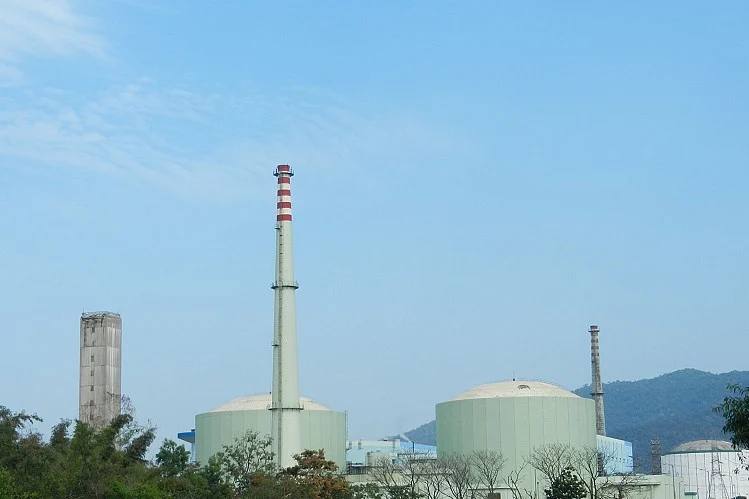
Kaiga Generating Station Unit-1 (KGS-1) attained criticality in the early hours of Sunday, 22 November, the Nuclear Power Corporation of India Limited (NPCIL) announced, restarting the sustained, controlled nuclear chain reaction at the 220-MW reactor in Karnataka's Uttara Kannada district.
Source: Indian Nuclear Forum
The restart came just 600 days after the unit was shut down on 1 April 2025 for a major refurbishment — the replacement of its coolant channels and feeders, known as Extended Mid-Cycle Coolant Channel Replacement (EMCCR) and Extended Mid-Cycle Feeder Replacement (EMFR). NPCIL said it was the first reactor in its fleet to return to criticality so quickly after such extensive work, calling it a new fleet-wide benchmark.
What criticality means — and what comes next
Criticality means the reactor has achieved a self-sustaining fission chain reaction at low power. It is not yet generating electricity: fuel loading began in September after clearance from the Atomic Energy Regulatory Board, and the unit must still pass inspections, testing and operational checks before it can be synchronised to the grid and supply power.
Source: World Nuclear News
The refurbishment was a life-extension overhaul. Over more than 25 years of operation the reactor's coolant channels and feeders age and must be replaced — a complex job involving defuelling the reactor, draining its heavy water, removing and replacing the channels, in-core inspections, reloading fuel, leak testing and hot conditioning.
A record-setting reactor
KGS-1 is no stranger to records. Between May 2016 and December 2018 it ran continuously for 962 days, a world record for uninterrupted operation by a nuclear power reactor at the time. The unit first went critical on 26 September 2000 and began commercial operation on 16 November 2000.
Kaiga, near the Kali river about 56 km from Karwar, has four 220-MW indigenous pressurised heavy water reactors. Two larger 700-MW units, Kaiga-5 and Kaiga-6, are under construction at the site, with work having begun on 1 March 2026.
India's nuclear programme depends on extending the life of its existing indigenous PHWR fleet while new units are built. Completing a full coolant-channel and feeder replacement in 600 days — faster than any NPCIL unit before it — is the engineering proof that the older reactors can keep running for decades.
NPCIL congratulated Team Kaiga, the wider NPCIL family and the Department of Atomic Energy fraternity for the achievement, crediting their dedication and teamwork.