Latest News — Punjab, India, USA and the World
Awaaz Punjab is an independent digital news platform publishing original, source-verified reporting in English, Punjabi and Hindi. Every story below is published with its sources named and dated, and every article is available in all three languages. Our newsroom covers Punjab first — its politics, districts and the road to the 2027 assembly election — along with India, the Punjabi diaspora in the USA and Canada, and world affairs that touch Punjab's people, from the Gulf to North America.
The guard of a Delhi–Jammu train spotted heavy cement pillars lying on an adjacent track near Sirhind station shortly after midnight; GRP and RPF teams removed them in time and an investigation is under way to find who placed them.
Published 2026-11-25 · Awaaz Punjab
Months of excessive wildlife feeding in Chicago's Lincoln Park have drawn rats, fines and now national attention — and raised a hard question for the city: how do you enforce the rules when penalties don't change behaviour?
Published 2026-11-25 · Awaaz Punjab
A proposed class action filed in Maryland federal court accuses Wendy's and its point-of-sale provider NCR Voyix of using shared sales data to coordinate prices across franchise restaurants — an alleged scheme the complaint says dates to 2016.
Published 2026-11-25 · Awaaz Punjab
Peru has closed 96 ports along its entire Pacific coast after abnormal swells linked to El Niño smashed homes, hotels and seafront roads, with the navy warning the danger will last until Sunday.
Published 2026-11-25 · Awaaz Punjab
Two Libyan naval officers have died of wounds from Sunday's Ukrainian sea-drone attack on the Russian corvette Merkury at Benghazi, and the Libyan National Army has vowed to retaliate — dragging Libya deeper into a war being fought far from its shores.
Published 2026-11-25 · Awaaz Punjab
The CBI's Anti-Corruption Branch says Kumar, who also serves as Bihar's Official Liquidator, had demanded ₹10 lakh to let a scrap-removal contract at Rohtas Sugar Mill continue. He was caught at his Lucknow home on Tuesday evening.
Published 2026-11-25 · Awaaz Punjab
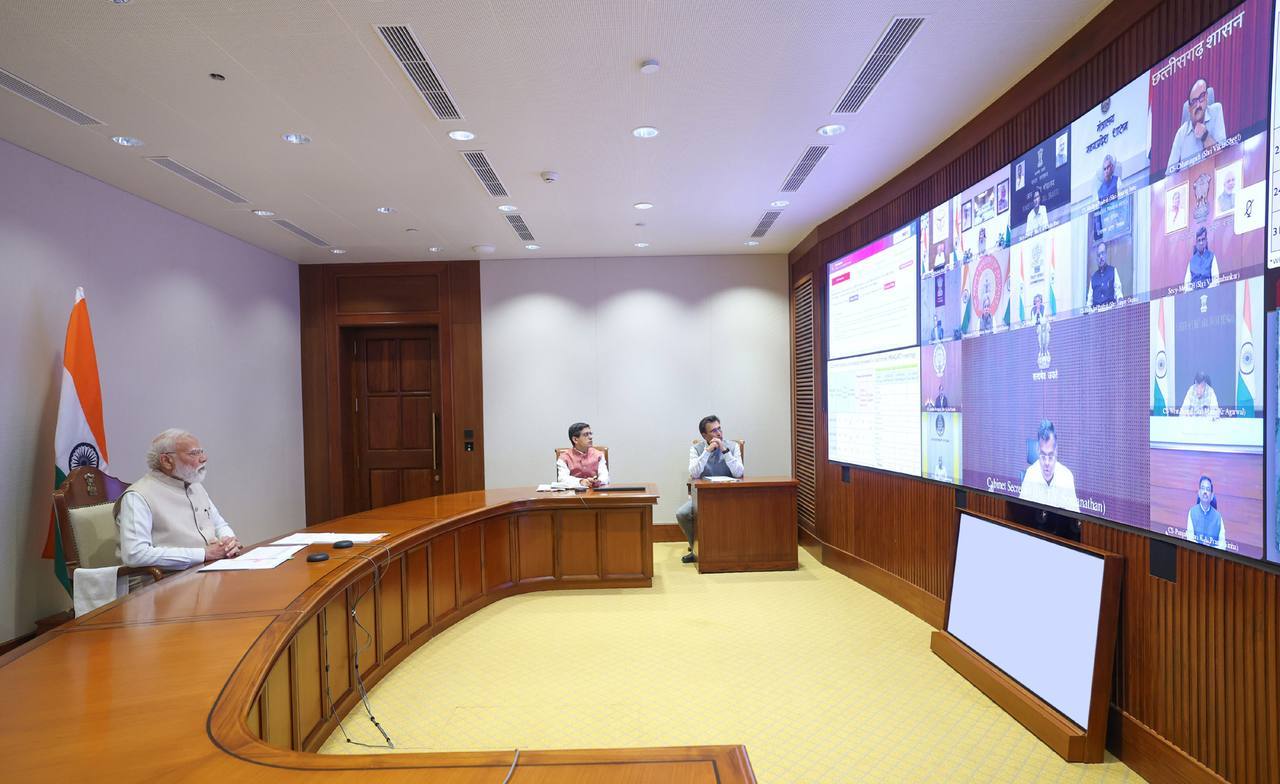
Chief Minister Samrat Choudhary chaired the meeting at the Chief Minister's Secretariat, where the government also launched a paperless e-Cabinet system and raised the annual grant for village courts from ₹4,000 to ₹24,000.
Published 2026-11-25 · Awaaz Punjab
One 800 MW unit at Adani Power's Godda plant in Jharkhand goes offline from midnight on November 25 for a 25-day annual overhaul. Bangladesh will get roughly half its usual power from the plant until December 18, while the second unit keeps running.
Published 2026-11-25 · Awaaz Punjab
A speeding truck lost control while descending the steep Bopdev Ghat slope on Wednesday afternoon, first hitting a car and then ploughing into students waiting at a bus stop outside Trinity College in Pune's Yewalewadi area. Three students were killed and two others injured, police said.
Published 2026-11-25 · Awaaz Punjab
The legendary sprinter and first woman to head the Indian Olympic Association did not file her nomination before Tuesday's 4:30 pm deadline, ending her four-year tenure. Olympic bronze medallist Gagan Narang, Archery Association of India secretary general Virendra Sachdeva and former IOA secretary general Rajeev Mehta are in the fray for the December 5 election.
Published 2026-11-25 · Awaaz Punjab
The Board of Supervisors voted unanimously on Tuesday to declare a local emergency at the Castaic landfill, a week after a drilling crew struck a pressurised pocket of methane and sent a geyser of gas and debris hundreds of feet into the air. The county is asking the state to declare an emergency too — and residents say they have waited years for action.
Published 2026-11-25 · Awaaz Punjab
The under-construction building in KAECHS Block 4 came down on Wednesday morning while dozens of workers were on site; rescuers were still searching the rubble as officials blamed illegal construction and a court stay order that had blocked demolition.
Published 2026-11-25 · Awaaz Punjab
The 15-day Golden Dragon 2026 exercise opened on Wednesday at Ream Naval Base, with about 2,000 troops, Chinese Type 96A tanks and three warships — the eighth and biggest edition of the joint drills.
Published 2026-11-25 · Awaaz Punjab
The CBI told the Kerala High Court it found no evidence to prosecute Chennithala in the 2006 case over alleged irregularities in a ₹256-crore effluent treatment plant at the state-owned Travancore Titanium Products Ltd. A closure report has been filed before the special court.
Published 2026-11-25 · Awaaz Punjab
The BUPE for Recovery Act would temporarily exempt buprenorphine from the DEA's suspicious-orders tracking so pharmacies can stock it without fear — a second attempt at a fix first introduced in 2024.
Published 2026-11-25 · Awaaz Punjab
Yemen's Houthis said on Wednesday they attacked the kingdom's largest oil refinery at Ras Tanura and claimed fires broke out. The Saudi-led coalition said its air defences destroyed four drones over the port and gave no confirmation the refinery was hit — hours after it struck the rebel-held port of Hodeidah.
Published 2026-11-25 · Awaaz Punjab
Warsaw raised the idea at a NATO ambassadors' meeting in Brussels after three Russian Kh-101 cruise missiles crashed in south-eastern Poland on 20 November. Some allies backed the discussion, but no decision was taken — and the move would need the unanimous consent of all 32 allies.
Published 2026-11-25 · Awaaz Punjab
Ukraine's Defence Minister Yevhenii Khmara announced the pledge in Oslo, with air defence first in line for the money. The commitment lands as Kyiv warns of a huge funding gap for 2027.
Published 2026-11-25 · Awaaz Punjab
Krissh Mahatma, 18, a freshman soccer player at Copiah-Lincoln Community College from London, was shot outside Green Ghost Tacos in downtown Jackson early on Sunday. Capitol Police say Danny Luna, 22, was arrested on Tuesday and charged with murder.
Published 2026-11-25 · Awaaz Punjab
Lauren Becker, 22, was stabbed in the parking lot of the Kids Can Community Center in South Omaha on Tuesday morning. Police say Terry Kanmacher, 21, was arrested hours later at Minneapolis–Saint Paul airport as he tried to board a flight to France.
Published 2026-11-25 · Awaaz Punjab
Students who opted for three languages this year can continue, the court said while hearing CBSE's plea — and the Class 6–9 relaxation on the Class 10 third-language board exam stays.
Published 2026-11-25 · Awaaz Punjab
Union Minister Virendra Kumar launched SAMAVESH and a revamped e-Anudaan portal in New Delhi on Tuesday, bringing the Social Justice Department's schemes, services and organisations onto a single login — with an AI assistant in 22+ languages.
Published 2026-11-25 · Awaaz Punjab
South Korea's KOSPI sank 6.16% to 4,697.51 and Taiwan's Taiex fell 4.8% on Wednesday as a Wall Street tech slump and fresh US tariff worries wiped out Monday's relief rally in a single session.
Published 2026-11-25 · Awaaz Punjab
The Federal Supreme Court ruled on Wednesday that federal forces can secure all international borders, including in the semi-autonomous Kurdistan region — backing Prime Minister Ali al-Zaidi's drive to take over Kurdish-run oilfields and border crossings after an oil-smuggling probe.
Published 2026-11-25 · Awaaz Punjab
Published 2026-11-25 · Awaaz Punjab
Published 2026-11-25 · Awaaz Punjab
Published 2026-11-25 · Awaaz Punjab
Published 2026-11-25 · Awaaz Punjab
Published 2026-11-25 · Awaaz Punjab
Published 2026-11-25 · Awaaz Punjab
Published 2026-11-25 · Awaaz Punjab
Published 2026-11-25 · Awaaz Punjab
Published 2026-11-25 · Awaaz Punjab
Published 2026-11-25 · Awaaz Punjab
Published 2026-11-25 · Awaaz Punjab
Published 2026-11-25 · Awaaz Punjab
Published 2026-11-25 · Awaaz Punjab
Published 2026-11-25 · Awaaz Punjab
Published 2026-11-25 · Awaaz Punjab
Published 2026-11-25 · Awaaz Punjab
Published 2026-11-25 · Awaaz Punjab
Published 2026-11-25 · Awaaz Punjab
Published 2026-11-25 · Awaaz Punjab
Published 2026-11-25 · Awaaz Punjab
Published 2026-11-25 · Awaaz Punjab
Published 2026-11-25 · Awaaz Punjab
Published 2026-11-25 · Awaaz Punjab
Published 2026-11-25 · Awaaz Punjab
Published 2026-10-22 · Awaaz Punjab
Published 2026-10-19 · Awaaz Punjab
Published 2026-10-18 · Awaaz Punjab
Published 2026-10-18 · Awaaz Punjab
Published 2026-10-18 · Awaaz Punjab
Published 2026-10-18 · Awaaz Punjab
Original Reporting — Only on Awaaz Punjab
Some of what we publish exists nowhere else: our numbered Awaaz Punjab Jaanch Reports are original, document-based investigations, and our Punjab Election 2027 hub tracks all nine parties and all 117 MLAs with their official 2022 affidavit data, a promise-by-promise Vaada Tracker and reader polls — a permanent public archive built from primary records.
More from Awaaz Punjab
Our Editorial Standards
How we work: every story is checked against at least two independent, reputable sources before publication; allegations are labelled as allegations; figures carry the name of the outlet or agency that reported them and the date; corrections are published openly. Read our full verification method on the How We Verify page, our data desks on the School, Podcast and SUNO audio pages, and our numbered original investigations in the Investigations section.
Awaaz Punjab is an independent, trilingual newsroom — for Punjab, by Punjabis. We do not sell aggregated news; we publish investigations that stand on sources, with the outlet and date attached to every claim. Our first beat is Punjab's drug crisis, our second is Punjab politics. From Amritsar to Toronto — wherever a Punjabi lives, Awaaz Punjab reaches.