Three Russian missiles landed in Poland on Friday, November 20, during a large Russian attack on Ukraine. NATO's top council met in Brussels on Monday to discuss the incursion, and Poland asked allies for more air defence and surveillance on the eastern flank. Read the earlier story
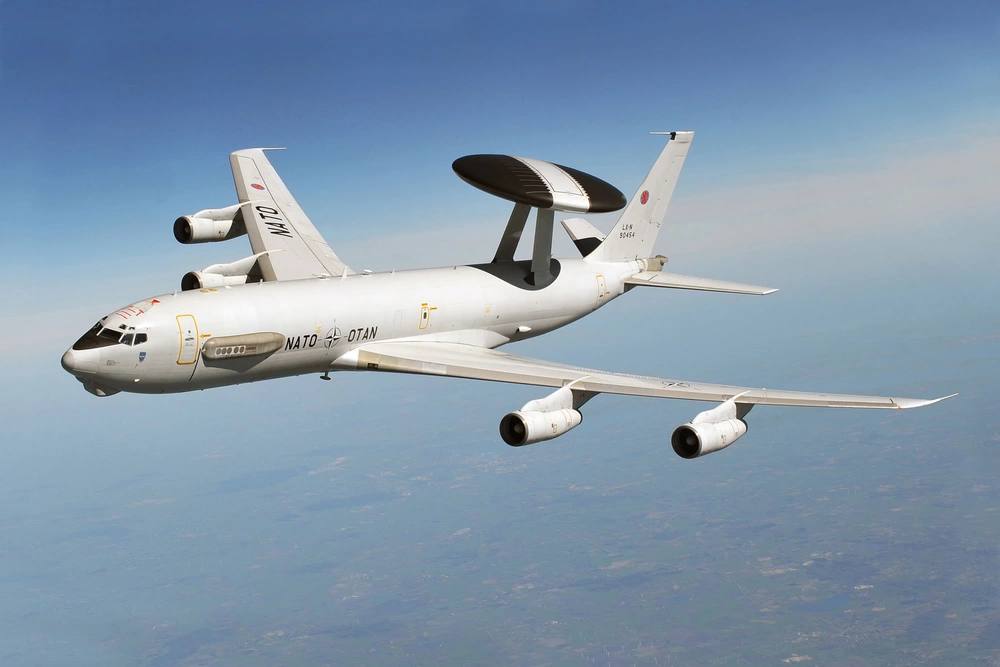
NATO will deploy an AWACS early-warning aircraft to Poland, Polish Deputy Defence Minister Paweł Zalewski said on Monday, November 23, after an emergency meeting of the alliance's North Atlantic Council in Brussels. The move is NATO's first concrete response to three Russian missiles landing on Polish soil last week.
"An AWACS early-warning aircraft will be made available to Poland," Zalewski told reporters after the meeting. "This is a very good system that gives us even deeper operational awareness which allows us to respond better to this kind of threat."
A NATO spokesperson confirmed the decision separately, saying the alliance's top military commander, US Air Force General Alexus Grynkewich, had authorised the "forward deployment" of NATO's Airborne Warning and Control System aircraft. The spokesperson said Moscow "bears full responsibility" for the incursions into Polish airspace.
What happened in Poland on Friday
Three Russian Kh-101 cruise missiles entered Polish airspace early on Friday, November 20, during one of the larger Russian attacks on western Ukraine, and came down in south-eastern Poland. Polish prosecutors confirmed on Sunday that all three objects were Kh-101 missiles, after analysis of the recovered debris.
The missiles crashed at Nowy Lipowiec, Rudnik nad Sanem and Mołodycz, in the Podkarpackie and Lublin regions near the Ukrainian border. Investigators recovered propulsion and guidance parts and said the weapons had been manufactured in the fourth quarter of 2026 at a plant in Dubna, about 140 kilometres south of Moscow, according to the Lublin District Prosecutor's Office.
The Kh-101 can carry a warhead weighing up to 990 pounds, about 450 kilograms, Polish officials said. The missiles came down about 20 to 30 miles inside the Polish border, and close to the site of a major multinational military exercise involving British and other European troops.
A Swedish JAS 39 Gripen pilot patrolling Polish airspace received NATO authorisation to shoot down one of the suspected missiles but held fire in bad weather, according to earlier reporting on the incident.
Deliberate provocation or mistake? The allies disagree
Polish Prime Minister Donald Tusk said the incident was likely an intentional Russian provocation, timed to coincide with the military exercises under way in Poland. US President Donald Trump, by contrast, played the incident down, saying Russia was "landing drones in Poland and a couple of little missiles, by mistake."
NATO Secretary-General Mark Rutte visited Warsaw on Saturday and said the alliance would "defend every inch of Polish territory." He said General Grynkewich was reviewing allied defences to identify vulnerabilities after the incursion.
Poland did not invoke NATO's Article 4 consultations. Instead, Warsaw sought additional allied assets, and the North Atlantic Council — the alliance's top decision-making body, with envoys from all 32 member states — met in Brussels on Monday to discuss the incident. Poland was represented by Deputy Defence Minister Zalewski, who said allies would present proposals to strengthen protection of Poland's eastern border.
What an AWACS does
NATO's 14 AWACS aircraft — E-3 Sentry jets fitted with a distinctive nine-metre-wide rotating radar dome — have served as the alliance's eyes in the sky since 1982. Based at Geilenkirchen air base in Germany, the fleet has flown surveillance missions along NATO's eastern flank since Russia launched its full-scale invasion of Ukraine in 2022.
The aircraft can track other aircraft and missiles at long range and pass that picture to fighters and air defences on the ground, giving defenders far more time to react than ground-based radar alone.
Wider pattern of pressure on NATO's east
The Poland incident is the latest in a string of provocations attributed to Russia by European governments. Denmark moved last week to expel Moscow's defence attaché over an alleged Russian plot to kill a Ukrainian-American citizen on Danish soil, and European leaders have warned for months about sabotage, airspace incursions and assassination plots aimed at NATO states.
The same week, Ukraine said it was ready for four-way peace talks with Europe, the United States and Russia "as soon as possible", while Russia continued heavy strikes on Ukrainian cities and energy infrastructure. The European Commission also proposed its 22nd package of sanctions against Russia on Monday.
What is solid
- Three Russian Kh-101 missiles landed in south-eastern Poland on November 20, 2026.
- NATO's North Atlantic Council met in Brussels on November 23 to discuss the incident.
- NATO will make an AWACS early-warning aircraft available to Poland, as announced by Polish Deputy Defence Minister Paweł Zalewski and confirmed by a NATO spokesperson.
What is only claimed
- Whether the missiles entered Poland deliberately — Poland's prime minister says it was likely an intentional provocation; US President Trump said it happened "by mistake".
- Whether the missiles were aimed at Poland or went off course during the attack on Ukraine — Polish prosecutors have confirmed what the weapons were and where they fell, not their intended target.
What happens next
NATO has not said when the AWACS aircraft will arrive in Poland or how long it will stay. General Grynkewich's review of allied defences is continuing, and Poland is pressing allies for further air-defence and surveillance assets for the eastern flank. Any further Russian incursion into NATO airspace is likely to trigger another emergency council meeting — and a much sharper debate about how the alliance responds.