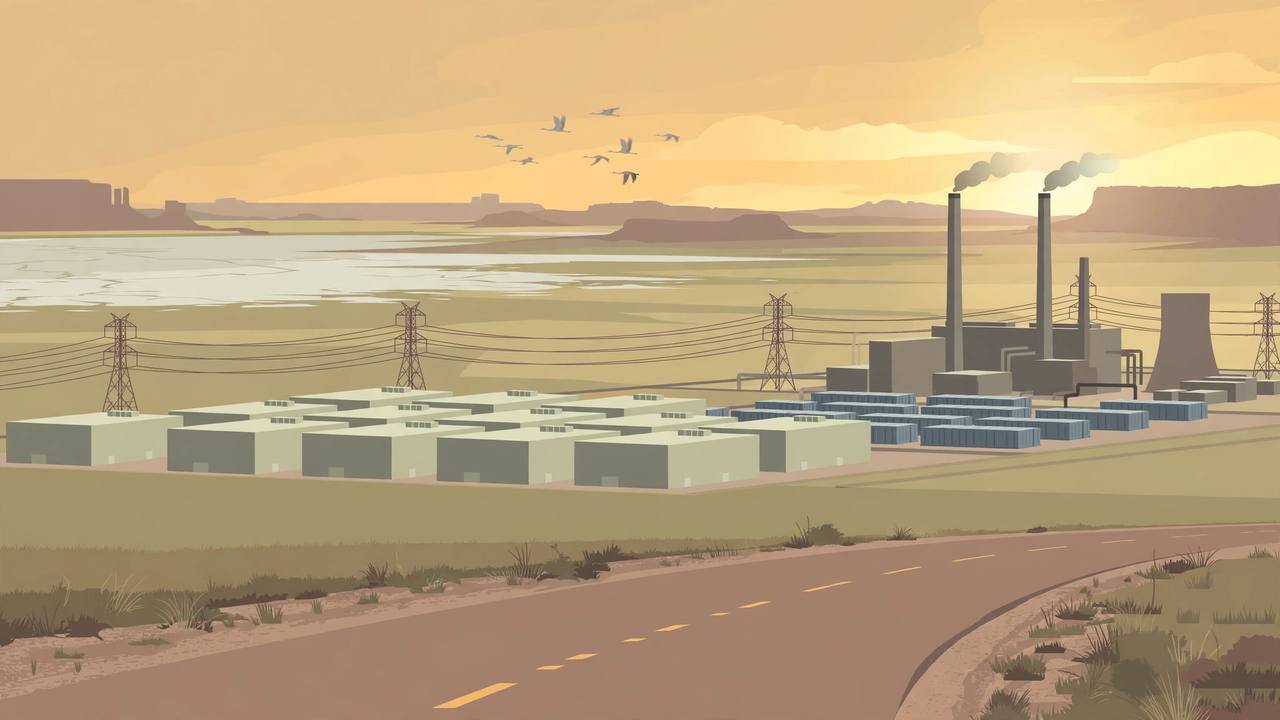
One of the largest data centres ever proposed in the United States is planned for open desert in Cochise County, southeastern Arizona — and the company behind it is SpaceX. At a packed community meeting at Cochise Elementary School on Wednesday evening, November 4, attended by roughly 275 residents, SpaceX officially confirmed that it is driving a proposed 747-acre artificial-intelligence data centre campus and battery energy storage system near the unincorporated community of Cochise, about 13 miles outside Willcox and roughly 80 miles east of Tucson. No decision has been made: a county hearing on December 9 will decide whether the project can proceed.
Source: The Gila Herald
The application was not filed under SpaceX's own name. It was submitted to Cochise County by an entity called Tombstone Resources L.L.C., and the county's own town-hall notice said SpaceX would host the Wednesday meeting. KVOA reported that SpaceX confirmed at the meeting that it is behind the proposal, and a company representative explained that the application was filed under another name because having SpaceX on it 'draws attention' from outside the county. KOLD also reported that SpaceX hosted the meeting, while noting the exact legal relationship between SpaceX and Tombstone Resources is unclear.
Source: TeslaNorth / KVOA
Where exactly — and how big is 6 gigawatts?
The site sits along U.S. Highway 191, on land zoned rural next to the Apache Generating Station, the coal-and-gas power plant that anchors electricity supply in this corner of Arizona. According to the special use authorization application — numbered SU26-22 and filed on October 30 — the campus would be built in four phases, with up to nine computing buildings plus battery storage, electrical, cooling and supporting infrastructure. At full build-out it would draw up to 6,000 megawatts, or six gigawatts, of electricity. The Arizona Republic calculated that is about 2.5 times the power demand of all the data centres in Maricopa County — the Phoenix metro — combined.
Source: Tucson Daily Brief / Cochise County / Arizona Republic via Arizona Daily Star
Because the land is zoned rural, the project cannot proceed without a Special Use Authorization from Cochise County. The county has stressed that the figures in the application come from the applicant and have not been independently verified — a caution readers should keep in mind for every number in this story, from jobs to water use.
Jobs promised — and a room divided
The application and company representatives point to thousands of construction jobs and about 1,000 permanent positions. Riley Trettle, SpaceX's head of energy and supercomputer department, told attendees in breakout sessions that the company intends to source permanent employees locally from the surrounding area. Some residents supported the project as a step toward technological progress. Many others, however, questioned the promised job numbers, the lack of transparency in an application filed under an unfamiliar company name, and whether a rural farming county should host an industrial project of this scale. KJZZ reported that more than 1,000 people had signed a petition against the proposal before the meeting even took place.
Source: The Gila Herald / KJZZ via TeslaNorth
In the Arizona desert, water is the first question for any mega-project. The application proposes dry cooling — using air instead of water to cool the computers — estimates total use of about 7 to 10 acre-feet a year, and states the facility will not pump groundwater from the Willcox basin for industrial or non-drinking needs. The application puts full-build-out use at roughly what 20 to 30 Arizona homes consume. Residents at the meeting said they remain worried about long-term strain on local resources.
Electricity is the second question. The applicant has suggested the project could lower electricity bills for customers of the Sulphur Springs Valley Electric Cooperative (SSVEC), the local co-op that distributes power from the Apache station — but the co-op's own letter says those benefits 'are not guaranteed'. Jason Bowling, SSVEC's chief executive, told the meeting that public sentiment is divided, that both excitement and concern are valid, and that the community needs to let the facts emerge so residents can evaluate the project independently. Residents also raised noise, wildlife — the site lies near the Willcox Playa, a flat lake bed where migratory sandhill cranes gather each winter — and the sheer electricity demand of a campus that would use more power than a major city.
Why this matters beyond Cochise County
The proposal is part of a national race: AI companies are hunting for land next to existing power stations because electricity, not land, is now the scarce ingredient for artificial intelligence. A 6-gigawatt campus beside a working generating station is exactly the kind of site that race produces. For Awaaz Punjab's readers, the story lands close to daily life in two ways. Willcox sits on Interstate 10, the freight corridor Punjabi truckers cross between Tucson and New Mexico, and thousands of construction jobs in a rural county are the kind of work that draws travelling crews from across the Southwest. If the campus is built, it would also become one of the largest single electricity customers in Arizona — with consequences for power planning across the state.
What happens next
The Cochise County Planning and Zoning Commission will hold a formal public hearing on the proposal on December 9 in Bisbee, the county seat. The commission can approve the special use authorization, attach conditions, or deny it — and its decision is final unless it is appealed to the county Board of Supervisors. The Gila Herald reported that construction is slated to begin immediately if the authorization is approved. Until then, nothing about the project is settled: not the power supply arrangements, which require further utility studies and agreements, and not the promised bill savings, which the co-op itself says are not guaranteed.
Source: The Gila Herald