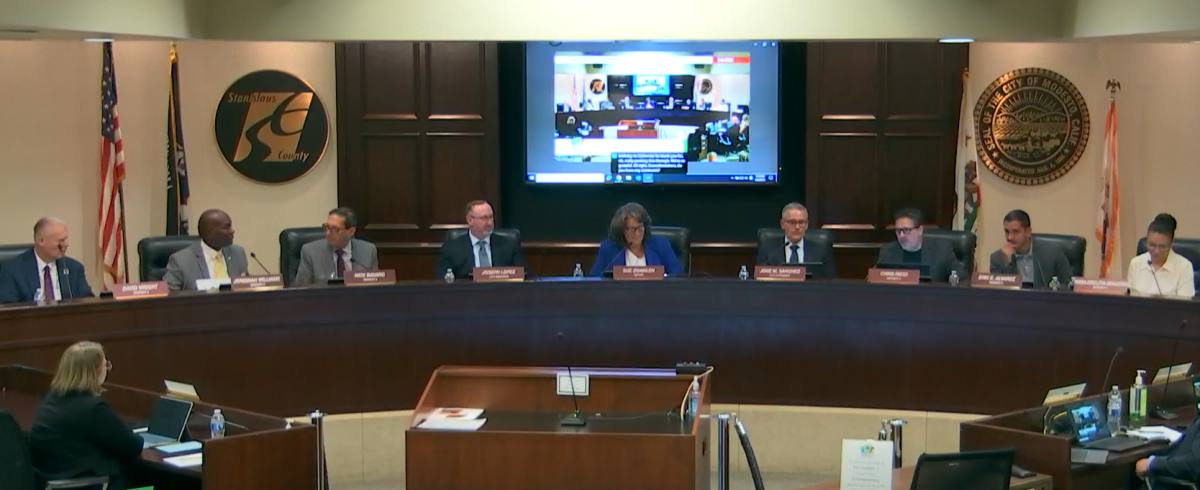
The Modesto City Council has voted to scrap the face-covering ban in its protest ordinance and settle the federal lawsuit challenging it, ending a legal fight that cost city taxpayers $824,613 in legal fees. At a special meeting on Monday evening, November 16, the council unanimously approved removing the mask provision from the ordinance, which was passed in 2019 but not enforced until the summer of 2025, when it was used against demonstrators at anti-Trump and immigration-enforcement protests.
Source: The Modesto Focus
What the council decided
Alongside dropping the face-covering rule, the council amended the ordinance to allow protesters to wear “ordinary bicycle helmets” and to exempt journalists, letting them wear protective equipment while covering a public assembly. The changes settle the case in principle, city attorney Jose M. Sanchez told the council, and close a lawsuit that had already stopped the city from enforcing the ban.
The council also voted 6–1 to approve a third increase in legal fees — another $108,658 — bringing the total paid to its own special counsel, Deborah Fox of the law firm Meyers Nave, to nearly $460,000. On top of that, the settlement requires the city to pay $366,455 in attorney fees to the American Civil Liberties Union, which represented the people who sued. Councilman Chris Ricci cast the lone dissenting vote on the fee increase; he also voted against the previous fee increase of up to $349,500 in early April.
A 2019 law, first used in 2025
The council passed the ordinance in 2019 to give police more tools to keep crowds safe during demonstrations involving groups such as the Proud Boys and Antifa, according to The Modesto Focus. But the ban on face coverings sat unused for years. It was first enforced on June 14, 2025, when five people wearing face coverings were taken away in handcuffs at an ICE Out protest in Modesto. Criminal charges against those arrested were dropped before their first court appearances.
The ordinance does more than ban masks. It makes it a misdemeanour, punishable by up to six months in jail, to carry a bicycle helmet, wear a bandana, or bring a padded vest or gas mask to a protest, with only vague exemptions for religious belief, medical need and costumes carrying an “expressive message”. It also bans large sticks, glass or metal water bottles, umbrellas with pointed ends and tactical gear.
The ACLU Foundation of Northern California sued the city in March 2026 on behalf of three individual plaintiffs and the Pacific Media Workers Guild, the union representing local journalists. The lawsuit argued the ordinance violated free-speech and free-assembly rights under state and federal law and stopped journalists from protecting themselves while reporting on demonstrations. In June 2026, a federal judge in the U.S. District Court for the Eastern District of California issued a preliminary injunction blocking the city from enforcing the ordinance while the case continued.
Source: ACLU of Northern California
What council members said
Mayor Sue Zwahlen told the meeting she had done her best to weigh each situation, despite what she described as ridicule and harsh comments directed at her. She said one of her biggest concerns was how to tell who is a real journalist, especially when anyone can call themselves a reporter, and that she was concerned for the welfare of journalists, residents and anyone who chooses to be in public — as well as for police officers, who she said need the necessary tools to do their job.
Vice Mayor Jeremiah Williams, who respects freedom of speech and the right to protest, said he hopes there will be no need to protest and therefore no need for a mask ordinance. “We'll take out what is unconstitutional. However, there were other pieces of that needed to stay so there could be peaceful protesting,” Williams said. “The money was spent to help the cause, to help those who want to be able to protest without being harmed.”
Councilmember Nick Bavaro, who represents District 4 on the east side of downtown Modesto, said his initial support for the ordinance was about public safety for residents, visitors and businesses, and that he had heard no pushback from his own constituents. “People in my district were in favor of what the council was doing… The vast majority of people in my district support law enforcement,” Bavaro said, adding that for him public safety is the number one issue, “not how much we were going to spend.”
More than a dozen advocates and community members spoke at Monday's meeting, expressing disappointment at the waste of tax dollars and what they called the council's disregard for community concerns. People at council meetings had demanded a repeal 135 times since June 2025, according to an analysis by The Modesto Focus, and the city's Community Police Review Board had recommended repeal. The council had instead voted in December 2025 to keep the ordinance after Police Chief Brandon Gillespie called it an important crowd-safety tool — a decision that led directly to the ACLU lawsuit in March.
With the face-covering provision removed and the settlement in principle agreed, the lawsuit against the city comes to an end and the amended ordinance — with its journalist exemption and the allowance for ordinary bicycle helmets — is the law that will govern future protests in Modesto. The council's fee votes close out the legal bills, but the $824,613 total is now part of the public record of what the defence of the ban cost the city's taxpayers.
The case matters beyond Modesto. The city is the seat of Stanislaus County in California's Central Valley, home to a large Punjabi and immigrant community, and the ordinance was first enforced at a protest against immigration enforcement — an issue followed closely by many Valley families. The settlement also leaves Modesto's experience as a cautionary example for other California cities: of the three cities that passed similar bans, Modesto was the only one to enforce its law, and it ended up paying more than $800,000 to defend and then abandon it.