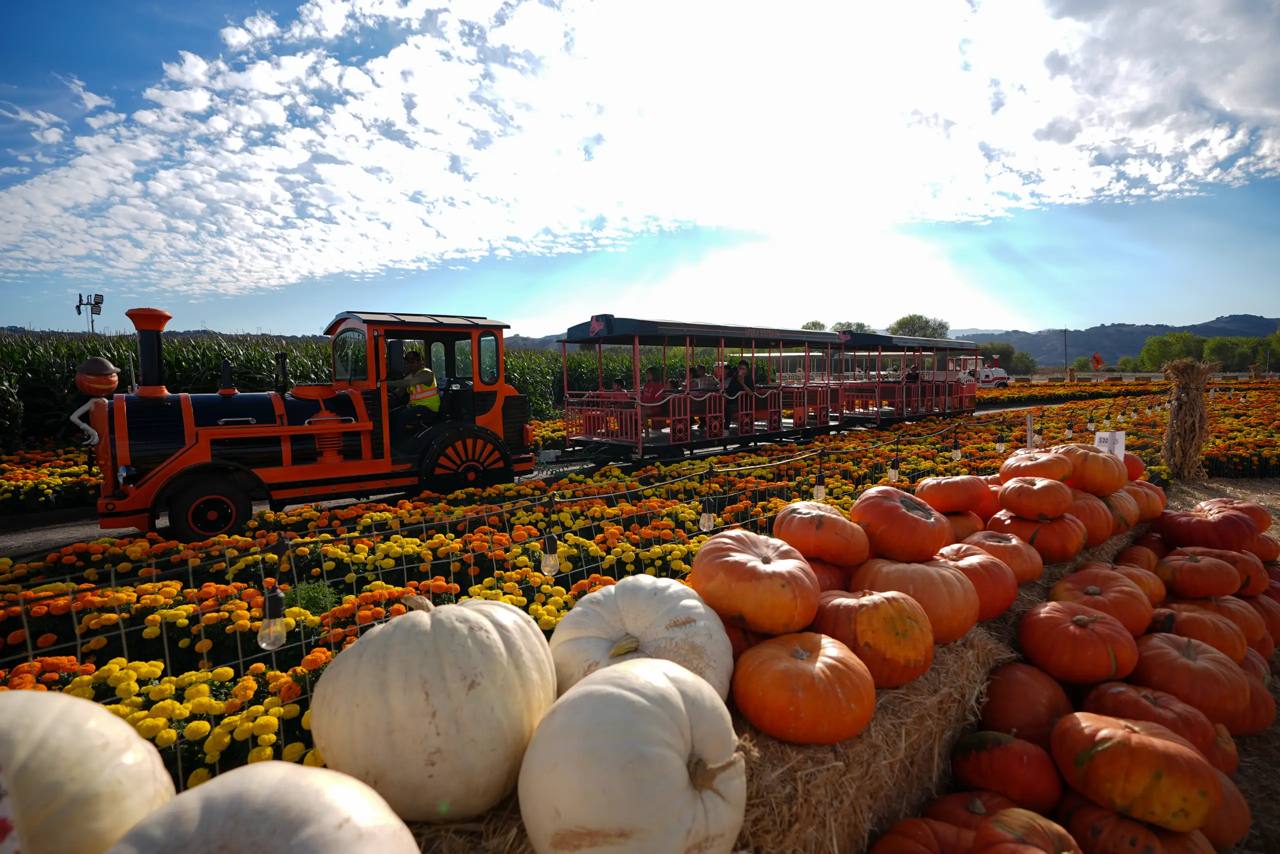
One person has died in an E. coli outbreak linked to Brookshire Farms, a popular pumpkin patch in San Luis Obispo County, California, county health officials confirmed on Tuesday, November 10. San Luis Obispo County Public Health spokesperson Tom Cuddy said the department was sharing the news with the family's permission and offered condolences, but released no age or other details about the person who died.
Source: Los Angeles Times
The outbreak involves Shiga toxin-producing E. coli O157, a dangerous strain of the bacteria. The county's closing release on November 6 listed five people with laboratory-confirmed infections, all of whom had visited Brookshire Farms on October 17 or 18, and 10 more people who visited between October 16 and 26, fell ill and are counted as suspect cases — 15 people in all.
Source: Food Safety News
Three children developed kidney failure
The county's October 30 release reported that three children had developed hemolytic uremic syndrome, or HUS — the kidney failure that health officials describe as the most feared complication of an E. coli O157 infection — and the Los Angeles Times reported that the three children were put in pediatric intensive care. The county has not said whether the person who died was one of the five confirmed cases or one of the ten suspect cases, and it has not said whether the person who died was one of the three children.
Probe closed, source never found
Investigators closed the case without identifying what made people sick. Genetic testing showed that the bacteria from three of the five confirmed patients matched each other and did not closely match anything in national databases, which the county said strongly suggests “a common and unique source.” A fourth test was still pending when the county closed its investigation, and a fifth sample could not be tested.
Source: Food Safety News
Water, food and other environmental samples taken at the farm did not find E. coli O157, although other strains of E. coli were found in some samples, and the county said no further environmental testing is planned. Edible corn cups, pumpkins, hay and non-potable water were common to the people who became ill, but none of them was identified as the source. No farm animals or petting zoo were open to the public.
Health Officer Dr. Christy Mulkerin said a negative environmental result is not unexpected, because contamination is often temporary and hard to detect, and that the clinical and epidemiological evidence still points to a short-lived shared exposure. The county has said there is “no ongoing public health threat” from this incident.
Brookshire Farms shut its fall attractions voluntarily for 10 days during the investigation, in the middle of peak pumpkin season, and reopened on November 6. The county announced it was wrapping up its investigation the same day, about five and a half hours after the farm reopened. “I'm destroyed,” co-owner Shawn Callaway told the San Luis Obispo Tribune on reopening day. “The worries, the fears, the concerns, the ups and downs.”
Source: Los Angeles Times
The outbreak also reached beyond the farm: the city of San Luis Obispo cancelled its annual Pumpkin Smash event, scheduled for November 1, over concerns about the outbreak. The post-Halloween event was meant to help residents dispose of pumpkins and teach them how to divert organic material from landfills.
Part of a rising California trend
Health officials say Shiga toxin-producing E. coli infections have surged in California in recent years, rising from around 500 cases in 2011 to more than 2,500 in 2023, according to California Department of Public Health figures cited by the Los Angeles Times. Pumpkin patches and farm attractions draw large family crowds across California every autumn, which is why a fatal outbreak at one farm — with no source ever found — matters well beyond one county.
What happens next: for now, the official record is closed. The county plans no further environmental testing, the farm has reopened, and officials say the window for new exposures from this incident has passed, because everyone who fell ill had visited between October 16 and 26. One question remains open in the county's own releases — whether the fourth genetic test, still pending when the probe closed, ever added to what investigators know. The person who died has not been identified publicly, and the county has released no further details.