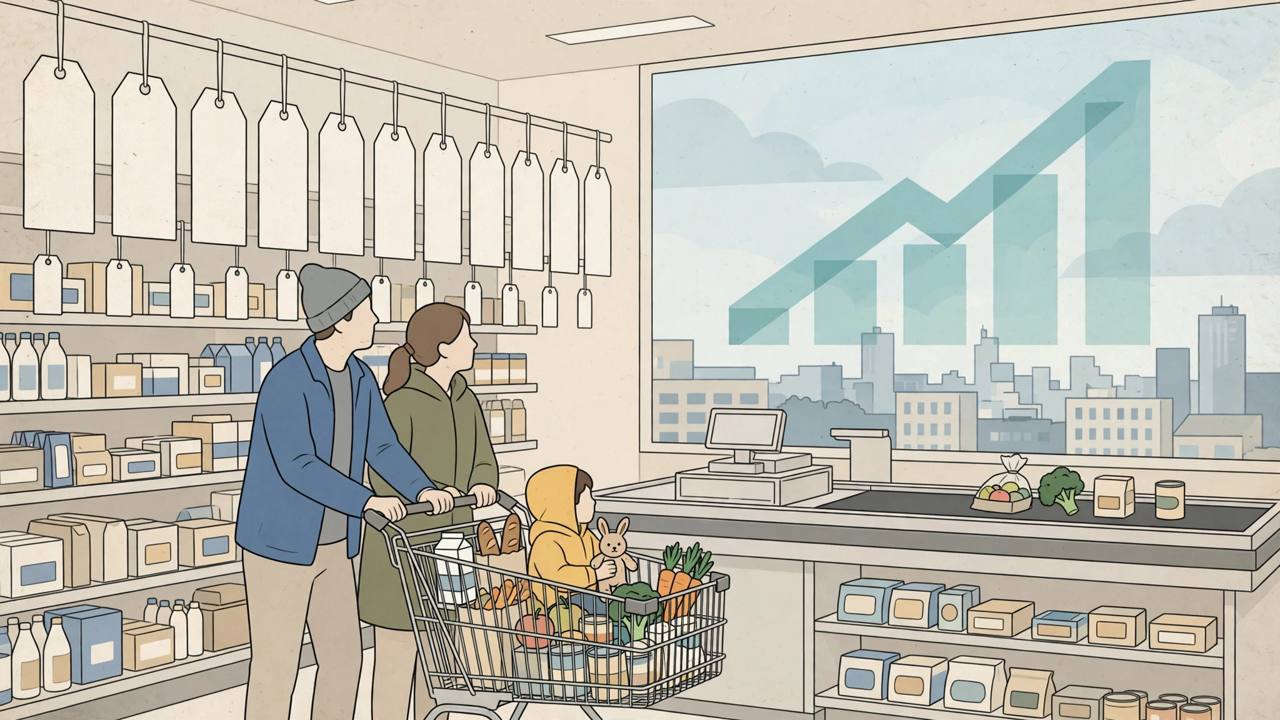
American consumers felt a little less gloomy in early November. The University of Michigan's preliminary Consumer Sentiment Index rose to 51.0 in November, up about 6 percent from October's final reading of 48.0 and well above the 48.0 economists had forecast, the university's Surveys of Consumers announced on Friday, November 6. It is the index's highest reading since August — but it comes off a floor so low that October's 48.0 was, as this site reported last month, close to the weakest consumer mood ever recorded by the survey.
Source: Kitco News, reporting the University of Michigan Surveys of Consumers release, Nov. 6, 2026
Both halves of the survey improved together. The Current Economic Conditions Index rose 9.2 percent to 51.0, from 46.7 in October, while the Consumer Expectations Index rose 4.3 percent to 50.9, from 48.8, according to the survey data summarised by Advisor Perspectives. A gauge of current personal finances rose to a four-month high, and buying conditions for durable goods rebounded from the record low they hit in October, Bloomberg reported via TheStreet.
What the survey director said
“Consumer sentiment ticked up about 6% in the preliminary read,” Surveys of Consumers Director Joanne Hsu said in the release. “Modest improvements in multiple domains, including expected personal finances and business conditions, were concentrated primarily among independents. While sentiment lifted for lower- and middle-wealth consumers, it fell 5% for those with the largest stock portfolios in the wake of a relatively turbulent period in stock markets.”
The split ran deeper inside the wealthiest group: Hsu said the personal finances of consumers with the largest stock portfolios dropped 12 percent this month to their lowest reading since April, which she linked to agitation in stock values in recent weeks, while every other wealth group saw modest improvements, Bloomberg reported. Independents, meanwhile, recorded their strongest sentiment in more than a year — their index jumped to 52.1 from 42.4 — while sentiment among both Democrats (35.9) and Republicans (80.9) slipped, according to TheStreet's summary of the Bloomberg figures.
The headline improved, but the complaint did not go away: 57% of consumers spontaneously mentioned that their living standards have been eroded by high prices — the highest share since May, and up from 46% in February. Overall sentiment is still down 10% from February.
Inflation expectations cooled — but remain high
Households' year-ahead inflation expectations declined from 4.7 percent last month to 4.3 percent this month, Hsu noted — the lowest reading since August. Longer-run inflation expectations inched down from 3.5 percent in October to 3.4 percent. Hsu was careful to put both numbers in context: the 4.3 percent year-ahead figure “remains substantially above the 3.4% seen in February before the Iran conflict began, along with all 2024 readings,” and the long-run 3.4 percent is “notably higher than their 2024 range of 2.8% to 3.2%.” For the Federal Reserve, which watches these expectations as an early warning that price rises could become self-fulfilling, the direction is welcome and the level is not.
A second worry surfaced in consumers' own words this month. “In addition to inflation worries, consumers' comments revealed growing anxiety over a possible AI bubble,” Hsu said — though she added that “AI worries, however, were dwarfed by cost of living concerns, which continue to be at the forefront of consumers' minds across the population.” Reuters, reporting the same release, likewise led on the improvement in sentiment while noting that concerns over the higher cost of living remained and that households worried about a possible artificial intelligence bubble.
Read the dates before reading too much into it
Interviews for this preliminary release were conducted between October 20 and November 2 — ending the day before the November 3 midterm elections and before Thursday's sharp sell-off in AI-linked stocks. The reading therefore captures neither the election result nor the market turbulence that followed it. Hsu also noted what consumers expected going in: in the two months leading into the election, more than two-thirds of consumers expected Democrats to win the House, and over half anticipated the same for the Senate. The final November reading, which will absorb the election outcome and this week's markets, is scheduled for November 20, according to the Surveys of Consumers calendar reported by Advisor Perspectives.
The sentiment release landed about ninety minutes after the morning's bigger economic headline: the Bureau of Labor Statistics reported that US employers added 165,000 jobs in October — far above forecast — while unemployment slipped to 4.1 percent, a report published in full on this site earlier on Friday. Taken together, the two releases describe households that are still employed in growing numbers yet still feel squeezed at the checkout: jobs are holding up, pay packets are being spent, and prices remain the single dominant grievance, named unprompted by a majority of the country.
Why it matters for Punjabi households and truckers in the US
For the Punjabi diaspora — families running trucking companies, gas stations, restaurants and small stores from California's Central Valley to New Jersey — this survey is a direct read on their customers. When the expectations index rises, households book the freight, order the inventory and eat out; when 57 percent of consumers say high prices are eroding their living standards, that pressure shows up first in exactly the discretionary spending those businesses live on. Diesel, groceries and rent are also the three costs diaspora families themselves cite most — and on all three, this month's survey says the pain eased slightly but did not lift.
What happens next: the final November sentiment reading arrives on November 20, and before that, October consumer price data is due on Tuesday, November 10 — the inflation print the Federal Reserve will weigh alongside these expectations ahead of its December meeting. If prices cool the way households now expect, November's small lift in mood could hold; if they do not, October's near-record gloom is the level this index falls back to.