ZURICH and CHARLOTTE — Two Federal Reserve officials on Thursday (November 5) made the case for modest, steady interest rate increases to bring down above-target inflation, in the first round of comments from central bankers since Democrats won control of Congress in Tuesday's midterm elections — results that could change the path of price pressures across the American economy.
Source: Reuters via SRN News
"I expect that monetary policy will need to move to a restrictive stance to bring inflation back to 2% in a timely manner," Federal Reserve Bank of Cleveland President Beth Hammack said in a speech prepared for an event in Zurich, according to Reuters. Hammack, one of the central bank's most steadfast supporters of higher short-term interest rates, said inflation has now overshot the Fed's target for over half a decade.
Hammack said she prefers "getting to that stance through more frequent smaller adjustments when possible, something which would be less disruptive to households, businesses, and financial markets." Gradual increases, she argued, would also help prevent an "inflationary mindset" from taking hold among the general public. In the text of the same speech, reported separately by Kitco News, she added that the US central bank still has more work to do because price pressures remain unacceptably high, and that central bank independence is critical to achieving stable inflation.
Source: Kitco News (Reuters)
Richmond Fed President Thomas Barkin echoed the message on the same day in Charlotte. Speaking at CNBC's CEO Summit, Barkin said inflation is "too high" and is holding in rather than easing, Reuters reported. For central bankers, "the implications for policy are pretty straightforward," he said; the open question is pace, and on pace, "gradual makes sense." Barkin described current policy as somewhere around neutral — the level that neither stimulates nor restrains the economy — and pointed to broad-based cost pressures of the past 18 months, starting with tariffs, that firms feel they have to pass along.
The first Fed voices after the election
The remarks land one week after the Fed left its benchmark rate inside the 3.75%–4.00% range while acknowledging inflation was above where policymakers want it. The Fed had raised rates in September — its first increase in three years — and financial markets broadly expect another increase in December, although the path after that is less clear. Hammack, along with Fed Governor Lisa Cook, dissented in favour of a rate hike at last week's meeting; Hammack had also dissented in late July when the Fed left rates unchanged, arguing that monetary policy and broader financial conditions are not providing the restraint needed to bring inflation to heel.
Fed Chair Kevin Warsh has eschewed giving markets a map of future policy, believing it is better for markets to form their own outlook. Even as Warsh has stepped back from the guidance debate, other officials have continued to weigh in — and Thursday's pair were unusually aligned: rates need to go higher, but in small, frequent steps rather than large jumps. Traders took some of the hawkish edge off during the day: futures markets still pointed to a December increase, but Reuters put the probability at around 70%, down from more than 80% on Wednesday.
Why inflation came back — and why the election matters
Inflation had been moving back down toward target until President Donald Trump returned to office, Reuters reported; it heated up again with the imposition of the president's trade tariffs, and this year price pressures were further fuelled by the Middle East war and by heavy investment in artificial-intelligence infrastructure. September's personal consumption expenditures (PCE) report showed headline inflation at 3.6% year over year and core PCE — the Fed's preferred underlying measure — at 3.1%, both well above the 2% target.
The new political landscape could cut both ways. The Democratic capture of Congress came with local voter pushback against data centres, which could slow AI construction and ease some demand pressure. Analysts at Evercore ISI told clients on Wednesday that AI capital spending "will be slowed down some by permitting challenges in large states including Texas, easing overheating risk in the next year or two." TD Securities, by contrast, said it remains confident the Fed will raise rates by a total of half a percentage point by the start of next year — while adding that closure on the Iran war or a paring back of AI investment could mean no further tightening is needed after March. Tech stocks sold off on Thursday, with the Nasdaq down 10% from its record close nearly a month ago.
What it means for households, truckers and the diaspora
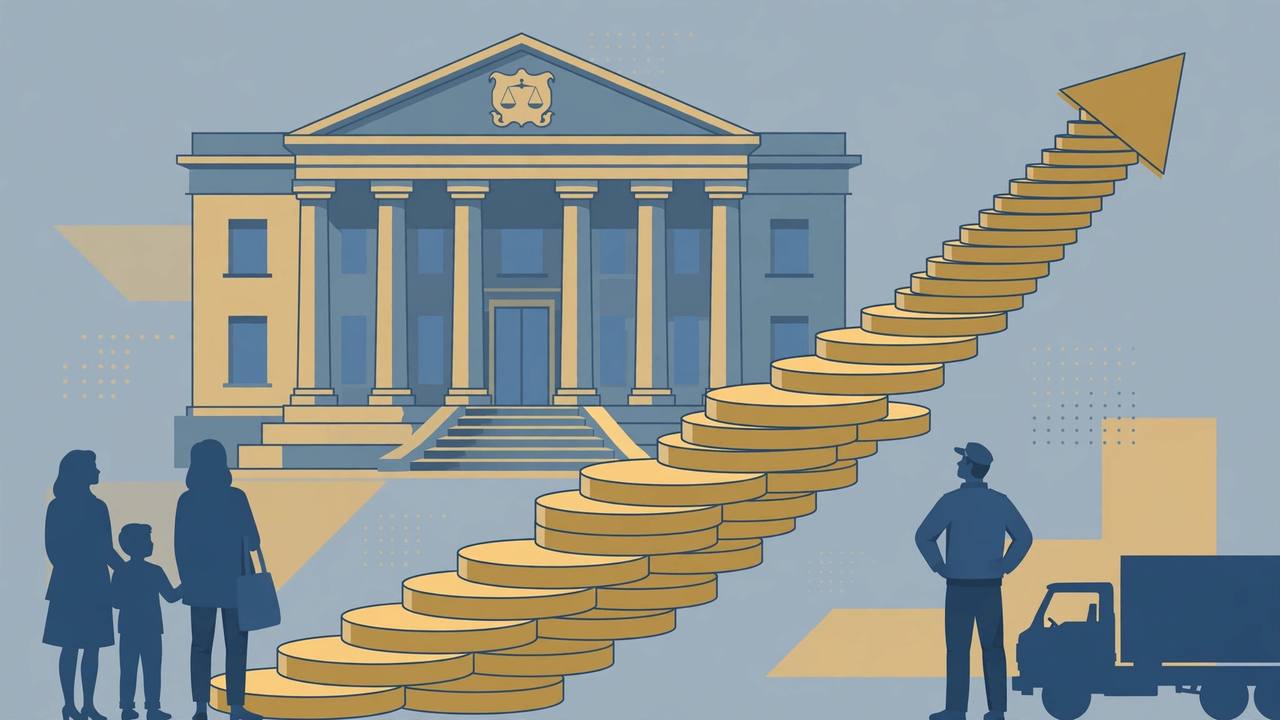
For Punjabi and other diaspora families across the United States — and for the many readers who drive trucks for a living — the pace of rate hikes is not abstract. Every additional increase feeds into truck and equipment loans, commercial mortgages on plazas and warehouses, home mortgage renewals and credit-card rates. Hammack's argument for smaller, more frequent steps is explicitly aimed at avoiding a single large shock to households, businesses and financial markets; Barkin's warning is that moving too slowly would let tariff- and war-driven price pressures become embedded instead.
The Fed's outlook faces a fresh test on Friday (November 6) with the government's October jobs report: a poll of economists expects hiring of about 65,000 jobs, after September's tepid 29,000 gain, with the jobless rate holding at 4.2%. Fed officials have said the labour market's relative stability gives them room to focus on inflation, since they do not see employment as a driver of price pressures — but weaker job gains would make the December decision harder. The next rate-setting meeting follows in December, where a further quarter-point increase remains the market's central expectation.
Thursday's data backdrop pointed the same way as the speeches: separate Labor Department figures showed initial jobless claims falling to 189,000, a 57-year low, and third-quarter worker productivity rising 3.6% — evidence, in policymakers' reading, that the jobs market is not the source of inflation and that the fight is with prices themselves. (Sources: Reuters reporting by Michael S. Derby and John Revill, with additional reporting by Howard Schneider and Ann Saphir; Kitco News; TradingView/Seeking Alpha coverage of Barkin's CNBC remarks.)