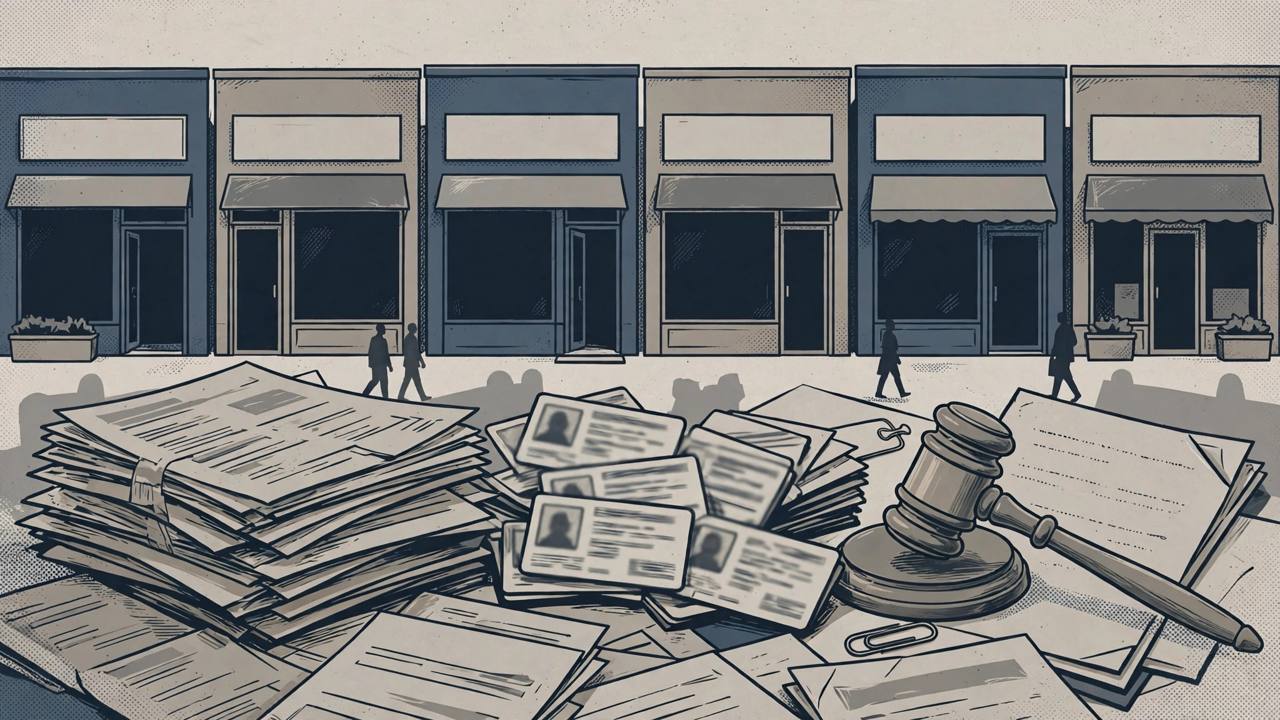
A Wellington, Florida man was sentenced on Thursday, November 12, to 84 months — seven years — in federal prison for running six sham cosmetic surgery clinics built on the stolen identities of more than 100 people, defrauding medical lenders of approximately $2.3 million, and fraudulently seeking COVID-19 disaster relief loans, the U.S. Department of Justice announced.
Source: U.S. Department of Justice
U.S. District Judge Rodolfo A. Ruiz II of the Southern District of Florida sentenced Jacquez Dion Tullis, 42, to 60 months on a conspiracy to commit bank fraud count and a consecutive 24 months on an aggravated identity theft count, followed by five years of supervised release. Tullis was also ordered to pay $2,309,859.44 in restitution, a $200 special assessment, and a forfeiture money judgment of $2,309,859.44.
How the sham clinic scheme worked
According to court documents and admissions in his plea, from approximately April 2018 through February 2024, Tullis and his co-conspirators created six sham medical clinics that claimed to offer cosmetic surgery and other medical services but provided no real care. The conspirators registered the clinics with the Florida Department of State using stolen personal identifying information of practicing doctors and others, without their knowledge or consent.
In some cases, they listed those doctors as clinic owners on applications to become approved merchants with six medical lenders. Those lenders — two FDIC-insured banks and four financial technology companies — financed out-of-pocket procedures not covered by insurance, the kind of point-of-sale medical credit patients use for cosmetic work.
Once the clinics were approved, the conspirators submitted fraudulent credit applications to the lenders in the names of more than 100 individuals, seeking approximately $3.1 million. The applications falsely represented that the funds were for cosmetic surgery and other services the clinics would provide. In fact, the individuals did not know about or authorize the applications and did not need or want any treatment. According to death records, some had died before the dates they supposedly received care.
The pandemic relief second act
Separately, from April through August 2020, Tullis submitted at least nine fraudulent applications on behalf of certain businesses to the U.S. Small Business Administration for Economic Injury Disaster Loans (EIDL), the federal stimulus program authorized under the CARES Act. The applications collectively sought $696,860 in EIDL funds and falsely represented, among other things, the businesses' number of employees and revenue.
"Jacquez Tullis built fake medical clinics using stolen identities, including those of practicing doctors and deceased individuals, and used them to steal millions from lenders," said Assistant Attorney General Colin M. McDonald of the Justice Department's National Fraud Enforcement Division. "When the pandemic hit, Tullis then tried to exploit taxpayer-funded relief meant for struggling small businesses. Today's sentence makes clear that the Fraud Division will hold accountable those who abuse the public's trust, whether they steal from private lenders or from the American people."
"The defendant's actions represent a serious breach of trust, exploiting the identities of innocent individuals and manipulating financial institutions for personal gain," said Special Agent in Charge Brett D. Skiles of FBI Miami. "Fraud schemes of this magnitude undermine the integrity of our financial system and inflict real harm on victims whose identities are stolen and misused." The FBI investigated the case.
Tullis pleaded guilty on July 21, 2026, to conspiracy to commit bank fraud and aggravated identity theft. The consecutive structure of the sentence — five years on the fraud conspiracy plus two more years that must be served after it for the identity theft count — reflects how federal law treats aggravated identity theft as an additional, separate harm on top of the underlying fraud.
Co-defendants already sentenced
Two co-defendants were sentenced earlier. Taneika Nakia Pace, 50, of Hallandale Beach, managed two of the sham clinics. She pleaded guilty to bank fraud on June 15, 2026, and was sentenced on September 2, 2026, to six months in prison and four years of supervised release, and was ordered to pay $49,825 in restitution and to forfeit $23,200.
Junaque Nicole Tullis, also known as Juanaque Tullis, 46, of Coral Springs, submitted at least five fraudulent EIDL applications to the SBA between April and December 2020, seeking approximately $164,521 in the names of several businesses and herself, with false statements about employees and revenue. She pleaded guilty to wire fraud on April 23, 2026, and was sentenced on August 13, 2026, to eight months in prison and three years of supervised release, and was ordered to pay $4,000 in restitution and to forfeit $4,000.
All three defendants were charged as part of the Justice Department's 2025 National Health Care Fraud Takedown, announced on June 30, 2025. Trial Attorney Shana Priore of the Fraud Division's Public Trust and Financial Integrity Section prosecuted the case, and Assistant U.S. Attorney Sandra Demirci of the Southern District of Florida handled asset forfeiture. What happens next: Tullis begins a seven-year federal term, after which five years of supervised release follow, while the restitution and forfeiture judgments of more than $2.3 million each remain collectible — and for the more than 100 identity-theft victims, including the doctors whose names fronted clinics they never owned, the case is a reminder to check credit reports for medical financing accounts they never opened.