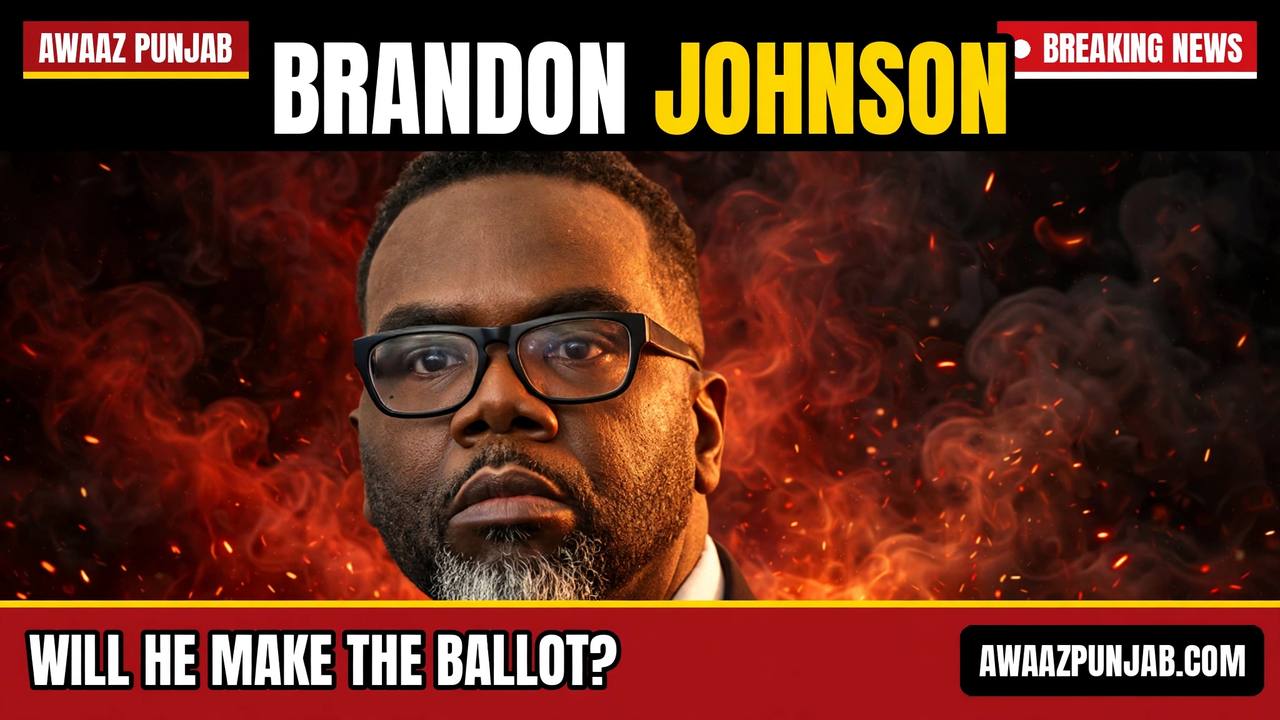
Chicago Mayor Brandon Johnson's place on the February 2027 ballot is in doubt, after two formal challenges to his nominating petitions forced the Chicago Board of Elections into a line-by-line review of the roughly 33,000 signatures his campaign filed — the first time a sitting Chicago mayor has faced a ballot challenge since 2007.
Source: Focal News
What the challenges allege
The main challenge was filed on November 2 by former state Senator Rickey Hendon, acting for the campaign of mayoral rival Willie Wilson. It alleges that many of Johnson's signatures are photocopies, that some circulators were not registered voters, that some signers live outside Chicago, and that pages gathered for City Treasurer Melissa Conyears-Ervin's campaign were mixed into the mayor's filing. NBC Chicago reported that sheets bearing Conyears-Ervin's name were included in Johnson's submission. Hendon has claimed that fewer than 5,000 of the signatures are valid — a claim the Board of Elections has not ruled on.
Source: Chicago Politics
A second challenge, filed by Jessica R. Jackson and Zoe Marsh-Leigh, also questions Johnson's petitions. Its detailed grounds have not been widely reported, and the Board of Elections heard both cases on November 17 before continuing them to November 23.
Source: Chicago Mayoral Race 2027 tracker
Election attorney Burt Odelson, working with the challengers, says his team found at least 100 duplicate pairs of petition sheets — 200 pages in all — copied before they were numbered and inserted at different places in the filing. He has described the pattern as deliberate padding. Those are the challengers' allegations; no election authority has found fraud.
Where the count stands
The review began on November 16, and Friday, November 20, was only its third day. Political consultant Frank Calabrese, who is tracking the review, reported on November 21 that of 5,048 challenged lines examined so far, 3,702 had been invalidated and 1,346 upheld — an invalidation rate of 73.3 percent. At that pace, he projects Johnson will finish with roughly 13,400 valid signatures, about 900 above the 12,500 minimum — but he cautions that it is still too close to say whether the mayor makes the ballot.
Source: Wisevoter
Wilson himself has put Johnson's chances of missing the ballot at 90 percent or higher, telling FOX 32 on November 20: “I know he in danger.” Johnson's campaign says it is confident it filed more than enough valid signatures, and the mayor has said he will be on the ballot.
How the review works
Board of Elections staff examine each challenged signature to confirm that the signer is a registered Chicago voter and that the signature matches the voter's address and registered signature. Representatives for both the mayor and the challengers are present and may object on the record to any determination. Disputed signatures go to an additional expert, and if the expert and the staff disagree, a hearing officer decides and writes a report recommending whether the candidate stays on the ballot or is removed, according to William Kresse, a Governors State University professor and former election board commissioner.
Source: Focal News
Why it matters
Sixteen candidates filed for mayor, and 12 of them face objections — 14 in all. The election is February 23, 2027, with a runoff on April 6 if no candidate wins a majority, and mail ballots and early voting begin January 14. The Board of Elections must certify the final ballot by December 17. Johnson won the 2023 runoff with 52 percent of the vote. The last sitting mayor to face a petition challenge was Richard M. Daley in 2007, and that challenge failed.
Source: Chicago Mayoral Race 2027 tracker
The ballot fight is unfolding alongside a bruising budget season at City Hall. The city's chief financial officer, Ashlee Gabrysch, resigned on November 13 after about three months in the job; S&P Global Ratings put Chicago's BBB credit rating on CreditWatch with negative implications on November 18; and the City Council voted 45–5 for an independent review of the city's finances. Johnson's proposed $17.6 billion budget for 2027 aims to close an $882.4 million gap.
Board of Elections hearings on both objections resume on November 23. The signature review continues until every challenge is worked through, and the final ballot is certified on December 17.
For Chicago's large South Asian and Punjabi community — one of the largest in the country — the fight matters twice over: it will decide who leads the city where many families live and work, and it is a reminder of how strictly American ballot-access rules are enforced, signature by signature.