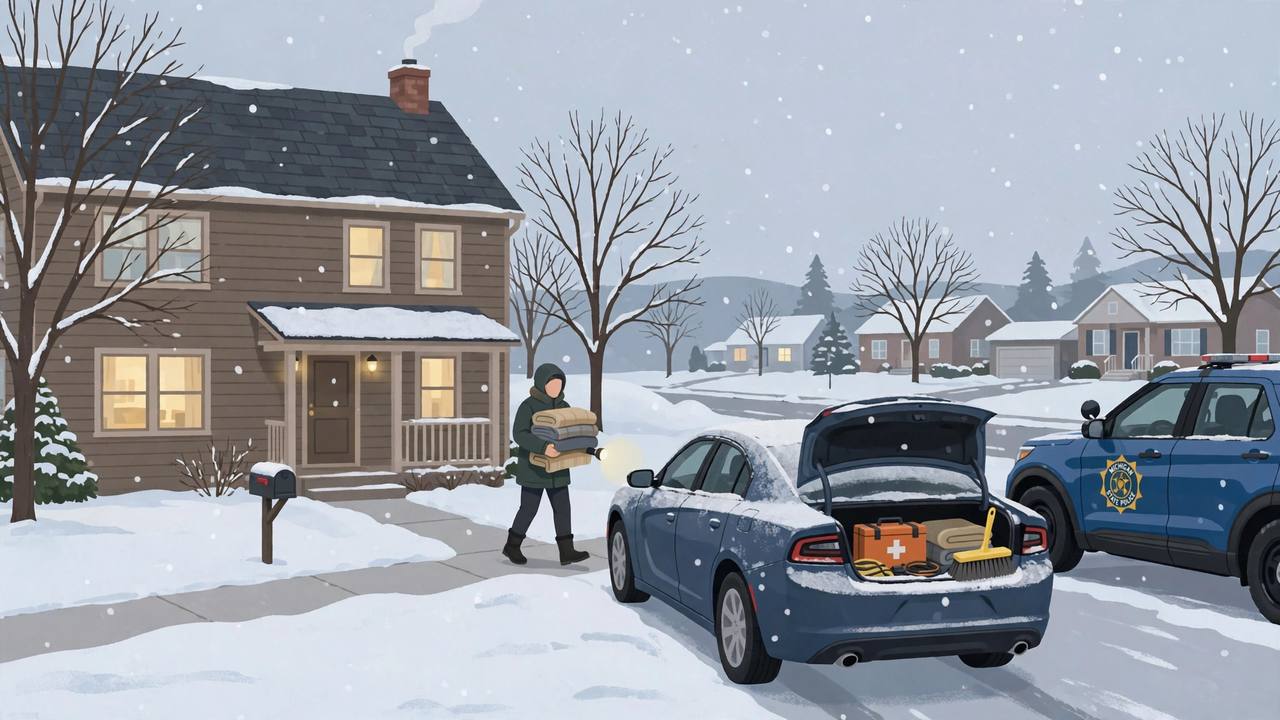
Michigan's winter does not start on a calendar date — it arrives storm by storm. With the season now at the door, Governor Gretchen Whitmer has proclaimed November 8–14, 2026, as Winter Hazards Awareness Week in Michigan, and the Michigan State Police's Emergency Management and Homeland Security Division (MSP/EMHSD) is urging every household in the state to use the coming days to prepare for snow, ice and extreme cold.
The state police released their guidance from Lansing on Friday, November 6 — two days before the awareness week begins on Sunday. A second Michigan outlet, 9&10 News, reported the same proclamation and the same advice on Friday, and the governor's proclamation itself is published on michigan.gov.
Source: Michigan State Police / michigan.gov
"Michigan winters are unpredictable. In the last year alone, we've seen up to four feet of snow fall in a single event," said Capt. Kevin Sweeney, deputy state director of Emergency Management and commander of the MSP/EMHSD. "Even a routine winter storm system can create dangerous conditions. That's why we encourage everyone to take a few simple steps now to stay safe in the months ahead."
The hazards the division names are the ones Michigan drivers and households know well: snow- and ice-covered roads, extreme cold, power outages and hazardous travel. The point of the week, the proclamation says, is to recognise the importance of winter weather preparedness and to encourage Michiganders to protect themselves, their families and their homes throughout the season.
Prepare your home: what the State Police actually recommend
Weatherproof the house first, the division says: install weather-stripping, caulking and insulation on walls, doors and windows. Insulate water lines that run along exterior walls to reduce the risk of frozen pipes — a burst pipe in a Michigan January is one of the most common and most expensive winter household failures.
Heating comes next. The guidance says to lock in a propane rate now and have a backup heating plan, such as a generator, wood stove or fireplace. Have a professional inspect gas or oil furnaces and replace the air filter, and schedule a fireplace and chimney inspection — the division suggests asking the local fire department for a referral or finding a local inspector online.
Carbon monoxide is the quiet risk in the list. The State Police recommend battery-operated carbon monoxide detectors near all sleeping areas, noting that CO poisoning risks increase when furnaces are in use and during power outages, when people often turn to portable generators. Clean gutters to prevent ice dams that can lead to interior damage, and clear storm drains to avoid basement flooding.
Finally, keep an emergency kit at home: water, non-perishable food, a first aid kit, extra batteries, a hand-crank or battery-powered radio, emergency lighting, flashlights, blankets and warm clothing.
Home: weatherproof, insulate pipes, secure heating and a backup, inspect furnace and chimney, CO detectors by the bedrooms, clear gutters and drains, stock a kit. Vehicle: service the radiator, new wipers and winter fluid, sound tires, full inspection, and a stranded-driver kit in the trunk.
Prepare your vehicle — the part that matters most to drivers
For the vehicle, the division recommends servicing the radiator system, replacing windshield wipers and using winter-grade wiper fluid. Replace worn tires and check tire pressure regularly. Have the brakes, brake fluid, oil, battery, heater and exhaust inspected before the worst weather arrives, not after the first breakdown.
And store an emergency kit in the vehicle — batteries, a hand-crank or battery-powered radio, a flashlight, an ice scraper, jumper cables, a mobile charger, a shovel, blankets, a first aid kit, non-perishable food and bottled water — in case you get stranded. For long-haul truck drivers crossing Michigan this winter, that stranded-driver list is the professional version of the same advice: the state's freight corridors can close or crawl in a single storm, and a cab stocked with blankets, food, water and a charger is the difference between an uncomfortable night and a dangerous one.
Why a proclamation week, and why now
Awareness weeks can sound ceremonial, but the timing here is practical. The proclamation runs Sunday, November 8 through Saturday, November 14 — the point in November when Michigan households can still service a furnace, inspect a chimney and replace tires in ordinary conditions, before the first major storm makes every one of those jobs urgent and expensive. Capt. Sweeney's four-feet-in-one-event figure is the division's argument for not waiting: the state's recent winters have not eased in gently.
Michigan is also home to a large Punjabi and South Asian community, including many families in trucking, logistics and small business who will spend this winter on the state's highways and in homes heated through the coldest months. The State Police guidance is addressed to every Michigander, and its two checklists — home and vehicle — are the whole substance of it.
What happens next
Winter Hazards Awareness Week runs November 8–14. The division points residents to MIReady — the state's preparedness site at michigan.gov — for information on how to prepare before, during and after an emergency or disaster, and to the MSP/EMHSD accounts on X and Facebook for updates through the season. No storm is required for the advice to apply: the entire point, in Capt. Sweeney's words, is to take the simple steps now, in the months ahead of the weather that makes them necessary.