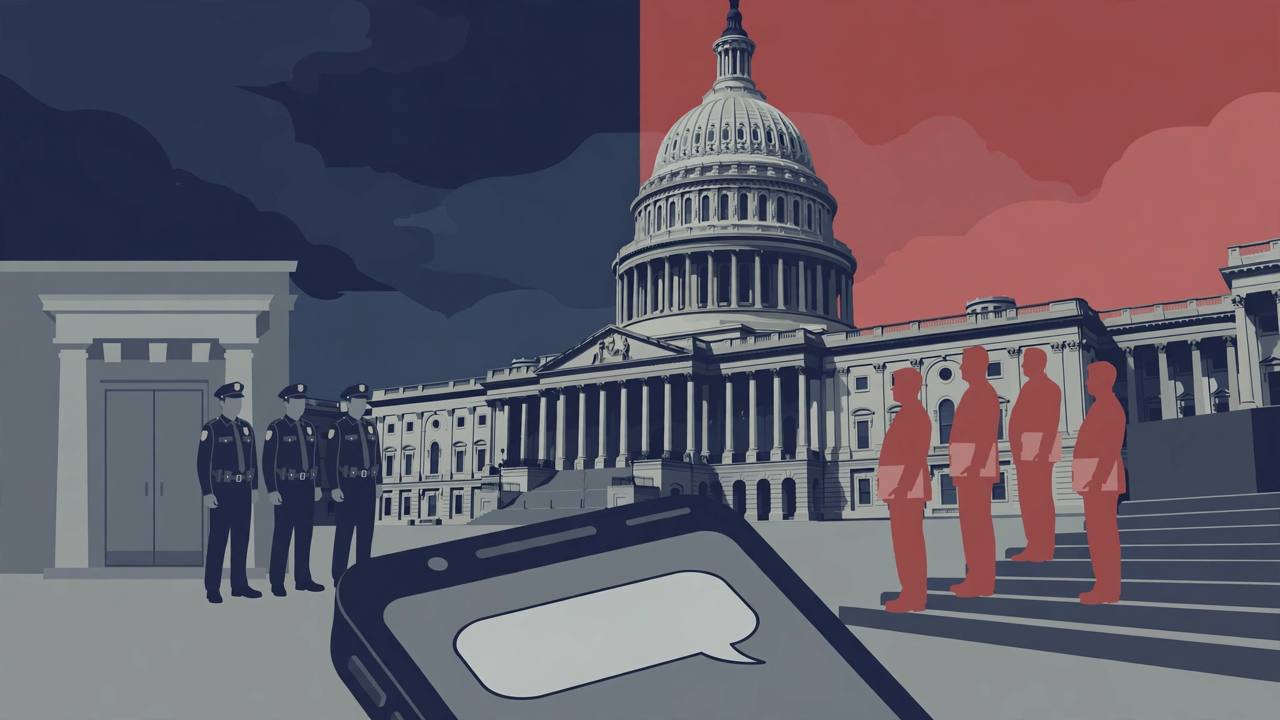
WASHINGTON — Three words, posted on X shortly after 2:30 p.m. EST on Wednesday, November 4, set the terms for America's next immigration fight: "Deportations will continue." The message came from Homeland Security Secretary Markwayne Mullin, the cabinet official in charge of Immigration and Customs Enforcement (ICE), hours after Democrats completed their midterm sweep and prepared to take control of both the House and the Senate, The National News Desk (TNND) reported on Thursday, November 5. By early Thursday afternoon the post had been viewed more than 4.6 million times and drawn about 12,000 comments — a measure of how directly it landed with the two audiences it was aimed at: an incoming Democratic Congress that campaigned against the Trump administration's deportation drive, and the immigrant communities, including hundreds of thousands of Punjabi families, who live under it.
Source: The National News Desk (TNND), November 5, 2026
The exchange that followed showed the shape of the coming clash. As projections on Tuesday confirmed the Democratic takeover, Democrats on the House Homeland Security Committee answered Mullin in advance on X: "@SecMullinDHS clear your calendar" — a public promise that the secretary will be called to testify about deportation policy, ICE operations and the treatment of migrants once the new Congress is seated in January. Many winning Democratic candidates campaigned on challenging President Donald Trump's hardline immigration agenda and the administration's mass-deportation operations, and some ran on abolishing ICE altogether. Mullin's post was the administration's first answer: control of Congress may change, but enforcement will not.
Election Day first: no ICE at the polls, 1,000 federal monitors instead
The post-midterm argument began even before the results, over whether immigration agents would appear at polling places. On Election Day, Mullin appeared on Fox News to answer criticism from Democrats, including former Secretary of State Hillary Clinton, who had warned that ICE officers could intimidate voters at the polls. "Absolutely not," Mullin said, adding that ICE agents would not be present at polling places unless there was a specific threat. In the event, more than 124 million Americans voted, ICE officers did not patrol polling places, and the Justice Department deployed approximately 1,000 federal election monitors to observe voting across all 50 states, according to reporting on the exchange. Mullin has also said ICE works every day of the year — including Thanksgiving, Christmas and election days — and, by his account, Election Day arrests included people with prior convictions for attempted murder, aggravated assault with a weapon and child sexual abuse; those characterisations are the secretary's own and were published as his statement, not as independently verified case records.
The administration's own scoreboard, released the day before the election, frames what "continue" means in practice. According to Department of Homeland Security data published on November 3 and reported the same week, nearly 1.2 million deportations and more than 1.25 million arrests of undocumented immigrants have been recorded since January 2025 — figures DHS presents as the record of the Trump administration's enforcement campaign since it took office. Those are the department's own numbers, published by the agency that runs the operations, and they have not been independently audited; but they are the baseline the administration says it intends to maintain, and the baseline the incoming Congress says it intends to investigate.
What a Democratic Congress can — and cannot — actually do
The legal reality sits between the two sides' rhetoric. Congress shapes immigration enforcement through appropriations — it funds DHS and ICE — and through oversight: committee hearings, subpoenas, document demands and public scrutiny of senior officials such as Mullin. But the president and the executive agencies retain authority over most day-to-day enforcement decisions, so a change in party control alone does not automatically end deportations, TNND's analysis noted. The incoming Congress is expected to take office in January, which means the first real tests — DHS funding bills, oversight hearings with Mullin at the witness table, and possible legislative efforts to restrict ICE tactics — are still weeks away. Until then, enforcement proceeds under the same leadership, the same budget already in place, and, if Mullin's post is taken at face value, the same tempo, holidays included.
A New York Times/Siena poll conducted before the election found 52 percent of voters preferred the Democrats' approach to immigration against 45 percent for the Republicans. But NBC exit polling reported after the vote found only 14 percent of voters named immigration the country's most important issue — and among those voters, Republicans led Democrats only narrowly, 44 percent to 41 percent. A Pew Research Center study cited in the same reporting found 62 percent of Latino voters strongly opposed the scale of the deportations as excessive. Both parties can read their own mandate into those numbers, which is precisely why the argument is headed for hearings rather than a settlement.
For the Punjabi diaspora, this is not an abstract Washington argument. Punjabi communities across California, New York, New Jersey, Texas and Washington include truck drivers whose livelihoods run through exactly the enforcement channels in the headlines — commercial-driver-licence checks, highway operations run with state patrols, workplace and courthouse arrests — as well as mixed-status families for whom a change in enforcement tempo is a household question, not a headline. Thursday's other USA-desk reporting underlines the point from the opposite direction: even as a new Congress prepares to scrutinise ICE, courts are separately ruling on how far the federal government can push states to cooperate with it. The practical position for immigrant families today is unchanged from election week: deportation operations continue at the administration's stated pace, the promised congressional scrutiny has not yet begun, and the first institutional checkpoint is the new Congress taking office in January.
What happens next
Three dates now organise the fight. First, the holiday season: Mullin has publicly committed ICE to operating through Thanksgiving and Christmas, so advocates and community groups expect no enforcement pause in the coming weeks. Second, January: the new Democratic House and Senate are sworn in, committee gavels change hands, and the Homeland Security Committee's "clear your calendar" message becomes formal hearing invitations and document requests aimed at Mullin and ICE leadership. Third, the funding cycle that follows: DHS appropriations are where congressional control becomes operational, because money for detention beds, flights and agents is the one lever Congress fully owns. The administration's opening position is now on the record in three words. The counter-position will be written in hearing rooms and budget lines — and Awaaz Punjab will follow both, because for a large share of this site's readers in the United States, few stories touch daily life more directly.
What is solid
- DHS Secretary Markwayne Mullin posted "Deportations will continue" on X on Wednesday, November 4, shortly after 2:30 p.m. EST; the post passed 4.6 million views by early Thursday afternoon (TNND, November 5).
- Democrats won control of the House and Senate in the November 3 midterms and take office in January; House Homeland Security Committee Democrats publicly told Mullin to "clear your calendar" for oversight.
- On Election Day Mullin said ICE would not be at polling places unless there was a specific threat; ICE did not patrol polls, while the Justice Department deployed about 1,000 federal election monitors across all 50 states and more than 124 million Americans voted.
- Congress can shape enforcement through funding and oversight, but day-to-day enforcement authority rests with the executive branch, so the change of control does not by itself stop deportations.
What is only claimed
- The figures of nearly 1.2 million deportations and over 1.25 million arrests since January 2025 are the Department of Homeland Security's own numbers, released November 3 and not independently audited. Mullin's description of Election Day arrests (prior convictions for attempted murder, aggravated assault and child sexual abuse) is his statement as reported, not independently verified case detail.