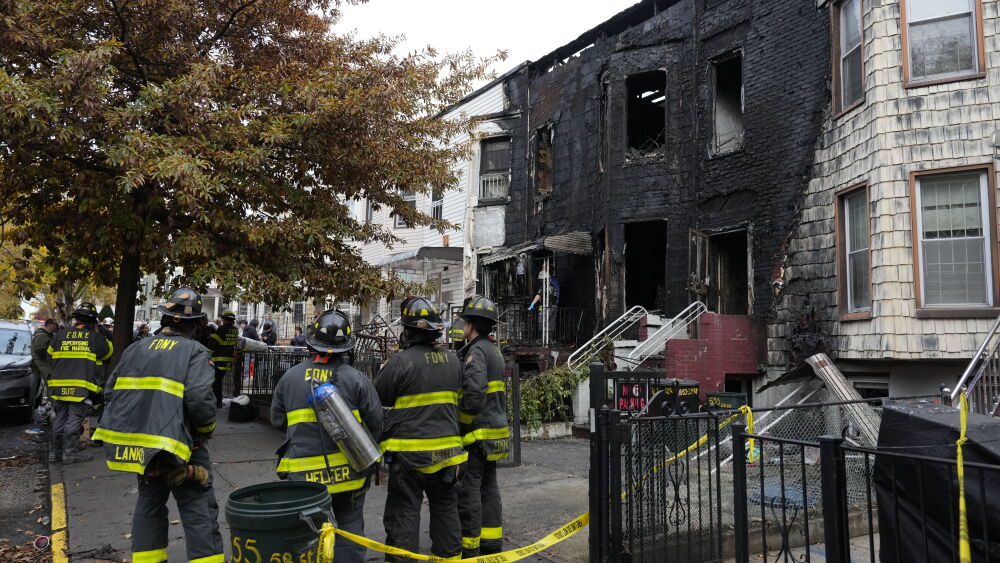
New York City Council held an emergency hearing on Friday, November 20, 2026, on the surge in deadly lithium-ion battery fires, after two fires in less than two weeks killed 10 people — four in a Bronx apartment and six in a Brooklyn row house. Fire Department figures show 406 battery fires in the city so far in 2026, a record, up from 241 in the same period last year.
Source: Reuters
Two fires, ten lives
On October 28, an e-bike battery ignited inside an apartment in a public-housing building in the Bronx, killing four members of a family, including an 11-year-old boy. The e-bike was standing near the doorway, and the fire blocked the family's escape, Fire Commissioner Lillian Bonsignore said at the time.
Source: Reuters
About a week later, on November 5, a fire tore through a row house on 58th Street in Sunset Park, Brooklyn, killing six people and injuring at least seven. Investigators have not yet determined the cause, but fire officials said two charred e-bikes were removed from the building and batteries were found in the debris. At least one of the two fires has been confirmed to have been caused by an e-bike battery.
Source: Reuters
A record year for battery fires
The Fire Department told the Council that battery fires are up about 70 percent from a year ago, with nine deaths from battery fires this year against one in 2025. Fire deaths overall have reached 90 so far this year, up from 63 in 2025, and structural residential fires rose 6 percent in fiscal year 2026, to 21,475 from 20,180 a year earlier. Lithium-ion batteries now rank among the top causes of residential fires, alongside faulty wiring, smoking and candles.
Source: New York City Council
What the Council is weighing
The hearing, led by Council Speaker Julie Menin and the chairs of the Fire and Emergency Management and Housing and Buildings committees, took up seven bills. Among the proposals: making it a crime to possess or use batteries that do not meet safety standards, banning the storage of batteries inside apartments, and giving the Department of Consumer and Worker Protection the power to close a shop selling uncertified batteries after two violations instead of three. The Fire Department told the Council it supported only one of the seven bills.
Menin also pressed city officials over a lapsed $2-million battery trade-in program run by the Department of Transportation, which let about 400 delivery workers swap unsafe batteries or e-bikes for UL-certified versions. The program was allowed to end without a replacement, and Menin demanded it be brought back. Commissioner Bonsignore told the hearing her agency would welcome another trade-in program.
Source: Streetsblog NYC
“This year's rise in fires and fire-related deaths is not just concerning, it is an emergency,” Speaker Julie Menin said at the hearing. “These incidents are more than tragic, they are entirely preventable, and they represent safety failures at the highest level.”
Washington moves too
On Thursday, November 19, the United States Senate unanimously passed legislation sponsored by New York Senators Chuck Schumer and Kirsten Gillibrand directing the Consumer Product Safety Commission to set mandatory national safety standards for lithium-ion batteries used in e-bikes and other micromobility devices. A commission staff report published in April found 45 deaths from 2017 to 2024 linked to lithium-ion battery fires involving micromobility devices — 19 tied to e-bikes, 15 to e-scooters and 11 to hoverboards.
Source: Reuters
Why the danger keeps growing
The Council passed a slate of battery-safety bills in 2023, including a law requiring the city to run a battery trade-in program, and it is already illegal in New York City to sell uncertified e-bikes or batteries. But cheaper uncertified equipment is still widely available online and on the black market, and Fire Department data suggests a large share of batteries now in use are reaching the end of their life — a factor in the rising fire count. Delivery workers, many of them immigrants, charge their bikes overnight in bedrooms and hallways because there is almost nowhere else to do it; advocates and workers' representatives testified at the hearing, and the city has installed only one public battery-charging cabinet so far, according to local reporting.
Source: Streetsblog NYC
What happens next
The seven Council bills remain under consideration, with no vote date announced. The Senate battery-safety bill now goes to the President. Fire officials advise New Yorkers to use only certified batteries and chargers, never to charge a battery overnight or leave it charging unattended indoors, and to keep e-bikes and batteries away from doorways and exits. The Council said a full recording of the hearing is available on its website.
Source: New York City Council