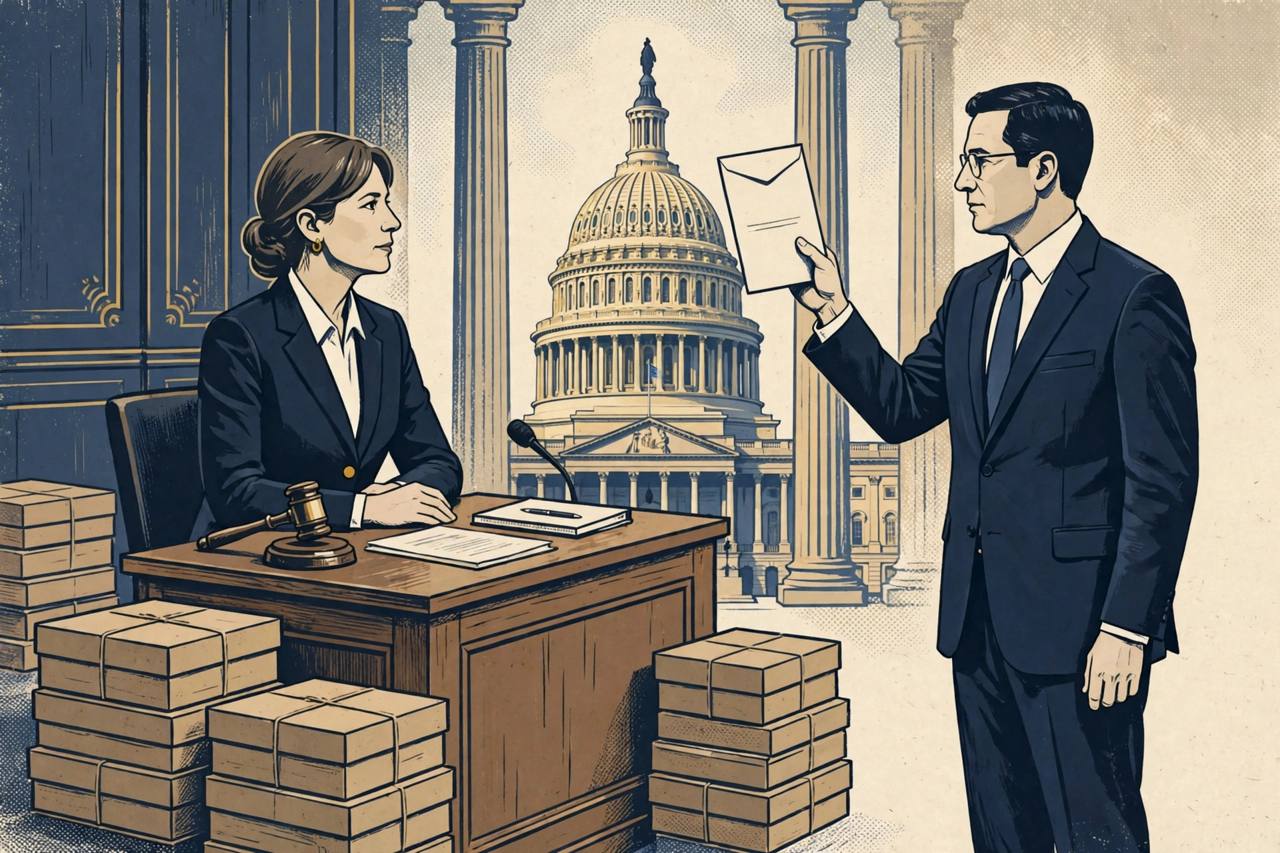
A federal prosecutor has told Senator Elizabeth Warren of Massachusetts to preserve all records tied to her planned congressional inquiries, in a letter posted on Sunday, November 15, that sharply escalates the White House's fight with Democratic lawmakers preparing to investigate President Donald Trump's administration when the new Congress takes over.
Source: Hallman Brief
U.S. Attorney Aaron Reitz, the federal prosecutor for the Southern District of Texas, alleged in the letter that Warren's planned inquiries target private Americans because of their association with President Trump. He cited federal criminal civil rights laws and asked the Massachusetts Democrat to confirm by 6 p.m. Eastern on Monday, November 23, that she had received the letter and taken steps to preserve the records.
Source: Hallman Brief
A second report on Sunday described the letter the same way: a formal litigation hold covering Warren, her Senate staff, her consultants and her campaign team, covering what Reitz called her “intent to weaponize” congressional oversight, with a warning of potential legal sanctions if she does not confirm compliance by the November 23 deadline. “The American people are entitled to freely associate without their elected officials terrorizing them with aggressive, harassing government action,” Reitz wrote, according to that report. Warren had not responded publicly by Sunday.
Source: Aaron Parnas Substack
Why Warren, and why now
Warren is expected to chair the Senate Banking Committee after Democrats' midterm wave, and she has signalled that she plans to investigate big tech chief executives, Wall Street executives, Trump family businesses and donors to projects such as Trump's White House ballroom. That agenda is what brought her into the same line of fire that has already hit three of her colleagues in the past week.
Just days earlier, on November 12, Warren joined Senator Richard Blumenthal of Connecticut and Representative Robert Garcia of California in writing to Meredith O'Rourke, the president's chief fundraiser, over the more than $800 million she has reportedly helped raise for the ballroom, the presidential library, the Freedom 250 celebrations and the Garden of Heroes. The lawmakers wrote that the operation “reeks of potential corruption and the potential for quid pro quo politics,” asked O'Rourke to list every company and donor she solicited and what came of each request, and set a November 25 deadline for answers. Their letter pointed to a Public Citizen analysis finding that 14 corporations that donated to the ballroom had collectively received more than $50 billion in new or expanded federal contracts.
Source: Washington Post via Viralnado
The fourth warning letter in a week
Sunday's letter is the latest in a rapid series. White House counsel Will Scharf first warned Garcia, the top Democrat on the House Oversight Committee, that certain investigative conduct could cross into criminality; Garcia said Democrats would not be intimidated. On November 11, Reitz sent Blumenthal a similar preservation demand over his inquiry into ballroom donors, citing 18 U.S.C. sections 241 and 242, the federal criminal civil rights statutes. Blumenthal, a former U.S. attorney himself, replied the same day, called the implied threat of an investigation baseless, defended the inquiry as constitutional oversight, and directed Reitz to preserve his own communications with the White House and senior Justice Department officials about the letter. Reitz also sent a preservation demand to Senator Elissa Slotkin over her comments about holding people around President Trump accountable; her office said the letter appeared online before she received it.
Attorney General Todd Blanche said on November 12 that the Justice Department had no ongoing criminal investigations into lawmakers' words. Asked about Reitz's letter to Blumenthal, he did not clearly say whether that matter was under investigation. Sunday's letter to Warren likewise does not specify whether a formal criminal investigation has been opened.
At the White House, communications director Steven Cheung backed Reitz on Sunday, accusing Warren and other Democrats of targeting people because they work with or associate with President Trump. Reporting on the wider White House push says the strategy — treating aggressive oversight itself as potential criminal conduct — is being prepared ahead of Democrats returning to control of Congress, and that the president posted on social media on Saturday ordering the Justice Department to investigate what he called a criminal act. Those characterisations are the administration's own framing of the dispute, and the lawmakers involved dispute them.
What is actually at stake
A records-preservation letter is not a charge, an indictment or a court order, and no court has ruled on whether a prosecutor can use criminal civil rights laws against members of Congress for oversight inquiries. But the practical effect is immediate: Warren's office must now treat its inquiry files as potential evidence, and every lawmaker planning an investigation has been put on notice that the Justice Department is watching the inquiries themselves, not only their subjects. Legal commentators who covered the Blumenthal exchange described the letters as an attempt to intimidate Congress out of constitutionally protected oversight; the administration says it is defending private citizens' right of free association.
For readers in the Punjabi diaspora, the fight matters beyond Washington personalities. The Senate Banking Committee, which Warren is in line to lead, oversees banks, lending and financial rules that reach every small business that borrows to buy a truck, a shop or a house, and congressional oversight is the main tool for questioning how federal contracts and regulatory favours are handed out. Whether that oversight proceeds freely, or under a prosecutor's warning, will shape how much of the $800 million fundraising story ever becomes public.
What happens next
Warren has until 6 p.m. Eastern on November 23 to confirm compliance, and her public response — expected to follow the pattern Blumenthal set, a refusal letter that turns the preservation demand back on the prosecutor — will be the next development. O'Rourke's answers to the three lawmakers are due November 25. The incoming committee chairs gain subpoena power in January, which is when the administration's warning strategy and Congress's oversight plans will collide directly. Awaaz Punjab will update this story when Warren responds.