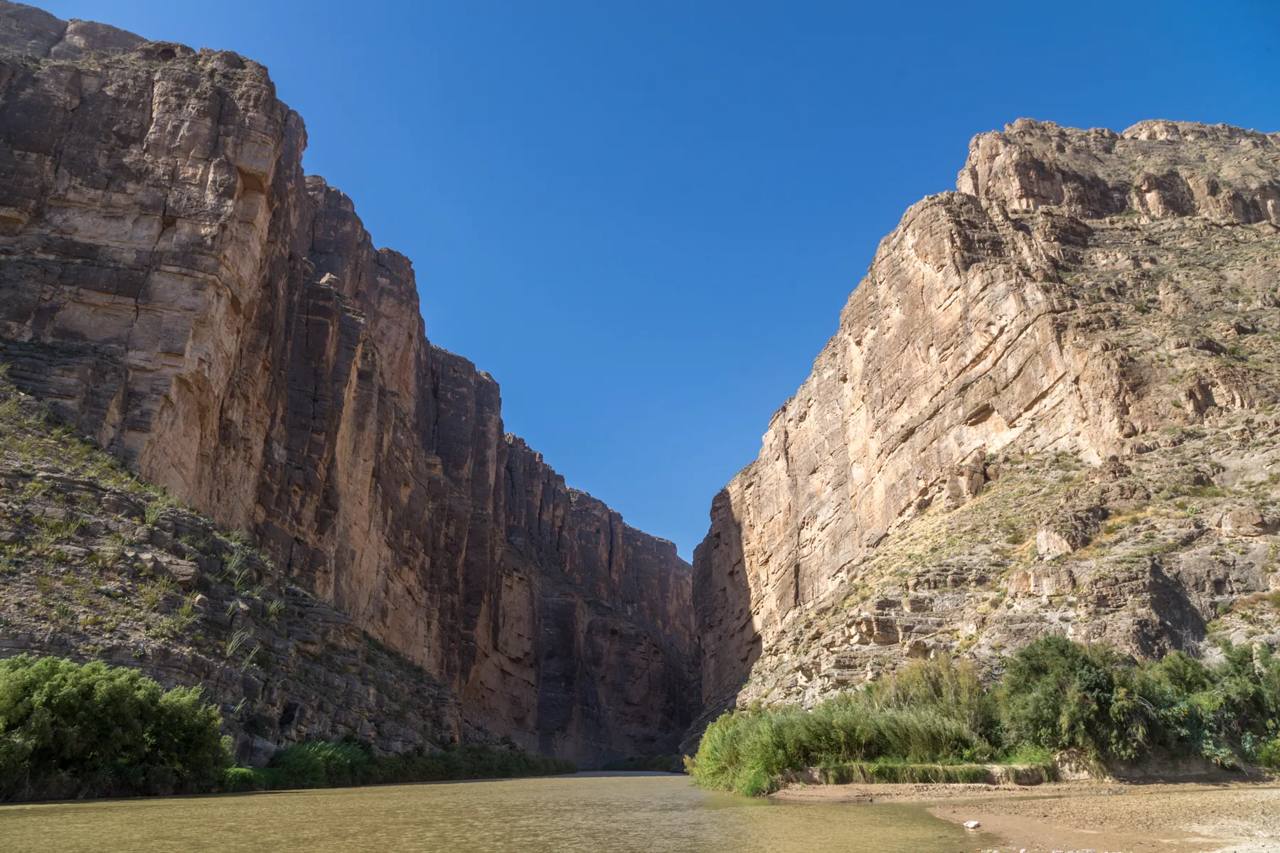
The U.S. Supreme Court on Monday, November 9, cleared the way for the Trump administration to resume building a border wall and related roads and barriers through the Big Bend region of West Texas, lifting a lower-court order that had halted all construction across the sector for the past month. The unsigned decision, issued on the court's emergency docket, suspends the injunction while the underlying lawsuit continues — it is not a final ruling on whether the administration lawfully swept aside environmental and historic-preservation laws to fast-track the project.
Source: US Times Mirror
In its five-page decision, the court said the lower court's order delays construction of the border barrier and roads in the Big Bend region and “impedes the Government from advancing its ‘compelling interests’ in border security and integrity.” The challengers “claim that construction in the Big Bend Sector will diminish their ability to use and enjoy the area,” the court wrote. “But Congress's enactment of [immigration law] — which permits the Secretary to waive the requirements of environmental-protection and other conservation laws — reflects a clear preference for expeditious border construction over the very harms respondents assert.” Justice Ketanji Brown Jackson was the only justice noted in dissent; she said she would have denied the Justice Department's request for emergency relief.
How the case got here
U.S. District Judge Kathleen Cardone in El Paso issued the preliminary injunction on October 2, barring the administration from building border barriers or related infrastructure, or engaging in “any construction or ground disturbing activities,” anywhere in the Big Bend sector. Cardone found that the Secretary of Homeland Security had exceeded his authority when he issued the waivers that allowed construction to proceed. As Awaaz Punjab reported at the time, the administration asked the Supreme Court on October 21 to let construction resume, and on October 31 the challengers asked the justices to keep the halt in place. Monday's order resolves that emergency fight in the administration's favour.
The legal dispute centres on a 1996 federal immigration law that lets the Homeland Security secretary waive legal requirements deemed necessary to ensure “expeditious” construction of barriers and roads near the southern border. Homeland Security issued three waivers for the Big Bend region this year — first under Secretary Kristi Noem in February, then under her successor Markwayne Mullin in May and July. The lawsuit, brought by the Center for Biological Diversity, Friends of the Ruidosa Church and a Big Bend-area river guide and landowner, argues the waivers violate the major questions doctrine, which requires explicit congressional approval for actions of vast economic and political consequence. The Center says the waivers marked the first time in U.S. history that the federal government swept aside a broad slate of environmental laws — including the Endangered Species Act, the National Wild and Scenic Rivers Act and the National Park Service Organic Act — inside a national park.
Source: Center for Biological Diversity
The two arguments the justices weighed
Solicitor General D. John Sauer warned the court that keeping the halt would cause “disruption of the government's ability to secure a quarter of the southern border against cartel incursions, drug trafficking, and illegal entry,” create “a massive vulnerability in border protection that risks funneling illegal entry and trafficking into the unsecured Big Bend Sector,” and impose irreversible delays and costs on construction already begun. The government has argued in court filings that immigration officers apprehended more than 89,000 people trying to cross illegally in the area between 2021 and 2025.
The challengers answered that Big Bend ranks last for apprehensions among the southern border sectors: the sector covers more than a quarter of the border, yet annual apprehensions there have ranged between 0.3% and 2.2% of the border-wide total, according to court filings, and the Center for Biological Diversity put the sector's 2025 share at 1.3% of total border apprehensions. “Once habitat is destroyed, vegetation cleared, historic resources damaged, livelihoods and private property destroyed, and wilderness landscapes fragmented by roads, barriers, and associated infrastructure, no final judgment can restore the status quo,” the plaintiffs' lawyers wrote in their Supreme Court filing.
“The Trump administration and its contractors are hellbent on destroying one of America's greatest national parks, and the Supreme Court just gave them the green light,” said Laiken Jordahl, national public lands advocate at the Center for Biological Diversity. “This horrific decision clears the way for contractors to bulldoze pristine desert and dynamite canyon walls before the courts have even decided whether this destruction is legal.” The plaintiffs are represented by attorneys at the Center and the Texas Civil Rights Project.
What has already happened on the ground
Bulldozers began work inside Big Bend National Park near the iconic Santa Elena Canyon on August 6, and contractors were documented plowing new routes for vehicle barriers on both sides of Mariscal Mountain, according to the Center, which says staging yards have been cleared, worker camps built and water wells drilled across the region. After widespread backlash, Customs and Border Protection announced a pause in park construction on August 17 that lapsed on September 30. CBP Commissioner Rodney Scott has said the proposed 30-foot wall itself will not cut through Big Bend National Park, but that other infrastructure would — including more than 200 miles of patrol roads and roughly 17 miles of vehicle barriers. More than 140 outfitters, local businesses and recreation groups have urged Texas leaders to protect public access to the Rio Grande and halt the project, and Texas Senator John Cornyn voiced his opposition to wall construction through Big Bend in an op-ed published Monday in the San Antonio Express-News.
The order lifts the construction halt while the lawsuit proceeds. It does not finally decide whether the Homeland Security waivers were lawful, and the case remains pending before Judge Cardone's court, with a possible appeal to the Fifth Circuit. Construction may resume in the meantime.
Why it matters beyond West Texas
Border construction is the most visible piece of the administration's immigration programme, and Congress funded the project with $46 billion last summer, according to reporting on the ruling; Customs and Border Protection has been erecting barriers at a pace the administration puts at about 12 miles a week across the entire border. For Punjabi and other immigrant families in the United States — including the large Punjabi trucking community in Texas, whose routes cross West Texas on Interstate 10 through Hudspeth County, where the first 47-mile stretch of this wall began in September — the ruling is the latest sign that the enforcement build-up at the border will continue while the courts argue over its limits.
What happens next
The administration is now free to resume construction across the Big Bend sector, including in Big Bend National Park and, the Center notes, potentially Big Bend Ranch State Park. The merits case returns to the district court in El Paso, where Judge Cardone will decide whether the waivers exceeded the secretary's authority; either side could then appeal to the Fifth Circuit, and the dispute could return to the Supreme Court. Until there is a final judgment, the wall work the injunction stopped for a month can proceed.